Skincare Brand Matcher
Your Profile
Recommended For You
Top Contenders Overview
Compare the key strengths of leading brands discussed in our guide.
Select your profile details and click "Find My Match" to see which brand aligns with your biology and goals.
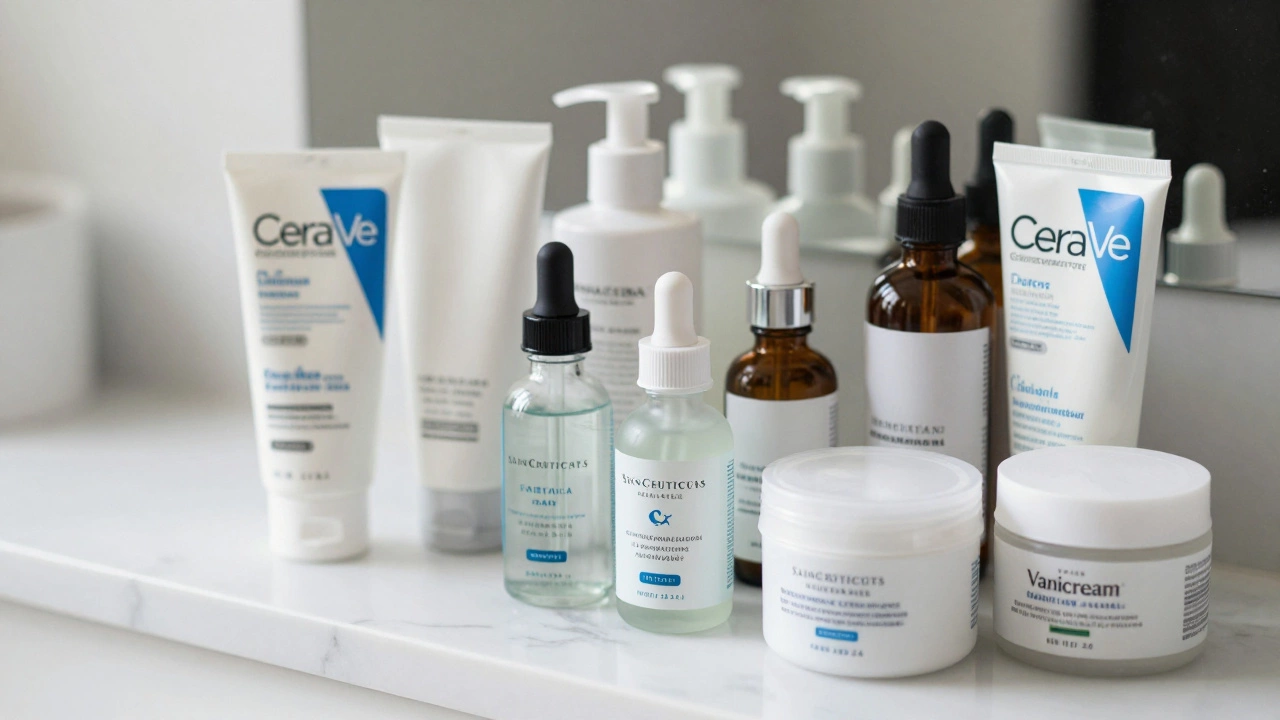
You walk down the aisle at your local pharmacy or scroll through endless options online. There are hundreds of bottles, jars, and tubes promising clearer, younger, brighter skin. The labels use words like 'clinical,' 'natural,' 'dermatologist-tested,' and 'luxury.' It is overwhelming. You want to know one simple thing: which brand is actually good for skin care? The honest answer might frustrate you at first-there is no single best brand for everyone. Your skin type, budget, and specific concerns dictate what works. However, there are clear winners in specific categories that have proven their worth through science, consistency, and user results.
Why "Best" Depends on Your Skin Type
Before we talk about names, we need to talk about biology. If you have oily, acne-prone skin, a heavy cream from a luxury brand designed for dry, mature skin will clog your pores and cause breakouts. Conversely, if you have sensitive, dry skin, a harsh, oil-free gel cleanser meant for oily skin will strip your moisture barrier, leading to redness and irritation. The 'best' brand is the one that aligns with your skin’s needs.
Think of it like shoes. You wouldn’t buy running spikes for a long hike, right? Skincare is similar. We categorize brands not just by price, but by their primary strength: medical-grade efficacy, gentle sensitivity support, natural ingredients, or accessible daily maintenance.
The Gold Standard for Acne and Medical Concerns
If your main goal is fighting acne, reducing hyperpigmentation, or treating signs of aging with clinically proven ingredients, you look toward brands backed by dermatological research. These brands often skip the fancy packaging and focus on high concentrations of active ingredients like retinoids, salicylic acid, and benzoyl peroxide.
Another heavyweight is La Roche-Posay, a French pharmacy brand. They specialize in thermal spring water-based formulations that soothe irritated skin while delivering actives. Their Effaclar line is legendary among teens and adults struggling with persistent acne. If you are dealing with rosacea or eczema, this brand is often the first recommendation because it avoids common irritants like fragrance and essential oils.
- Key Ingredient Focus: Ceramides, Niacinamide, Thermal Spring Water.
- Best For: Barrier repair, acne management, sensitive reactive skin.
- Price Point: Mid-range ($15-$30).
For Sensitive and Reactive Skin
Sensitive skin is tricky. Many products claim to be gentle but still contain hidden fragrances or preservatives that trigger reactions. Here, simplicity is key. You want brands that prioritize minimal ingredient lists and rigorous testing.
Vanicream is arguably the safest bet for highly reactive skin. They eliminate the 'eight major sensitizers': dyes, fragrance, masking fragrance, lanolin, parabens, formaldehyde releasers, and gluten. Their free-and-clear cleanser is so basic it feels like water, but it effectively removes dirt without stripping. If your skin reacts to almost everything, start here. It is not glamorous, but it works.
Another option is Avene, another French brand that uses soothing thermal spring water. Their Tolerance Extreme range is designed for compromised skin barriers. It is excellent for post-procedure care (like after laser treatments) or during severe flare-ups.

The Natural and Clean Beauty Leaders
If you prefer plant-based ingredients and want to avoid synthetic chemicals, the 'clean beauty' sector offers several strong contenders. However, 'natural' does not always mean non-irritating; some plants are potent allergens. Look for brands that balance botanical extracts with scientific formulation.
Tatcha brings Japanese beauty rituals to the modern market. Their Rice Polish and Violet-C Brightening Serum are cult favorites. While expensive, the texture and sensory experience are unmatched, and they deliver visible brightening results. It is skincare as self-care.
For a more accessible natural option, The Ordinary revolutionized the industry by offering single-ingredient actives at low prices. While not strictly 'natural' (they use lab-derived ingredients), their transparency allows you to build a routine based on exactly what your skin needs without paying for marketing fluff. Their Hyaluronic Acid serum and Niacinamide solution are entry points for millions of beginners.
Luxury and Anti-Aging Prestige
Some people value the experience, scent, and packaging alongside the results. Luxury brands often invest heavily in proprietary technologies and exclusive ingredients. Are they worth the premium? For some, yes. The delivery systems in high-end serums can enhance absorption, making potent ingredients like peptides and growth factors more effective.
SkinCeuticals sits at the intersection of clinical and prestige. Their C E Ferulic serum is widely considered the gold standard for vitamin C antioxidant protection. Studies show it provides superior photoprotection compared to other vitamin C serums. It is pricey, but many users swear by its ability to prevent sun damage and fine lines.
Drunk Elephant popularized the concept of 'biocompatible' skincare, avoiding what they call the 'Suspicious 6' (essential oils, drying alcohols, etc.). Their Virgin Marula Oil and Protini Polypeptide Cream are bestsellers that appeal to those who want clean, effective, and fun-to-use products.
Comparison Table: Top Contenders by Category
| Brand | Primary Strength | Key Ingredients | Price Range | Best For |
|---|---|---|---|---|
| CeraVe | Barrier Repair | Ceramides, Hyaluronic Acid | $ - $$ | Dry, Normal, Sensitive |
| La Roche-Posay | Acne & Sensitivity | Thermal Water, Niacinamide | $$ | Acne-Prone, Rosacea |
| Vanicream | Hypoallergenic Safety | Fragrance-Free Base | $ | Eczema, Highly Reactive |
| The Ordinary | Ingredient Transparency | Single Actives (AHA, BHA) | $ | Budget-Conscious, DIYers |
| SkinCeuticals | Antioxidant Protection | Vitamin C, Ferulic Acid | $$$ | Anti-Aging, Sun Damage |
| Tatcha | Glow & Texture | Rice Extract, Green Tea | $$$ | Dullness, Drying Skin |
How to Choose Without Wasting Money
It is easy to impulse-buy when influencers rave about a product. But skincare is personal. Follow these steps to find your match:
- Identify Your Core Issue: Is it acne, dryness, aging, or darkness? Pick one primary concern to address first. Trying to fix everything at once leads to irritation.
- Check the Ingredient List: Don't just read the front label. Look at the back. If you have sensitive skin, ensure 'fragrance' or 'parfum' is absent. If you have acne, look for non-comedogenic labels.
- Patch Test: Before applying a new product to your face, apply a small amount behind your ear or on your inner arm for 24 hours. If no reaction occurs, try it on a small patch of your jawline.
- Start Slow: Introduce only one new product every two weeks. This way, if you get a breakout, you know exactly which product caused it.
Common Mistakes to Avoid
Many people switch brands constantly because they don't see immediate results. Skincare takes time. Cell turnover takes about 28 days. You won't see significant changes from a retinol or vitamin C serum in three days. Give any product at least six to eight weeks before judging it.
Also, beware of 'miracle' claims. No cream can erase deep wrinkles overnight. Be skeptical of brands that promise dramatic transformations without listing active ingredients or providing clinical data.
Is expensive skincare better than drugstore brands?
Not necessarily. Drugstore brands like CeraVe and La Roche-Posay often use the same active ingredients as luxury brands. The difference usually lies in packaging, scent, texture, and marketing. However, high-end brands may offer more stable formulations or unique delivery systems for sensitive eyes or delicate areas.
Can I mix products from different brands?
Yes, absolutely. Most dermatologists recommend building a routine from different brands to get the best cleanser, serum, and moisturizer for your specific needs. Just be careful not to mix conflicting ingredients, such as using retinol and AHAs/BHAs at the same time, which can cause irritation.
What should I do if my skin breaks out after trying a new brand?
Stop using the new product immediately. Return to a basic routine with a gentle cleanser and moisturizer. If the breakout persists for more than a week, consult a dermatologist. It could be an allergic reaction or purging (if the product contains exfoliants). Purging usually resolves within 4-6 weeks, while allergies do not.
Are natural skincare brands safer?
Not always. 'Natural' ingredients can still cause allergic reactions. Essential oils, for example, are common irritants for sensitive skin. Synthetic ingredients are often more stable and less likely to degrade or harbor bacteria. Look for 'non-toxic' or 'hypoallergenic' rather than just 'natural.'
How often should I change my skincare brand?
Only when your skin's needs change or the current products stop working. Consistency is key. Switching too frequently prevents your skin from adjusting and makes it hard to track what is effective. Stick with a routine for at least three months before considering a change.