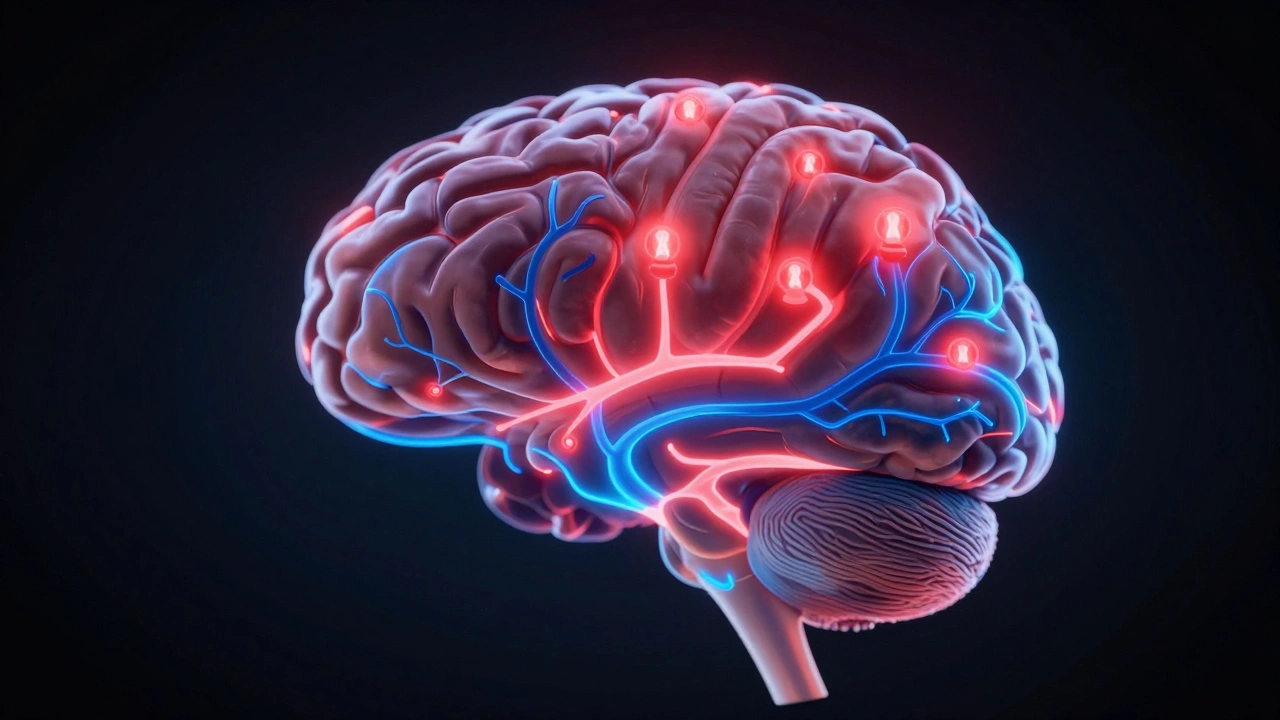
Brain Reprogramming Progress Tracker
Daily Tracking
Your Progress
Goal: At least 5 days per week
Your brain needs consistent input to rewire. Try to log your progress for at least 10 minutes daily, five days a week.
Chronic pain doesn’t just live in your body-it lives in your brain. If you’ve been dealing with pain for months or years, your nervous system has rewired itself to keep sounding the alarm, even when there’s no injury left to heal. That’s where brain reprogramming comes in. It’s not magic. It’s not wishful thinking. It’s neuroscience. And it’s changing how people finally get relief when meds, injections, and surgery have failed.
How Your Brain Keeps the Pain On
When you hurt yourself-say, you twist your ankle-your nerves send a signal to your brain: "Danger!" Your brain responds by turning up the volume on pain signals to make sure you pay attention. That’s normal. It’s protective.
But in chronic pain, that system gets stuck. After weeks or months, your brain starts treating the pain signal like a habit. It doesn’t need the original injury anymore. The nerves fire on their own. The brain interprets normal sensations-like a light touch or walking-as threats. This is called central sensitization. Your brain has learned to hurt, even when there’s no tissue damage.
Studies from the University of Auckland’s Pain Research Centre show that people with chronic lower back pain for over a year often have brain activity patterns that look more like those of someone with an active injury-even when scans show nothing wrong. The pain is real. But the source? It’s changed.
What Is Brain Reprogramming?
Brain reprogramming for chronic pain means teaching your brain to stop treating harmless signals as dangerous. It’s not about ignoring pain. It’s about changing how your brain responds to it. Think of it like resetting a faulty alarm system. The alarm still works-but now it only goes off when something actually needs attention.
This isn’t hypnosis or positive thinking. It’s grounded in neuroplasticity-the brain’s ability to rewire itself based on experience. Every time you think, feel, or move in a new way, you strengthen new neural pathways. Over time, those pathways can replace the ones that keep the pain cycle running.
Techniques like mindfulness-based stress reduction (MBSR), graded motor imagery, and cognitive behavioral therapy (CBT) are all forms of brain reprogramming. They don’t erase pain overnight. But they do give you tools to break the cycle.
How It Works in Practice
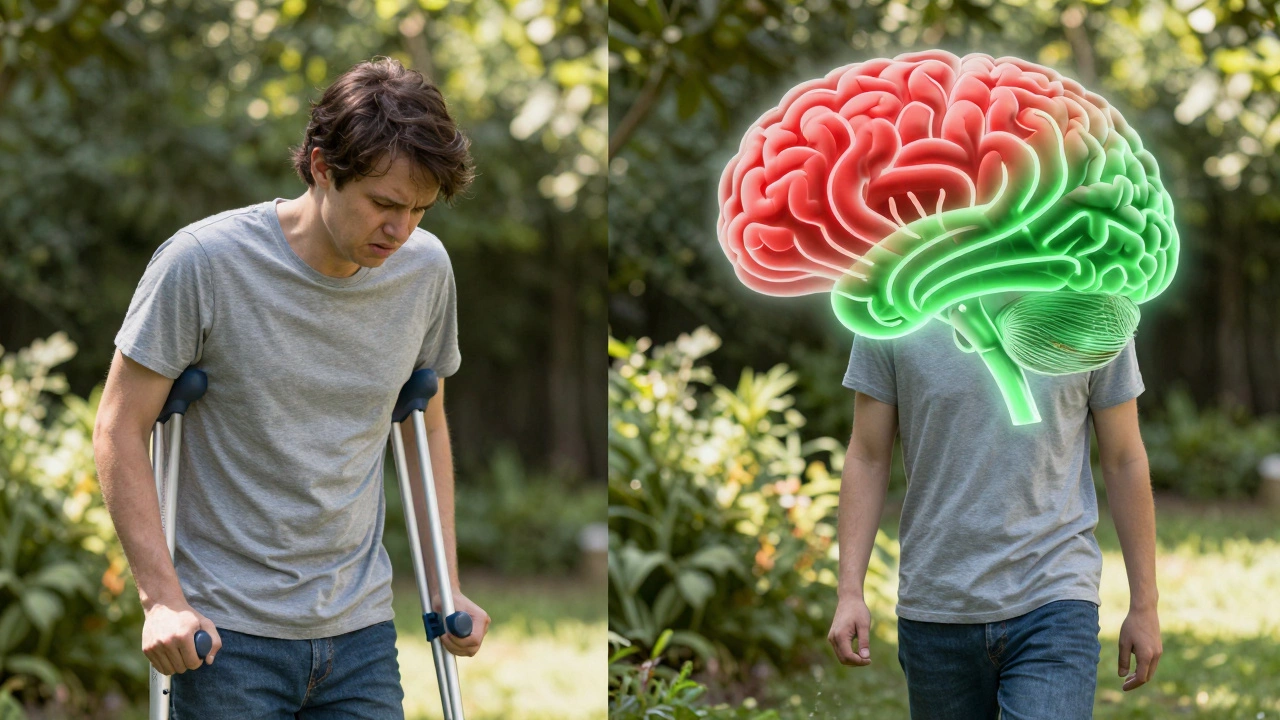
Let’s say you have fibromyalgia and avoid walking because it triggers burning pain. Your brain has linked movement with danger. So you stop moving. That makes your muscles weaker, your nerves more sensitive, and your brain more alert to pain signals.
Brain reprogramming breaks that loop. Instead of avoiding movement, you slowly reintroduce it-not to "push through" the pain, but to teach your brain that movement is safe. You might start with five minutes of gentle walking, tracked with a journal. Each time you do it without a major flare-up, your brain gets a new message: "This didn’t hurt before, and it didn’t hurt now. Maybe it’s not a threat."
Similarly, mindfulness practices help you notice pain without reacting to it. Instead of thinking, "This is unbearable, it’s getting worse," you learn to say, "I feel a burning sensation in my lower back. It’s intense, but it’s not spreading. It’s here, and it will change." That shift in attention reduces the emotional panic that amplifies pain signals.
One 2023 trial at the University of Otago followed 120 people with chronic neuropathic pain. After 12 weeks of daily 15-minute brain reprogramming exercises-combining breathwork, body scanning, and movement retraining-68% reported a 30% or greater drop in pain intensity. Not because the nerve damage disappeared. Because their brains stopped overreacting to it.

Tools and Techniques You Can Start Today
You don’t need a clinic or a pricey app to begin. Here are five evidence-backed methods anyone can try:
- Graded Motor Imagery (GMI): Look at pictures of left and right hands (or feet), then imagine moving them without actually moving. This tricks your brain into recognizing body parts without triggering pain. Works best for limb pain like complex regional pain syndrome.
- Body Scanning: Lie down, close your eyes, and slowly bring attention to each body part. Don’t try to change anything. Just notice. If pain shows up, acknowledge it like a passing cloud. Do this for 10 minutes daily. Studies show it reduces pain-related fear within four weeks.
- Pacing: Break tasks into tiny chunks. If cleaning the kitchen hurts, do one counter at a time. Rest. Then do the next. Your brain learns: "I can do this without breaking."
- Reframing Pain Signals: When pain flares, write down: "This is my brain being overly cautious, not my body being damaged." Repeat it like a mantra. It sounds simple, but it interrupts the fear-pain loop.
- Controlled Breathing: Breathe in for 4 seconds, hold for 4, out for 6. Do this for 2 minutes. It activates the parasympathetic nervous system, which tells your brain: "We’re safe. Turn down the alarm."
What Doesn’t Work
Not every "pain relief" method is brain reprogramming. Here’s what to watch out for:
- Just stretching or massaging without changing your brain’s response won’t reset the system. It might feel good temporarily, but if your brain still sees movement as dangerous, the pain comes back.
- Over-relying on painkillers masks symptoms but doesn’t rewire the brain. Long-term opioid use can actually make central sensitization worse.
- "Just stay positive" advice ignores the biology. You can’t think your way out of chronic pain. But you can train your brain to respond differently.
- Extreme exercise or "no pain, no gain" reinforces the fear-pain cycle. Pushing through pain trains your brain that movement = danger.
Who Benefits Most?
Brain reprogramming works best for people who:
- Have had pain for more than 3-6 months
- Have tried treatments that helped briefly but didn’t last
- Feel like their pain is "all in their head" (even if they hate that phrase)
- Are tired of being told to "just live with it"
It’s not a cure for everyone. If you have a tumor, infection, or structural issue like a herniated disc pressing on a nerve, medical treatment comes first. But for the millions with pain that has no clear physical cause-or where the damage has healed but the pain hasn’t-this is the most promising path forward.
Where to Start
You don’t need to go it alone. Look for:
- Clinicians trained in pain neuroscience education (PNE)
- Physiotherapists who use GMI or CBT for pain
- Apps like Pain Toolkit or MindDoc that guide daily brain retraining exercises
- Online programs like the Chronic Pain Recovery Program from the University of Sydney
Many public health clinics in New Zealand now offer group sessions on pain neuroscience. Ask your GP for a referral. Insurance often covers it under mental health or rehabilitation services.
Real Change Takes Time
Brain reprogramming isn’t fast. It’s not a one-time fix. It’s like learning to ride a bike. At first, you wobble. You fall. But each time you get back on, your brain gets better at balancing. After weeks, you don’t think about it-you just ride.
Most people start noticing small shifts in 3-6 weeks. Meaningful change takes 3-6 months. The key? Consistency. Not intensity. Ten minutes a day, five days a week, beats two hours once a month.
And the payoff? People who stick with it don’t just feel less pain. They sleep better. They move without fear. They stop canceling plans. They stop watching the clock, waiting for the next flare-up. They get their lives back.
Is brain reprogramming the same as meditation?
It’s related, but not the same. Meditation helps calm the mind. Brain reprogramming for pain is targeted: it uses specific techniques-like body scanning, movement retraining, and thought reframing-to change how your brain processes pain signals. Meditation can be part of it, but alone, it’s usually not enough to rewire chronic pain pathways.
Can brain reprogramming help if I’ve had pain for 10 years?
Yes. The longer you’ve had pain, the more entrenched the brain patterns are-but your brain never stops learning. Studies show people with 15+ years of chronic pain still improve with consistent brain retraining. It might take longer, but the brain’s ability to change doesn’t disappear with time.
Do I need to stop my pain medication to try this?
No. You can start brain reprogramming while still on medication. Many people gradually reduce their meds as their pain perception improves, but that should always be done with your doctor’s guidance. The goal isn’t to replace pills-it’s to reduce your brain’s dependence on them by changing how it interprets pain.
Is brain reprogramming backed by science?
Yes. Brain imaging studies show changes in pain-processing areas like the anterior cingulate cortex and insula after retraining programs. Randomized trials from Harvard, Oxford, and the University of Auckland confirm that these methods reduce pain intensity, improve function, and lower anxiety better than standard care alone.
Why isn’t this more widely known?
Because medicine has focused for decades on fixing the body, not the brain. Pain was seen as a symptom to suppress, not a system to retrain. But that’s changing. More doctors now understand chronic pain as a neurological condition. Training programs for clinicians are growing, and insurance coverage is slowly catching up.
What Comes Next?
If you’re tired of treatments that only mask pain, brain reprogramming offers something rare: real control. Not over the pain itself-but over how it affects you. You can’t always control what your body feels. But you can control how your brain reacts to it.
Start small. Pick one technique. Try it for 10 minutes a day. Track how you feel-not just pain levels, but sleep, mood, movement. Give it six weeks. If you don’t see a shift, try another. There’s no single right way. But there’s a right direction: away from fear, toward safety. Your brain is listening. It just needs the right signals to change its mind.