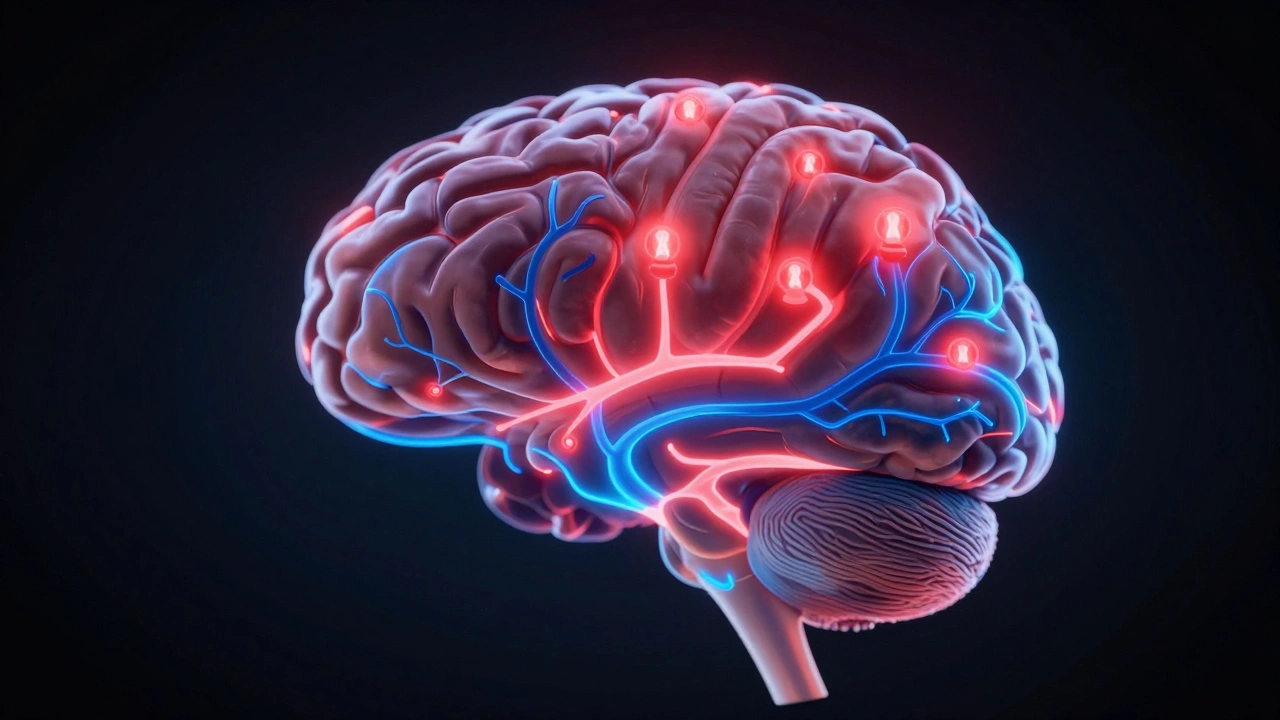
Neuroplasticity and Pain: How Your Brain Rewires Chronic Discomfort
When you feel pain that won’t go away—even after an injury heals—it’s not always about tissue damage. It’s often about your brain. Neuroplasticity, the brain’s ability to reorganize itself by forming new neural connections. Also known as brain plasticity, it’s what lets you learn a language, recover from a stroke, or, unfortunately, keep feeling pain long after the cause is gone. This isn’t magic. It’s biology. Your nervous system adapts. And when pain becomes constant, your brain starts treating it like a normal signal—like the sound of a ticking clock you stop noticing. That’s neuroplasticity pain in action.
Chronic pain doesn’t just live in your knee, back, or head. It lives in your neural pathways. Studies show that people with long-term pain have measurable changes in brain structure—the areas that process pain become more sensitive, and the ones that control it weaken. This isn’t "all in your head" in the dismissive sense. It’s real, physical change. The good news? Because your brain adapted to the pain, it can also adapt away from it. Tools like targeted movement, mindfulness, and even certain types of physical therapy can help retrain those pathways. It’s not about ignoring pain. It’s about teaching your brain it’s no longer needed.
Neuroplasticity pain connects directly to how you respond to treatment. If you’ve tried creams, injections, or even surgery and still hurt, it might not be the site of pain—it’s the signal. That’s why some people find relief with yoga or biofeedback, while others benefit from cognitive behavioral therapy. These aren’t "alternative" fixes. They’re neuroscience-based. Your brain didn’t get stuck by accident. And it doesn’t have to stay that way.
Below, you’ll find real stories and science-backed advice on how people have broken the cycle of chronic pain—not by chasing quick fixes, but by understanding how their own nervous system works. From managing back pain without opioids to retraining the brain after nerve damage, these posts show what actually shifts the needle when traditional methods fall short.
What Is Brain Reprogramming for Chronic Pain?
Brain reprogramming for chronic pain uses neuroscience to retrain how your brain processes pain signals. It’s not about ignoring pain-it’s about teaching your brain it’s no longer a threat. Proven techniques include mindfulness, movement retraining, and cognitive reframing.
Read More