K-Beauty vs J-Beauty: Your Personalized Skincare Matchmaker
Which Routine Fits You?
Confused by endless bottles? Take this 4-step diagnostic to find out if you are a K-Beauty (Layering & Actives) or J-Beauty (Texture & Efficiency) person.
Step 1 of 4
Your Skincare Profile
Based on your skin goals and lifestyle.
Recommended Focus
You’ve likely scrolled past bottles of essence, emulsion, and serums labeled 'K-Beauty' or 'J-Beauty' and wondered if the hype is real. The truth is, neither side is objectively superior; they simply solve different problems using different methods. If you are trying to decide between these two powerhouse industries, you need to understand what your skin actually needs right now.
While both come from East Asia, they treat skin health very differently. Think of Korean Skincare as a tech startup obsessed with innovation, new ingredients, and layering technology to create a dewy glow. On the other hand, Japanese Skincare operates like a precision engineering firm. It focuses on extreme texture control, gentleness, and proven safety records.
Understanding this difference saves you money and prevents product waste. If you buy heavy Korean creams when you live in humid Auckland summers, you might break out. If you buy watery Japanese toners when you have dehydrated winter skin, you might feel tight. Let’s break down exactly how these approaches differ so you can choose the right path.
The Philosophy: Innovation Versus Refinement
When you look at the history of these markets, you see why their products behave the way they do. Korean skincare took off globally in the early 2010s with a focus on trends. They introduced concepts like 'skin flooding' and 'glass skin' before anyone else. Their philosophy is proactive. They assume skin needs constant intervention with specialized actives to reach perfection. This leads to a market full of novelty ingredients. You’ll find things like mugwort, propolis, and snail secretion filtrate everywhere.
Japanese skincare has a much older history, rooted in the concept of *menma*, or beautiful skin that results from daily ritualistic care. They prioritize preservation of the barrier over aggressive treatment. If a cream feels sticky, Japanese formulators fix the formula until it slips on like water. Their motto isn't about adding more steps; it's about ensuring every drop absorbs perfectly. This creates a massive culture around texture and sensory experience.
For you, this means a choice in mindset. Do you enjoy the ritual of applying five different layers of serum to see immediate plumping effects? Or do you prefer a three-step routine where every product feels luxurious and disappears instantly into the skin?
Ingredient Science: What Goes Inside the Bottle
This is where most people get confused because both regions use familiar ingredients but combine them differently. In the Korean sphere, formulation teams love to experiment with unique actives derived from local flora or fermented substances. Fermentation is huge here because breaking down molecules makes them smaller and easier for the skin to absorb.
A prime example is Snail Mucin. While it sounds strange to some, it is packed with glycoproteins and glycolic acid that help heal acne scars and retain moisture. Another staple is Centella Asiatica (Cica), which is excellent for calming redness and irritation. These ingredients target specific active concerns like acne scarring or extreme sensitivity.
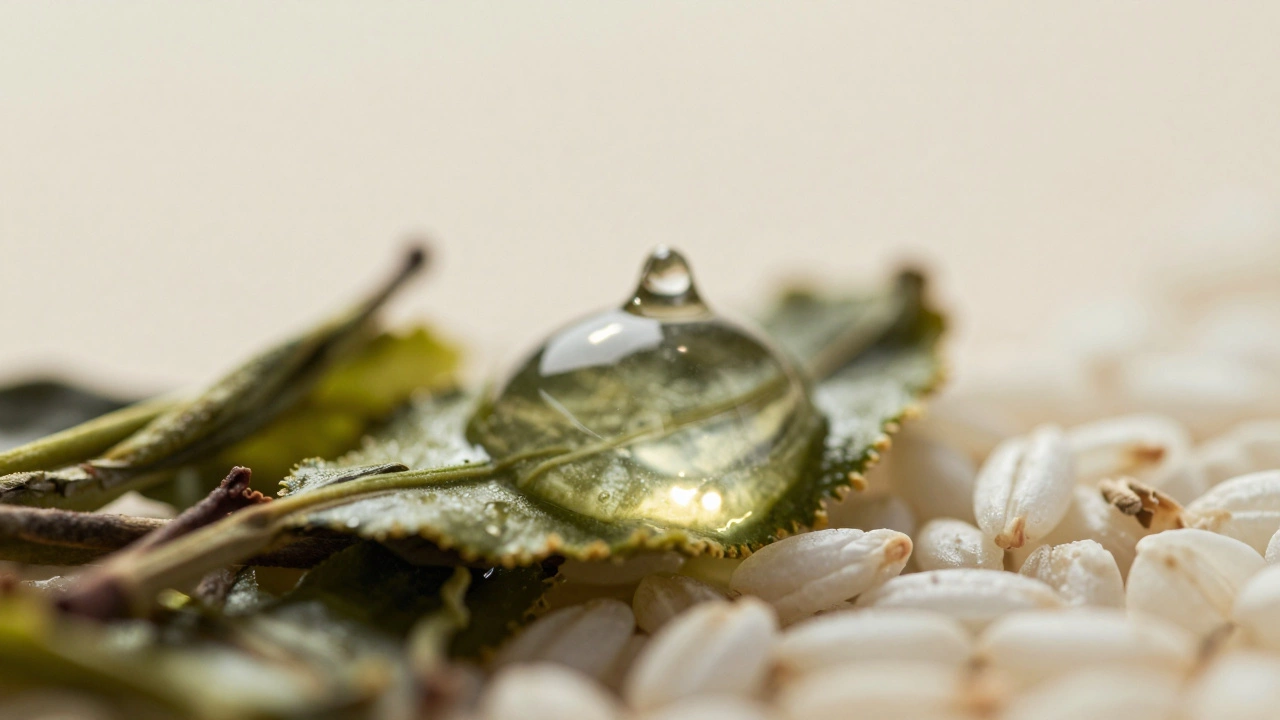
In contrast, Japanese formulas lean heavily on traditional botanical extracts that have been used for centuries. You will see Rice Bran extract, Camellia Oil, and Green Tea leaves frequently. The standout star here is Kojiic Acid. Unlike Vitamin C, which can be unstable and irritating, Kojic acid is a gentle exfoliant that targets hyperpigmentation without stripping the skin.
| Ingredient Focus | Korean Skincare Approach | Japanese Skincare Approach |
|---|---|---|
| Brightening Agents | Sodium Ascorbyl Phosphate, Niacinamide | Koji Acid, Rhodiola Root |
| Moisture Lock | Hyaluronic Acid, Beta-Glucan | Ceramides, Squalane |
| Texture Refiners | Rice Bran, Adenosine | Camellia Oil, Pomegranate |
| Freshness Method | Fermentation (Probiotics) | Extraction Technology (Purest Forms) |
The Routine Architecture: Steps and Structure
If you open your bathroom cabinet, the structure of your bottles will tell you which style you’re following. Korean routines are famous for the 'Layering Method.' The logic is simple: apply products from thinnest consistency to thickest. You wash your face, then use a toner, then an essence, then a serum, then an ampoule, then a mask, then a cream.
This architecture is great for dry skin types who feel their skin cracks under stress. By layering, you build a shield of hydration. However, if you are living in a hot climate, or if you have oily skin, ten steps can feel like suffocating your pores.
Japanese routines favor the "Wash-Rinse-Protect" model. The cleansing step is sacred. They use foam cleansers that lift dirt without rubbing. After washing, they might apply a single lotion (toner) followed by a lightweight emulsion (moisturizer). There is rarely a distinction between 'serum' and 'essence'; products are designed to do multiple jobs at once. This reduces friction and speeds up the process while maintaining hydration levels through highly effective humectants.
Sun Protection Standards
Here is where Japanese skincare pulls ahead for many users. Japan had the strictest sunscreen regulations for decades. While global standards have caught up, Japanese sunscreens still excel in one area: finish.
Western sunscreens often leave a white cast or feel greasy. Korean sunscreens improved this significantly in recent years, offering milky textures that glow. But Japanese chemical filters like Uvinul A Plus are incredibly advanced. They don’t just block UV rays; they protect against visible light pollution too. You can wear a 50+ SPF Japanese sunblock under makeup, and it acts like a primer, smoothing out fine lines.
However, Korean sunscreens sometimes double as color correctors. You can find pink-toned versions for pale skin or purple ones for dull skin tones. If you want your sunscreen to also improve your complexion immediately, look at Korea. If you want invisible protection, stick with Japan.
Sensory Experience and Aesthetics
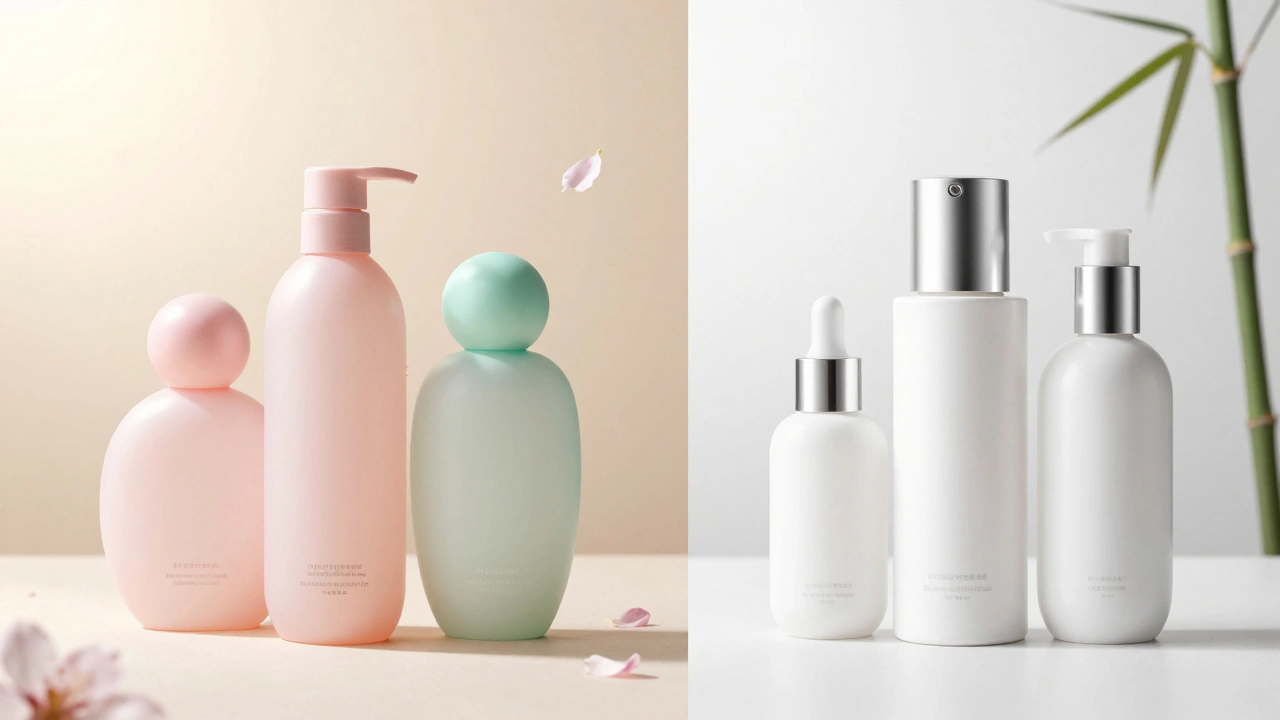
We shouldn't ignore the psychological factor. Self-care relies on the feeling of application. Korean packaging tends to be playful and colorful. Think pastel pinks, cute animal shapes, and fun branding. It signals 'fun' and 'self-pampering.'
Japanese packaging is clinical and sophisticated. It usually features clean white bottles, minimalist fonts, and silver caps. It signals 'clinical care' and 'efficiency.' If opening your skincare bottle makes you feel stressed or rushed, the aesthetic matters. A quick glance at the shelf should set the mood for your night routine.
This extends to scent. Many Japanese products are unscented to ensure no allergic reactions. Korean products often add subtle floral notes like green tea, grapefruit, or lavender to enhance the experience.

Making the Decision: Which Fits Your Skin Type?
You don't have to pick a side permanently. You can mix and match based on what your face tells you today. Here is a breakdown of who benefits most from which region's approach.
- Pick Korean Skincare if: You have dry or sensitive skin that craves intense repair. You are willing to spend more time applying multiple layers to achieve that hydrated 'glow.' You struggle with dark spots and want active brightening agents.
- Pick Japanese Skincare if: You have oily or combination skin that hates feeling heavy. You prioritize anti-aging and sun damage prevention. You want a routine that takes under five minutes but still delivers results.
If you live in a humid environment, the Japanese emulsion method works better. If you are indoors mostly and suffer from central heating dryness, the Korean layering technique gives you relief.
Building a Hybrid Routine
The smartest shoppers know that they don't need to stay loyal to one flag. Many dermatologists actually recommend a hybrid approach. Take the Japanese philosophy of gentle cleansing and sun protection-two non-negotiable steps for longevity. Then, inject the Korean philosophy of targeted treatment for specific issues.
For example, use a gentle Japanese foam cleanser to avoid damaging your barrier. Follow up with a Korean Essence containing fermentation to boost cell turnover. Finish with a Japanese Emulsion to seal everything in without grease. This gets the best of both worlds without overwhelming your face.
Is Korean skincare more moisturizing than Japanese?
Generally, yes. Korean products often use heavier occlusive ingredients and multi-layering techniques specifically designed to trap water in the skin. Japanese moisturizers tend to be lighter, focusing on absorption speed rather than sheer thickness.
Can I use both routines together?
Absolutely. A common strategy is using Japanese cleansers and sunscreens (for their superior texture) combined with Korean serums and essences (for active treatments).
Are Japanese sunscreens better for indoor lighting?
Yes. Japanese UV filters are known for blocking HEV light (blue light from screens) more effectively due to stricter regulatory testing requirements regarding particle size and dispersion.
What is the main difference in philosophy?
Korean beauty emphasizes 'Glass Skin' through heavy hydration and active correction. Japanese beauty emphasizes 'White Skin' through prevention, gentleness, and perfect texture.
Which is cheaper for a daily budget?
Japanese drugstore brands are often more affordable because fewer marketing costs go into fancy packaging. Premium Korean brands can be expensive, though the entry-level market is very competitive.