
Mental Health Progress Tracker
Track Your Daily Wellness Actions
Track small actions that build resilience. Focus on behavior, not mood.
Your Progress
Track your patterns over time
Remember: Your healing journey isn't linear. Small actions create momentum.
(Article excerpt: "Healing isn't about fixing what's wrong. It's about creating space—for rest, for connection, for joy.")
Fixing mental health issues isn’t about a quick fix. It’s not a button you press and suddenly feel better. It’s a process-sometimes messy, often slow, but always possible. If you’re reading this because you’re tired of feeling off, overwhelmed, or stuck, you’re not alone. And you’re not broken. Mental health struggles are common, treatable, and deeply human.
Start with the basics-your body isn’t separate from your mind
Most people think therapy or medication is the first step. But before you get there, your body needs to be in a position to heal. Sleep, movement, and food aren’t just physical concerns-they directly shape your mood, focus, and emotional resilience.
Studies show people who get 7-8 hours of sleep regularly cut their risk of anxiety and depression by nearly 40%. That’s not a coincidence. When you’re sleep-deprived, your brain’s emotional center (the amygdala) goes into overdrive, while your prefrontal cortex-the part that helps you think clearly-shuts down. You react more, reason less.
Move your body, even a little. You don’t need to run a marathon. A 20-minute walk three times a week, especially in natural light, can be as effective as medication for mild to moderate depression. Sunlight boosts serotonin. Movement releases endorphins. These aren’t buzzwords-they’re biology.
Food matters too. Diets high in processed sugar, refined carbs, and trans fats are linked to higher rates of depression. Swap out one sugary snack a day for a handful of nuts, an apple, or a boiled egg. Small changes add up. Your gut has more neurons than your spinal cord. What you eat affects how you feel.
Don’t wait for a crisis to seek help
Too many people wait until they’re in crisis before reaching out. By then, the weight is crushing. You don’t need to be on the edge to benefit from therapy.
Therapy isn’t just for people with severe diagnoses. It’s for anyone who feels stuck, drained, or unsure how to move forward. Cognitive Behavioral Therapy (CBT) is the most researched form of therapy for anxiety and depression. It doesn’t make you “think positive.” It teaches you to notice when your thoughts are distorted-like assuming the worst, or believing you’re a failure because one thing went wrong-and how to challenge them.
Online therapy platforms now offer sessions for under $40 per week in New Zealand. Some workplaces offer free sessions through employee assistance programs. If cost is a barrier, community health centers often have sliding-scale fees. You don’t need a diagnosis to start. You just need to be ready to talk.
Build a support system-even if you think you don’t need one
Loneliness is one of the strongest predictors of poor mental health. Not being alone doesn’t mean having 500 friends on social media. It means having at least one person you can text at 2 a.m. and know they’ll reply without judgment.
Start small. Text a friend: “Hey, I’ve been feeling off lately. Can we grab coffee this week?” You’d be surprised how many people feel the same way but are too afraid to say it. Support isn’t about fixing someone. It’s about saying: “I’m here.”
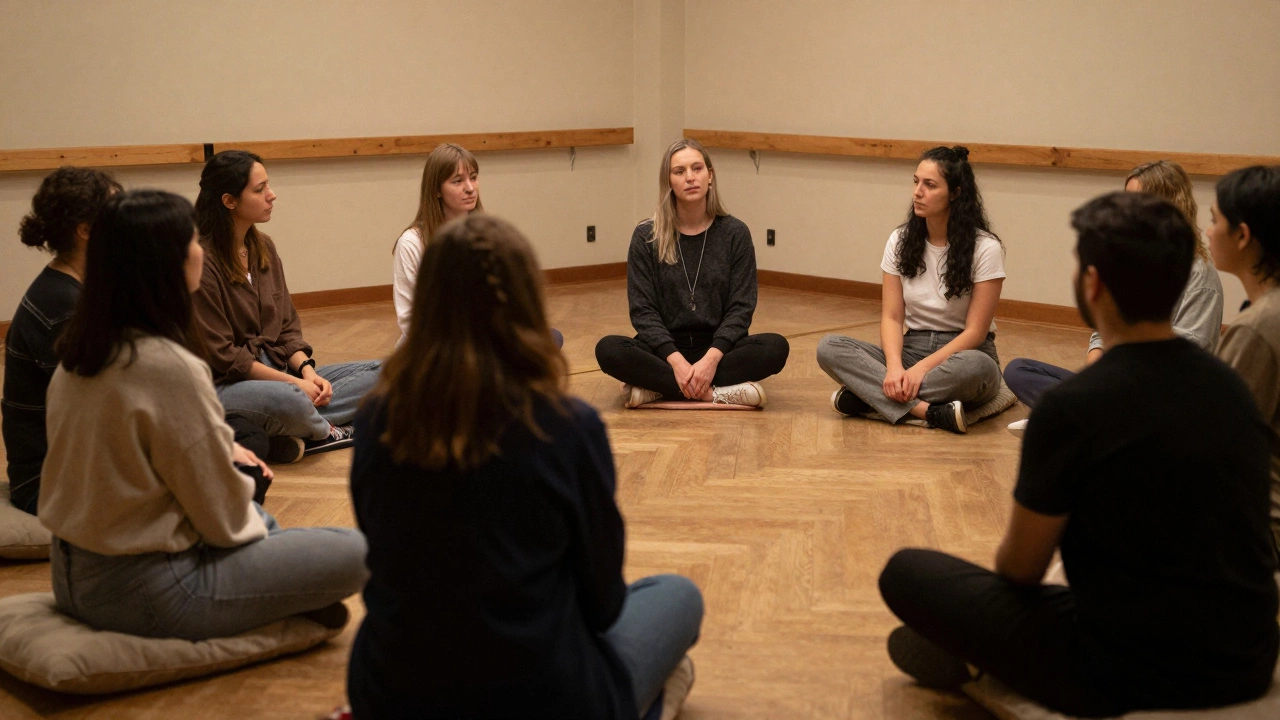
If you don’t have someone in your life, consider peer support groups. In Auckland, groups like Mental Health Foundation’s peer networks meet weekly. No therapist present. No pressure. Just people sharing what’s real. You don’t have to talk if you don’t want to. Just showing up changes things.

Recognize the difference between stress and mental illness
Feeling stressed after a hard week at work? That’s normal. Feeling numb for weeks, losing interest in everything, or having panic attacks without a clear trigger? That’s not stress. That’s your system signaling it’s overwhelmed.
Stress fades. Mental illness lingers. If symptoms last more than two weeks and interfere with work, relationships, or basic self-care (showering, eating, sleeping), it’s time to take it seriously. This isn’t weakness. It’s a signal your brain needs a different kind of support.
Common signs you might be dealing with something deeper:
- Constant fatigue, even after rest
- Feeling worthless or guilty for no reason
- Changes in appetite or weight without trying
- Difficulty concentrating or making simple decisions
- Thoughts of self-harm or not wanting to be here
If any of these sound familiar, talk to your GP. They can refer you to a psychologist or psychiatrist. In New Zealand, mental health services are free through the public system. You don’t need to be “bad enough” to qualify.
Medication isn’t a last resort-it’s a tool
There’s still stigma around antidepressants and anti-anxiety meds. Some people think they’re “chemical crutches.” But think of them like glasses for your brain. If your vision is blurry, you don’t feel weak for wearing glasses. You feel clearer.
Antidepressants don’t make you happy. They take the fog off. They let you feel emotions again-good and bad-without being drowned by them. Many people start medication and later realize they didn’t need it long-term. Others need it for years. Neither is failure. It’s adaptation.
SSRIs like sertraline or escitalopram are often first-line treatments. They take 4-6 weeks to work. Side effects like nausea or drowsiness usually fade in the first two weeks. If one doesn’t work, try another. It’s trial and error, not a life sentence.
Never stop medication cold turkey. Always work with your doctor to taper off. Withdrawal can mimic a relapse and make things worse.
Track your progress-not your mood
Trying to “feel better” every day is exhausting. Instead, track behavior. Did you get out of bed? Did you eat? Did you reach out to someone? Did you go for a walk? Those are measurable wins.
Use a simple journal. Write down three things you did each day, no matter how small. Over time, patterns emerge. You’ll notice you feel better after walking. Or that socializing-even for 10 minutes-lifts your mood. That’s data. That’s power.
Apps like Daylio or Moodfit let you log mood alongside activities. No fancy entries needed. Just tap: “Okay,” “Low,” “Anxious,” and check off: “Walked,” “Called Mum,” “Ate lunch.”
Healing isn’t linear
You’ll have good days. You’ll have days where you cry for no reason. You’ll feel like you’re back at square one. That’s normal. Recovery isn’t a straight line. It’s a spiral. You keep coming back to the same feelings-but now you have tools. Now you know it won’t last forever.
Don’t compare your day 10 to someone else’s day 100. Your journey is yours. Healing isn’t about becoming someone else. It’s about becoming more of yourself-flaws, quiet moments, and all.
You’re not broken. You’re rebuilding.
Mental health isn’t about fixing what’s wrong. It’s about creating space-for rest, for connection, for joy, for silence. It’s about learning to sit with discomfort without running from it. It’s about realizing you don’t have to carry everything alone.
Start with one thing today. Drink a glass of water. Step outside. Send a text. Call a helpline. Go to your GP. You don’t need to have it all figured out. Just take the next small step. The rest will follow.
Can mental health issues go away on their own?
Sometimes symptoms ease with time, especially if they’re tied to a temporary stressor like a job loss or breakup. But if feelings of sadness, anxiety, or numbness last more than two weeks and affect daily life, they’re unlikely to disappear without intervention. Left untreated, they often worsen or become chronic. Early action makes recovery faster and more stable.
Is therapy worth it if I don’t have a diagnosis?
Absolutely. Therapy isn’t just for diagnosed conditions. Many people go to therapy to navigate life transitions, relationship struggles, burnout, or just to feel more grounded. You don’t need a label to deserve support. A therapist can help you understand patterns, build coping skills, and feel less alone-even if you’re not “ill.”
What if I can’t afford therapy?
In New Zealand, mental health services are free through public health providers. Ask your GP for a referral to a psychologist or counselor. Community centers, universities, and nonprofits also offer low-cost or free group sessions. Online platforms like Talkspace and BetterHelp have sliding scales. Some workplaces offer free sessions through EAP programs. Help is available-you just have to ask.
How long does it take to feel better?
There’s no set timeline. Some people notice small shifts in 2-4 weeks. Others need months. Medication takes 4-8 weeks to kick in. Therapy often requires 8-12 sessions before deep changes appear. Progress is rarely dramatic-it’s quiet. It’s showing up. It’s choosing to walk instead of staying in bed. Those small choices compound. Patience isn’t passive. It’s part of the work.
Can exercise really help with anxiety and depression?
Yes, and the evidence is strong. A 2023 meta-analysis in The Lancet found that people who exercised 3-5 times a week for 30-45 minutes had a 25% lower risk of developing depression. Exercise reduces inflammation, balances stress hormones, and increases brain-derived neurotrophic factor (BDNF), which helps repair brain cells. You don’t need to sweat. Walking, dancing, gardening-all count.
What should I do if I’m having thoughts of self-harm?
If you’re having thoughts of self-harm or suicide, reach out immediately. In New Zealand, call or text 1737 to talk to a trained counselor 24/7. It’s free, anonymous, and confidential. You can also go to your nearest hospital emergency department. You are not a burden. Help exists, and you deserve it. You don’t have to face this alone.