UK Dental Treatment Cost & Savings Calculator
£902 by choosing NHS over Private.
Based on current average UK market rates.
Treatment Details:
Key Takeaways
- Dental implants are expensive in the UK (typically £1,500-£3,000 per tooth), but several viable alternatives exist.
- Dental bridges and partial dentures offer significant savings while restoring function and aesthetics.
- The NHS covers basic restorative work like bridges and dentures, making them far more accessible than implants.
- Choosing a cheaper option often involves trade-offs between longevity, bone health, and convenience.
- Hidden costs like bone grafts or crown replacements can add up; always ask for a full treatment plan upfront.
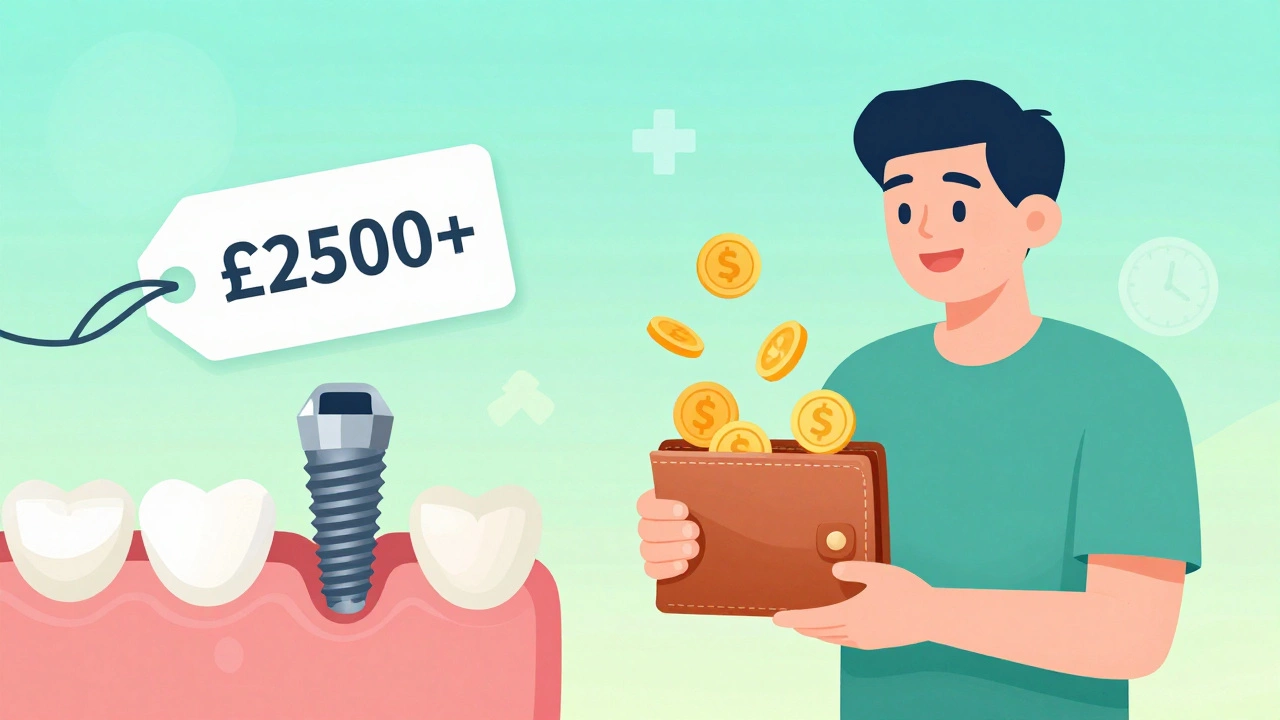
You’ve been told you need a dental implant is a titanium post surgically placed into the jawbone to replace a missing tooth root, topped with a custom crown. You’ve also seen the quote: £2,500. Maybe more. For one tooth. It’s easy to feel priced out of your own smile. But here’s the truth: you don’t always need an implant to get your life back. There are solid, proven alternatives that cost significantly less and still do the job well-especially if you’re looking for practicality over perfection.
In this guide, we’ll break down every realistic alternative to dental implants available in the UK today. We’ll cover what they are, how much they cost on the high street versus private clinics, whether the NHS will help, and who each option actually suits. No fluff. Just clear comparisons so you can make a confident choice without breaking the bank.
Why Dental Implants Are So Expensive in the UK
Before jumping to cheaper options, it helps to understand why implants carry such a steep price tag. A single dental implant isn’t just a screw and a cap. It involves surgery, specialized materials (like medical-grade titanium or zirconia), imaging technology (CBCT scans), and often multiple appointments over months. Clinics factor in lab fees for custom crowns, sterilization protocols, and the expertise of oral surgeons or prosthodontists.
According to data from the British Dental Association (BDA) and independent market surveys in 2024-2025, average prices across England range from £1,800 to £3,200 per unit. London and Southeast regions tend toward the higher end due to overheads. Add bone grafting (£500-£1,200) or sinus lifts (£800-£1,500), and you’re quickly approaching five figures for full-mouth reconstruction.
But does everyone need that level of intervention? Not necessarily. If your goal is simply to restore chewing ability, prevent adjacent teeth from shifting, and look natural in photos, there may be simpler paths forward.
The Most Common Cheaper Alternatives to Dental Implants
Let’s walk through the three main alternatives used by UK dentists when patients seek lower-cost solutions. Each has distinct pros, cons, and ideal use cases.
1. Dental Bridges
A dental bridge replaces one or more missing teeth by anchoring artificial teeth (pontics) to the adjacent natural teeth. Those neighboring teeth are filed down slightly to support crowns that hold the bridge in place. The whole structure is cemented permanently.
Cost: £600-£1,200 per unit depending on material (porcelain-fused-to-metal vs. all-ceramic).
Treatment time: 2-3 visits over 2-4 weeks.
Lifespan: 10-15 years with proper care.
NHS coverage: Yes, under Band 2 (£298.60 as of April 2025).
Bridges are popular because they’re fast, non-surgical, and visually seamless. However, they require sacrificing healthy enamel on adjacent teeth-a permanent change some patients regret later. Also, since the underlying gum bone doesn’t receive stimulation from a root-like structure, gradual bone loss can occur beneath the pontic over time.
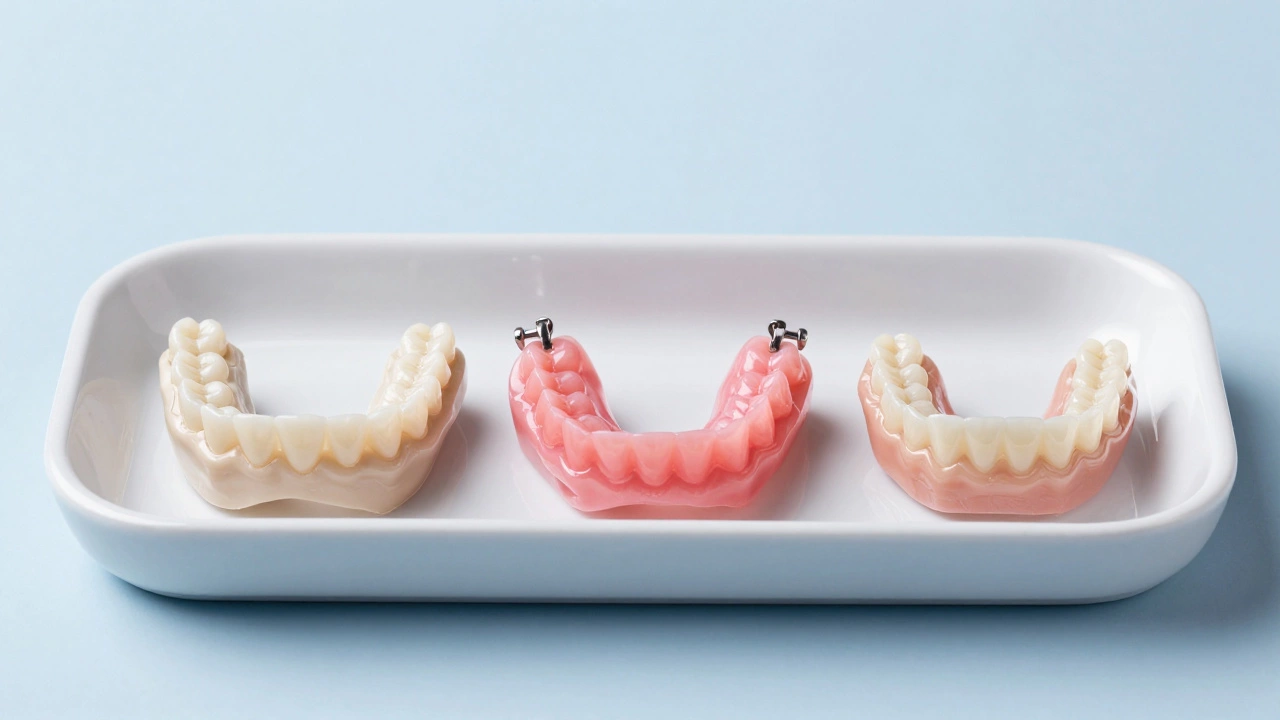
2. Partial Dentures
If you’re missing two or more teeth, especially spaced apart, a partial denture might be your best bet. These removable appliances feature acrylic or metal frameworks with false teeth attached via clasps that grip remaining natural teeth. Modern versions use flexible thermoplastics for comfort and discretion.
Cost: £300-£800 per arch (upper or lower).
Treatment time: 1-2 weeks including impressions and fittings.
Lifespan: 5-7 years before needing adjustment or replacement.
NHS coverage: Yes, under Band 2 (£298.60).
Partial dentures are the most budget-friendly option and fully reversible-you never alter existing teeth. They’re great for temporary fixes or older adults who prioritize affordability. Downside? They can slip during speech or eating, require daily removal for cleaning, and may irritate gums initially. Some users report feeling self-conscious about visibility when smiling widely.
3. Resin-Bonded Bridges (Maryland Bridges)
This hybrid approach uses a thin wing bonded directly to the back of adjacent teeth instead of preparing full crowns. Ideal for replacing front incisors where aesthetics matter most.
Cost: £800-£1,500.
Treatment time: 1-2 visits.
Lifespan: 7-10 years.
NHS coverage: Rarely covered unless medically necessary.
Less invasive than traditional bridges, resin-bonded types preserve more tooth structure. But their success depends heavily on bonding strength and bite alignment. They’re not recommended for molars or heavy chewers.
| Option | Average Cost (Private) | NHS Covered? | Surgery Required? | Longevity | Best For |
|---|---|---|---|---|---|
| Dental Bridge | £600-£1,200/unit | Yes | No | 10-15 years | Replacing 1-2 consecutive teeth |
| Partial Denture | £300-£800/arch | Yes | No | 5-7 years | Multiple missing teeth, tight budgets |
| Resin-Bonded Bridge | £800-£1,500 | Rarely | No | 7-10 years | Front tooth replacement, minimal prep |
| Dental Implant | £1,500-£3,200/unit | No* | Yes | 20+ years | Long-term stability, bone preservation |
*Note: NHS generally does not fund implants except in rare clinical circumstances involving trauma or congenital defects.*
When Might an Implant Still Be Worth the Investment?
Cheaper doesn’t always mean better long-term. Consider these scenarios where skipping an implant could cost you more down the line:
- Single missing molar: Without an implant, adjacent teeth drift, opposing teeth super-erupt, and bite alignment shifts. This leads to TMJ strain, uneven wear, and eventual need for orthodontics or extractions.
- Younger patients (<50): Preserving jawbone density matters now and decades later. Implants stimulate bone naturally; bridges and dentures don’t.
- High aesthetic demands: Front-facing professionals or those uncomfortable with visible gaps benefit from implant-supported crowns that mimic real teeth exactly.
- History of poor oral hygiene: While counterintuitive, maintaining an implant requires less complex routine than managing multiple bridge abutments prone to decay.
Ask yourself: Am I optimizing for immediate savings-or lifelong functionality? Sometimes paying extra upfront prevents bigger bills later.
How to Find Affordable Care Without Compromising Quality
You don’t have to choose between sky-high prices and shady discount clinics. Here’s how to navigate the system smartly:
- Get at least three quotes. Prices vary wildly even within cities. One clinic in Manchester quoted £1,900 for an implant + crown; another nearby offered £1,450 with identical components.
- Check if they accept NHS referrals. Even if implants aren’t covered, getting diagnosed through NHS means free consultation and potential access to subsidized bridge/denture plans.
- Look for training institutions. Universities like King’s College London or University of Birmingham run dental hospitals supervised by specialists. Fees drop 30-50%, though wait times increase.
- Ask about payment plans. Many reputable practices partner with finance providers offering 0% interest over 12-24 months. Read terms carefully-some charge arrangement fees.
- Beware “all-inclusive” deals overseas. Turkey packages advertise £600 implants, but complications abroad leave you stranded with no recourse. Follow-up care alone adds hundreds back home.
Real Patient Stories: What People Chose Instead
Sarah, 42, Leeds: Lost her upper left lateral incisor after sports injury. Opted for a resin-bonded bridge at £950. Says she loves how invisible it looks and avoids surgery entirely. Only downside: had to re-glue the wing once after six months.
David, 68, Bristol: Missing four lower premolars. Went with a flexible partial denture costing £420 privately. Initially struggled with fit, but his dentist adjusted it twice until comfortable. Now eats apples again without pain.
Jasmine, 35, Edinburgh: Needed two molars replaced. Selected conventional bridges (£1,100 total) funded partially through workplace wellness scheme. Reports excellent chewing power and zero maintenance issues after three years.
These stories show there’s no universal answer-but plenty of successful compromises tailored to individual needs.
Frequently Asked Questions
Are dental implants ever covered by the NHS?
Very rarely. The NHS only funds implants in exceptional cases such as severe facial trauma, cancer-related tissue loss, or developmental anomalies affecting speech/chewing. Routine tooth replacement falls outside standard provision due to cost-effectiveness policies.
Can I switch from a bridge to an implant later?
Yes, but it’s complicated. Removing a bridge requires extracting prepared abutment teeth unless they’re already compromised. Bone volume must be assessed first-if resorption occurred under the pontic, grafting may be needed. Consult your surgeon early to plan transitions strategically.
Do partial dentures damage remaining teeth?
Not inherently, but poorly designed ones can exert excessive pressure on clasp-holding teeth, accelerating wear or loosening fillings. Ensure your dentist takes precise impressions and checks occlusion regularly. Flexible designs reduce stress compared to rigid metal frames.
Is it safe to get dental work done in Europe to save money?
It carries risks. While EU standards align closely with UK regulations, follow-up care becomes difficult if complications arise post-return. Infection management, adjustments, or failures require local expertise. Factor travel expenses and potential emergency trips into true cost calculations.
What causes bone loss after losing a tooth?
Without a root stimulating the alveolar bone, osteoclasts break down unused mineral matrix faster than osteoblasts rebuild it. Within five years, up to 60% vertical height loss occurs around extraction sites. Implants halt this process by mimicking physiological loading forces.
How long do dental bridges last compared to implants?
Bridges typically endure 10-15 years before requiring replacement due to cement degradation, recurrent decay at margins, or fracture. Implants often exceed 20 years with good hygiene, though supporting crowns may need renewal every 10-15 years. Total lifetime expense favors implants despite higher initial outlay.
Can smokers use partial dentures successfully?
Smoking increases risk of periodontal disease and dry socket, complicating any prosthetic outcome. With dentures, nicotine stains acrylic surfaces rapidly and reduces suction seal effectiveness. Quitting improves retention and overall oral health regardless of chosen restoration method.
Are there financing options specifically for dental treatments in the UK?
Several companies specialize in healthcare lending: PaymentPlan, Gem Finance, and PayPal Credit offer installment loans ranging from £50-£10,000. Interest rates hover between 0-19.9% APR depending on creditworthiness. Always verify lender authorization via FCA register before committing.