
Teladoc Profitability Calculator
How Teladoc's Business Model Works
The article explains that Teladoc lost $172 million last year despite 11 million visits. This calculator shows why: when revenue per visit drops below cost per visit, volume alone can't prevent losses.
Input Your Assumptions
Results
What This Shows
As the article explains, Teladoc's losses come from pricing below cost. Even with high volume, a $7 loss per visit (like the Texas example) creates $700,000 monthly losses for 100,000 visits. This calculator demonstrates how revenue and costs interact to create profit or loss.
Telehealth was supposed to be the future of medicine. Millions of people stuck at home during the pandemic turned to apps like Teladoc for quick, easy doctor visits. But now, in late 2025, Teladoc is bleeding money-$172 million in net losses last year alone. Why? It’s not because people stopped using it. In fact, they’re using it more than ever. The problem isn’t demand. It’s the business model.
More visits, less revenue
Teladoc logged over 11 million visits in 2024. That’s up 35% from 2021. But revenue per visit? It’s dropped. In 2020, the average telehealth visit brought in $55. By 2024, that number was down to $31. Why? Because insurers and employers pushed hard for lower prices. They wanted telehealth to be cheap-so cheap that Teladoc barely breaks even on each visit.
Think of it like selling coffee. If you used to sell a cup for $5 and now you’re forced to sell it for $2, you need to sell 2.5 times as many cups just to make the same money. Teladoc is trying to do exactly that. But volume doesn’t fix a broken pricing structure.
The contract trap
Teladoc’s biggest customers aren’t individual users. They’re big employers and health plans. These clients sign multi-year contracts and demand discounts. In exchange for locking in thousands of employees, Teladoc gives up 40-60% off its standard rate. That’s not a deal. It’s a giveaway.
One major employer in Texas signed a deal for 50,000 employees at $18 per visit. Teladoc’s cost to deliver that visit-staff, tech, compliance, follow-up-is around $25. They lose $7 every time someone uses it. Multiply that by 100,000 visits a month, and you’re talking about $700,000 in monthly losses from just one client.
These contracts are hard to break. Once you’re locked in, you can’t raise prices without risking the whole account. So Teladoc keeps losing money on its biggest customers just to keep the lights on.
Overpaying for growth
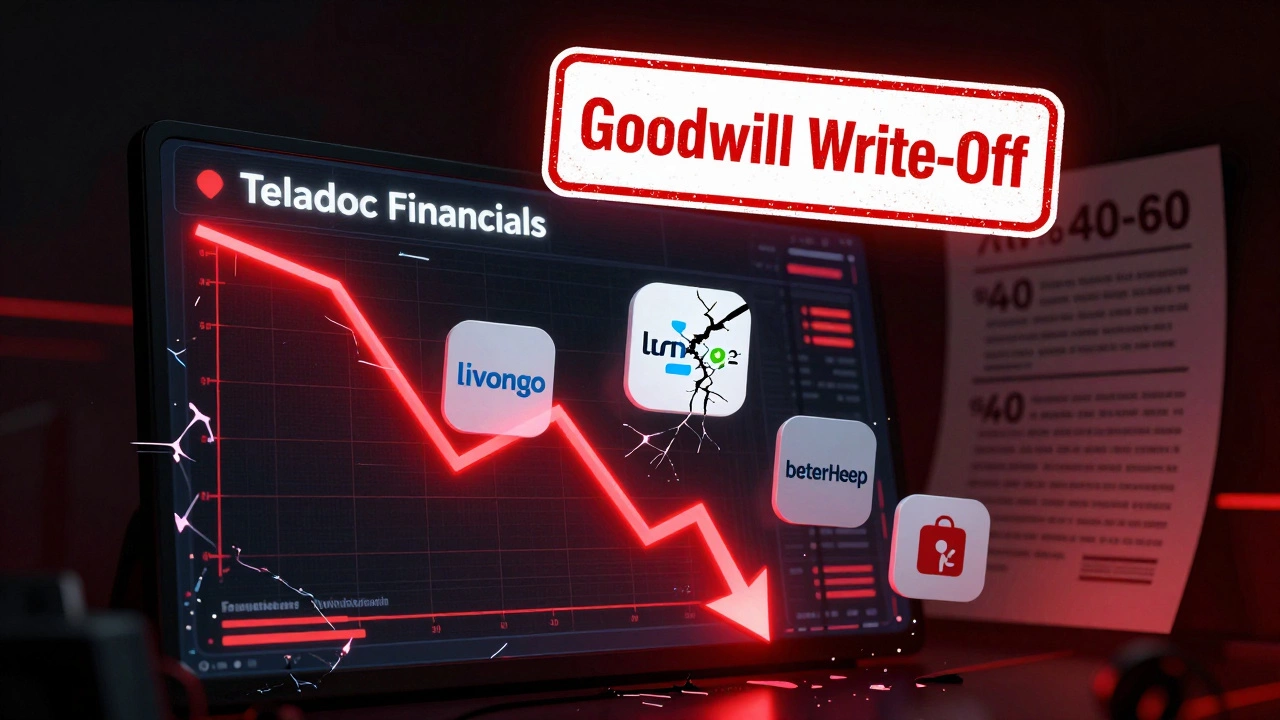
Teladoc didn’t just grow organically. It bought its way there. In 2020, it paid $1.8 billion for Livongo, a diabetes management company. Then in 2021, it spent $2.1 billion on BetterHelp, a mental health platform. Both companies were profitable on their own. But after the acquisitions, Teladoc spent hundreds of millions more trying to integrate them.
The tech systems didn’t talk to each other. The customer service teams didn’t know how to handle cross-platform issues. Patients got confused-was this a physical health visit or a therapy session? The promised synergy never came. Instead, Teladoc added $1.2 billion in goodwill on its balance sheet that’s now almost entirely written off.
Buying companies is risky. Buying companies that don’t fit your core business is even riskier. Teladoc thought it could turn into a full-service health platform. Instead, it turned into a patchwork of disconnected services with no clear path to profit.
The care is too shallow
Most Teladoc visits last 10-15 minutes. That’s enough for a sore throat or a rash. But not for chronic conditions. Patients with diabetes, heart disease, or depression need ongoing care. Teladoc’s model doesn’t support that. It’s built for quick fixes, not long-term relationships.
So what happens when a patient with high blood pressure uses Teladoc for a check-in, gets a prescription, and then goes six months without follow-up? They end up in the ER. That’s when healthcare costs spike. Teladoc doesn’t get paid for preventing those ER visits. The hospital does.
Real value in healthcare comes from keeping people out of hospitals. Teladoc isn’t structured to do that. Its revenue depends on how many visits it can push through the door-not how many problems it solves.
Competition is eating its lunch
Teladoc isn’t the only player anymore. Amazon HealthLake, Microsoft’s Nuance, and even CVS Health now offer telehealth services. And they’re doing it cheaper. Why? Because they don’t need to make money on the visits. They use telehealth as a loss leader to drive pharmacy sales or insurance sign-ups.
Amazon can afford to lose money on a doctor visit because they make it back when you buy your prescription through Amazon Pharmacy. CVS doesn’t care if you pay $10 or $0 for a virtual visit-it’s about getting you into their clinic for a flu shot or a blood test next week.
Teladoc has no such backup revenue stream. It’s all or nothing on telehealth. And right now, it’s all nothing.

Patients are getting tired
Let’s be honest: virtual visits aren’t always better. You can’t check a rash over video. You can’t feel a swollen joint. You can’t hear a wheeze without a stethoscope. Many patients feel like they’re being rushed through a system that doesn’t really care.
A 2024 survey of 12,000 U.S. telehealth users found that 48% said they’d rather see a doctor in person if they had the choice. Another 31% said they’d only use virtual care for simple issues. That leaves just 21% who trust it for anything serious.
Teladoc’s growth came from panic, not preference. Now that the pandemic is over, people are going back to clinics, urgent cares, and primary care doctors who know their history. Teladoc’s convenience is no longer enough.
What’s left to fix?
Teladoc isn’t dead. But it’s stuck. To survive, it needs to do three things:
- Stop giving away visits. Raise prices on new contracts. Let go of the ones that lose money.
- Focus on chronic care. Build real care teams-nurses, care coordinators, dietitians-that follow patients for months, not minutes.
- Partner with providers who get paid for outcomes, not visits. Work with value-based health plans that reward you for keeping people healthy.
Right now, Teladoc is a transactional service. The future of healthcare is relational. If it doesn’t shift, it won’t just keep losing money-it’ll disappear.
Is telehealth broken?
No. But Teladoc’s version of it is. Telehealth works when it’s part of a bigger system-when it connects to your primary care doctor, your pharmacy, your lab results, and your insurance data. Teladoc is still operating like a standalone app. And apps don’t fix healthcare.
Other companies are learning this. One startup in Boston, for example, connects telehealth visits directly to a patient’s electronic health record. If you talk to a doctor about high cholesterol, the system automatically flags your last lipid panel and suggests a follow-up test. That’s care. That’s value.
Teladoc hasn’t built that yet. And until it does, the losses will keep climbing.
Why is Teladoc losing money if so many people use it?
Teladoc has more users than ever, but it’s charging too little per visit. Most of its revenue comes from bulk contracts with employers and insurers that pay below cost. Each visit often loses money, and with millions of visits a year, those losses add up fast.
Did Teladoc make bad acquisitions?
Yes. The $1.8 billion purchase of Livongo and the $2.1 billion buy of BetterHelp were major missteps. Both companies were profitable on their own, but integrating them cost far more than expected. The systems didn’t work together, customers got confused, and Teladoc wrote off over $1 billion in goodwill. The acquisitions didn’t create synergy-they created debt.
Can Teladoc compete with Amazon and CVS?
Not the way it’s trying to. Amazon and CVS use telehealth to drive sales of pharmacy products or insurance plans. Teladoc doesn’t have that backup revenue. It relies entirely on visit fees, which are being driven down by competitors who can afford to lose money on care to win other business.
Is telehealth itself failing?
No. Telehealth works well for simple issues like colds, rashes, or mental health check-ins. But Teladoc’s model is too shallow. The real future of telehealth is in managing chronic conditions with ongoing care teams-not 15-minute drop-in visits. Teladoc hasn’t made that shift yet.
What would make Teladoc profitable again?
Teladoc needs to stop selling visits at a loss, focus on long-term chronic care, and partner with value-based health plans that pay for outcomes, not volume. It also needs to integrate with electronic health records so care is continuous-not fragmented. Without those changes, it won’t turn a profit.