
Medicare Part B Payment Calculator
Your Information
Important Information
Medicare Part B premium for 2025 is $174.70 per month. If your income exceeds certain limits, you may pay more through IRMAA.
Your Medicare Part B Premium
Your premium is currently being deducted from your Social Security check.
If you’re on Social Security and you’ve noticed your Medicare Part B premium isn’t being deducted from your check anymore, you’re not imagining it. But it’s not because the government stopped paying for it-it’s because something else changed. And if you’re wondering why your check looks bigger but your medical bills haven’t gone down, you’re not alone.
What Actually Happened to Medicare Part B Payments?
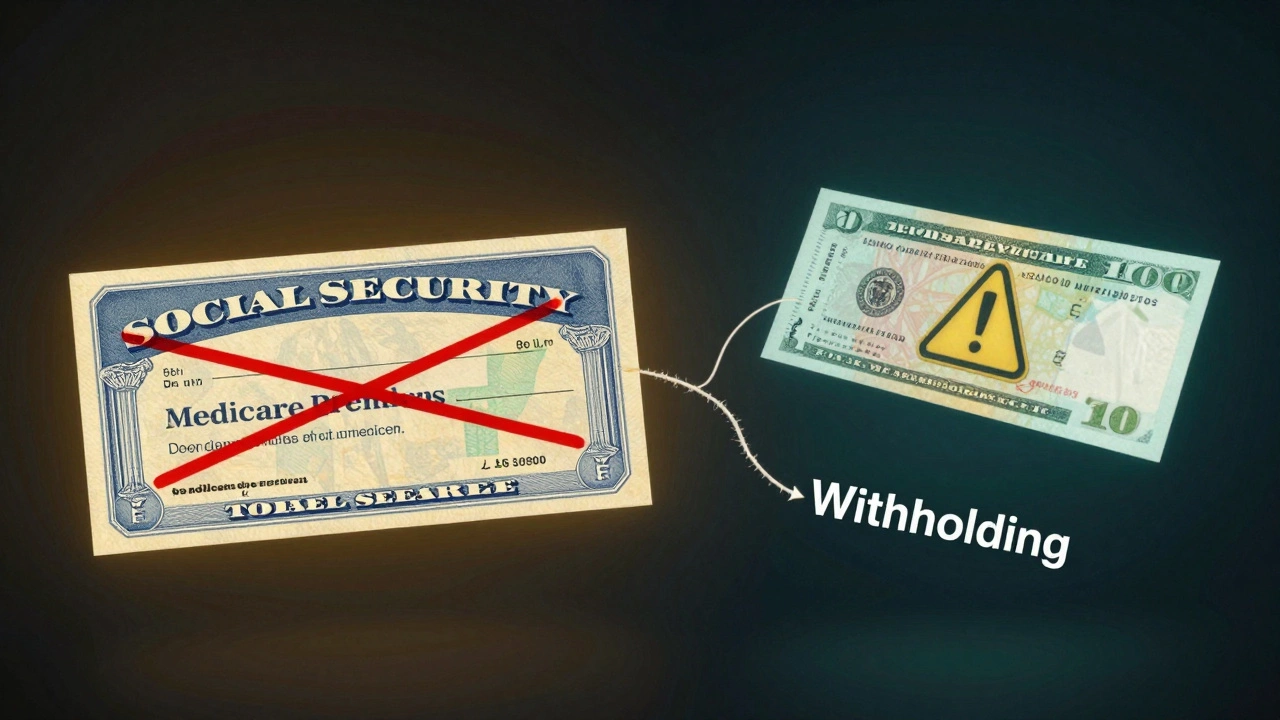
Social Security doesn’t pay for Medicare Part B. That’s a common misunderstanding. Social Security collects your Medicare Part B premium and sends it to Medicare on your behalf. The money still comes from you. It’s just easier when it’s taken out automatically.
Here’s how it works: If you get Social Security retirement or disability benefits, the government usually takes your monthly Medicare Part B premium-$174.70 in 2025-directly from your Social Security payment. That’s called withholding. But if your premium goes up and your Social Security benefit doesn’t increase enough to cover it, something called the hold harmless provision kicks in. That rule protects most people from paying more than their Social Security cost-of-living adjustment (COLA) allows.
But in 2025, something unusual happened. The COLA was only 2.5%. Meanwhile, the standard Medicare Part B premium jumped from $164.90 to $174.70. For most people, that increase was still covered by the hold harmless rule. But if you didn’t pay your premium through Social Security in the first place-maybe you’re new to Medicare, you’re paying through direct billing, or you’re a high-income enrollee-then your premium isn’t protected. And if you switched from direct billing back to Social Security withholding, the system might have reset.
Why You Might See the Premium Missing From Your Check
There are three main reasons your Social Security check no longer shows a Medicare Part B deduction:
- You’re a new enrollee. If you just signed up for Medicare in 2025, your premium hasn’t been set up for automatic withholding yet. You might be paying directly to Medicare, and Social Security hasn’t been told to start taking it out.
- Your income changed. If your modified adjusted gross income (MAGI) from two years ago (2023 tax return) was above $106,000 for individuals or $212,000 for couples, you pay an Income-Related Monthly Adjustment Amount (IRMAA). These higher premiums aren’t withheld by Social Security. You get a separate bill.
- You opted out of withholding. Some people request to pay Medicare premiums directly. Maybe you did this in the past, and now you’re confused why it stopped. You can always change it back through SSA.gov.
Let’s say you’re a retired teacher who started Medicare in January 2025. You didn’t get a Social Security check before, so you paid your Part B premium directly to Medicare. Then, in March, you started getting Social Security back pay for a delayed claim. Now, Social Security is supposed to start withholding your premium. But if the system didn’t sync up right, your check might show no deduction-because the withholding hasn’t been processed yet.
What This Means for Your Prescription Costs
This isn’t just about your check. It’s about your out-of-pocket costs. Medicare Part B covers doctor visits, lab tests, and many outpatient drugs-including high-cost injectables like those for diabetes, rheumatoid arthritis, or multiple sclerosis. If you’re paying your Part B premium directly, you’re still paying the same amount. But now you’re managing two separate payments: your Social Security check and a separate Medicare bill.
Here’s the real issue: People who pay Part B premiums directly often forget to pay them. In 2024, over 180,000 Medicare beneficiaries had their Part B coverage suspended because they missed payments. That means no coverage for your insulin, your chemotherapy, or your heart medication. And if your coverage lapses, you can be hit with a late enrollment penalty-up to 10% extra for each year you were eligible but didn’t enroll.
If you’re seeing your Part B premium disappear from your Social Security check, don’t assume it’s gone for good. It’s just moving. You might now be getting a bill in the mail. Check your MyMedicare.gov account. Look for a letter from Medicare. Call 1-800-MEDICARE. Don’t wait.
Who’s Affected Most?
The people most at risk aren’t those with high incomes-they’re those with low, fixed incomes who rely on Social Security to cover everything. If you’re on Supplemental Security Income (SSI), you’re automatically enrolled in Medicaid and don’t pay Part B premiums at all. But if you’re on regular Social Security and your income is just above the poverty line, even a $10 increase can throw off your budget.
Take Maria, 72, from Des Moines. She gets $1,420 a month from Social Security. Her rent is $750. Her groceries cost $300. Her Part B premium was $164.90. That left her $205. In 2025, her premium went up to $174.70. She still had $195. But when her prescription for Humira jumped from $50 to $120 per month, she couldn’t cover both. She stopped paying her Part B premium directly-and didn’t realize her coverage was at risk.
That’s the hidden danger. The system assumes you’re paying attention. But for many, it’s a blur of bills, dates, and letters. The government doesn’t warn you when your payment method changes. You have to notice it yourself.
What You Should Do Right Now
If you’re confused about your Medicare Part B payment, here’s what to do in order:
- Check your MyMedicare.gov account. Log in and look at your payment history. See if your premium is being billed to you directly.
- Call Social Security at 1-800-772-1213. Ask: “Is my Medicare Part B premium being withheld from my Social Security check?” They can confirm your payment method.
- Check your mail. Look for a letter from Medicare titled “Medicare Premium Bill.” If you see it, you’re being billed directly.
- Decide if you want to switch. If you’re paying directly and it’s stressful, you can switch to withholding. Call Social Security and ask them to start deducting your premium from your check. It takes 1-2 months to process.
- Enroll in Extra Help if you qualify. If your income is below $21,870 (individual) or $29,520 (couple), you may qualify for the Low-Income Subsidy (LIS), which covers your Part B premium and reduces your drug costs. Apply at SSA.gov or call 1-800-772-1213.

Why This Keeps Happening
This isn’t a glitch. It’s a design flaw. The Medicare system was built for people who had steady, predictable incomes. But today, millions of retirees are juggling part-time jobs, delayed Social Security claims, spousal benefits, and unpredictable drug costs. The system doesn’t adapt quickly.
Medicare Part B premiums are set annually by Congress, based on projected costs. In 2025, drug prices rose faster than expected. So premiums went up. But Social Security COLAs are tied to inflation, not healthcare costs. That’s why the gap keeps growing.
There’s a bill in Congress right now-the Medicare Premium Fairness Act-that would tie Part B premiums to the same inflation index as Social Security. But it’s stalled. Until then, the burden stays on you.
What Happens If You Don’t Pay?
If you miss three consecutive payments, Medicare will send you a final notice. After that, your Part B coverage is terminated. You lose access to outpatient drugs, cancer treatments, and even your doctor visits. You’ll have to re-enroll later-and pay a penalty of 10% per year you were late. That penalty lasts for life.
And if you’re on a high-cost drug like Ozempic or Enbrel, losing Part B means you pay full price-sometimes $1,000 a month. That’s more than most people’s rent.
Don’t wait for a bill to arrive. Check your status now.
Bottom Line
Social Security never paid for Medicare Part B. It just collected it for you. If you’re not seeing the deduction anymore, it’s not because the government stopped covering it-it’s because your payment method changed. And if you don’t act, you could lose your coverage and face steep penalties.
Don’t assume everything’s fine. Look at your account. Call Social Security. Know where your premium is going. Your health-and your wallet-depend on it.
Why is my Medicare Part B premium not being taken out of my Social Security check?
Your Medicare Part B premium may no longer be withheld from your Social Security check if you’re a new enrollee, your income qualifies you for IRMAA (higher premiums), or you previously opted out of withholding. Check your MyMedicare.gov account or call Social Security at 1-800-772-1213 to confirm your payment method.
Do I still have to pay my Medicare Part B premium if it’s not deducted from Social Security?
Yes. If your premium isn’t being withheld, you’ll receive a bill from Medicare. You’re still responsible for paying it on time. Missing payments can result in loss of coverage and a lifelong late enrollment penalty.
Can I switch back to having my Part B premium withheld from Social Security?
Yes. Call Social Security at 1-800-772-1213 and ask them to start withholding your Medicare Part B premium from your monthly benefit. It usually takes 1-2 months to process, so don’t wait until your bill is overdue.
What is IRMAA and how does it affect my Medicare Part B payment?
IRMAA stands for Income-Related Monthly Adjustment Amount. If your income from two years ago was above $106,000 (individual) or $212,000 (couple), you pay more than the standard Part B premium. These higher premiums are billed directly by Medicare and are not withheld from Social Security.
How do I know if I qualify for Extra Help with Medicare costs?
If your income is below $21,870 per year (individual) or $29,520 (couple), and your resources are under $15,510 (individual) or $31,020 (couple), you may qualify for Extra Help. This program pays your Part B premium and lowers your prescription drug costs. Apply at SSA.gov or call 1-800-772-1213.