
Dental Implant Eligibility Checker
This tool helps you understand if dental implants might be right for you based on medical history and lifestyle factors. It's not a medical diagnosis - always consult your dentist for personalized advice.
Not everyone is a good candidate for dental implants. Even if you’ve seen ads promising a perfect smile in just a few visits, the truth is more complicated. Dental implants are one of the most reliable ways to replace missing teeth, but they’re not a one-size-fits-all solution. In the UK, thousands of people are turned down for implants every year-not because they’re not trying hard enough, but because their health, habits, or jawbone condition make the procedure risky or likely to fail.
Your jawbone needs to be strong enough
Dental implants work by fusing with your jawbone, a process called osseointegration. If your jawbone is too thin, too soft, or has shrunk after tooth loss, the implant won’t hold. This is common in people who’ve been missing teeth for years. Without a tooth root to stimulate the bone, it gradually resorbs-like unused muscles weakening over time.
Some people think bone grafting fixes everything. It helps, but it’s not magic. If you’ve lost more than half your jawbone height or width, grafting becomes complex, expensive, and still carries a higher failure rate. A dentist might suggest a CT scan to measure bone density. If your bone density is below 500 Hounsfield Units (a standard dental imaging measurement), implants are unlikely to succeed without major reconstruction.
Uncontrolled diabetes is a major red flag
If you have type 1 or type 2 diabetes and your HbA1c levels are above 8%, you’re at significantly higher risk of implant failure. High blood sugar slows healing, weakens your immune response, and increases infection risk. Studies show diabetic patients with poor glucose control have up to a 30% higher chance of implant failure compared to those with levels under 7%.
It’s not about being diabetic-it’s about whether your condition is managed. People who monitor their blood sugar, follow their diet, and take medication as prescribed can still get implants successfully. But if you skip check-ups, don’t test regularly, or rely only on medication without lifestyle changes, your dentist will likely advise against implants until your health improves.
Smoking cuts your chances in half
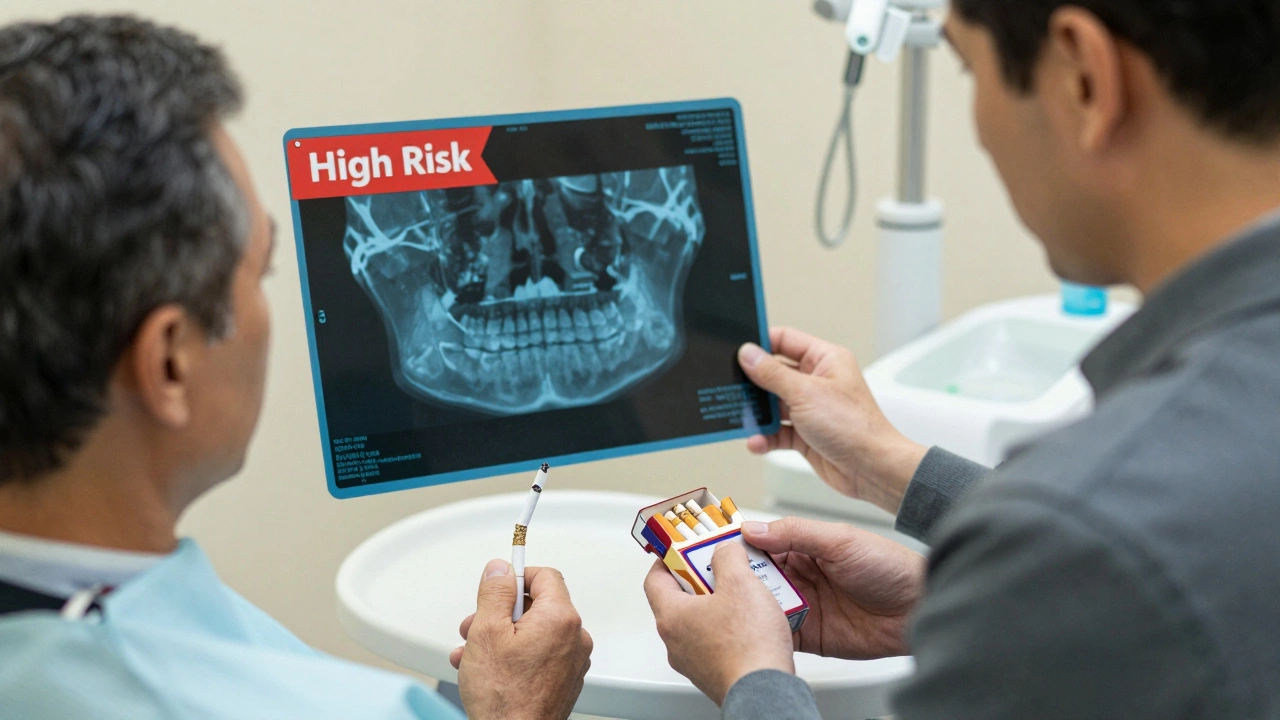
Smoking is one of the biggest predictors of dental implant failure. Nicotine reduces blood flow to your gums and jawbone, starving the area of oxygen and nutrients needed for healing. The chemicals in tobacco also weaken your immune system, making it harder to fight off bacteria that cause infection.
Research from the British Dental Journal found that smokers are more than twice as likely to lose an implant within five years compared to non-smokers. Heavy smokers (more than 10 cigarettes a day) have failure rates as high as 20%. Even occasional smoking or vaping increases risk. Some clinics in the UK won’t even schedule an implant consultation unless you’ve quit for at least eight weeks-and they’ll ask for proof.
Severe gum disease must be treated first
If you have active periodontitis (advanced gum disease), getting an implant is like building a house on a sinking foundation. The same bacteria that destroyed your natural teeth will attack the implant. Even if the implant is placed, it can develop peri-implantitis-a condition similar to gum disease but around the implant. Once it starts, it’s hard to stop and often leads to implant loss.
Before even considering an implant, you need a full periodontal treatment plan. This means deep cleanings, possible antibiotics, and strict oral hygiene routines. If your gums are still bleeding when you brush, your dentist will say no. You must prove you can maintain healthy gums before they’ll risk placing an implant.
Medications can block healing
Some prescription drugs make dental implants dangerous. Bisphosphonates-used for osteoporosis and certain cancers-can cause a rare but serious condition called medication-related osteonecrosis of the jaw (MRONJ). This causes bone tissue in the jaw to die, often after dental surgery. People taking IV bisphosphonates (like zoledronic acid) are at highest risk. Even oral versions like alendronate (Fosamax) can increase risk after prolonged use.
If you’re on these drugs, your dentist will need to know. In some cases, they’ll delay treatment or refer you to a specialist. Other medications like blood thinners (warfarin, apixaban) or immunosuppressants (after organ transplants) also require careful planning. You might need to adjust doses or timing, but never stop them without consulting your doctor.
Bruxism and clenching can break implants
People who grind or clench their teeth at night put extreme pressure on their implants. Unlike natural teeth, implants don’t have a periodontal ligament to absorb shock. That means all the force goes straight into the bone. Over time, this can cause the implant to loosen, the crown to crack, or the bone around it to break down.
Many people don’t even know they grind their teeth. Signs include morning jaw pain, flattened tooth surfaces, or a partner complaining about nighttime noise. If you have this habit, your dentist will likely recommend a night guard before considering implants. Even then, implants in people with severe bruxism still have higher failure rates. In some cases, they’ll suggest alternatives like bridges or dentures instead.
Young patients under 18 rarely qualify
Implants aren’t recommended for teenagers or children whose jaws are still growing. The implant is fixed in place and won’t move as the jaw develops. This can lead to misalignment, gaps, or the implant appearing sunken as the surrounding bone grows. In most cases, dentists wait until growth plates close-usually around 18 for girls and 21 for boys.
There are exceptions. If a teenager lost a tooth due to trauma and growth is nearly complete, some specialists may proceed with careful monitoring. But for most, temporary solutions like removable dentures or bonded bridges are preferred until adulthood.
Mental health and self-care matter more than you think
Dental implants aren’t a one-time fix. They require daily brushing, flossing, and regular cleanings. If you struggle with anxiety, depression, dementia, or severe OCD, maintaining oral hygiene can be a challenge. Some people simply forget, others feel overwhelmed by routine care.
Studies show that patients with untreated mental health conditions have higher implant failure rates-not because the procedure fails, but because they don’t follow aftercare instructions. If you’re working with a therapist, taking medication, or have support from family, your dentist may still proceed. But if your daily routine is unstable, they’ll suggest alternatives that require less maintenance.
What are the alternatives if you’re not a candidate?
Just because you can’t get implants doesn’t mean you’re stuck with gaps or ill-fitting dentures. Options include:
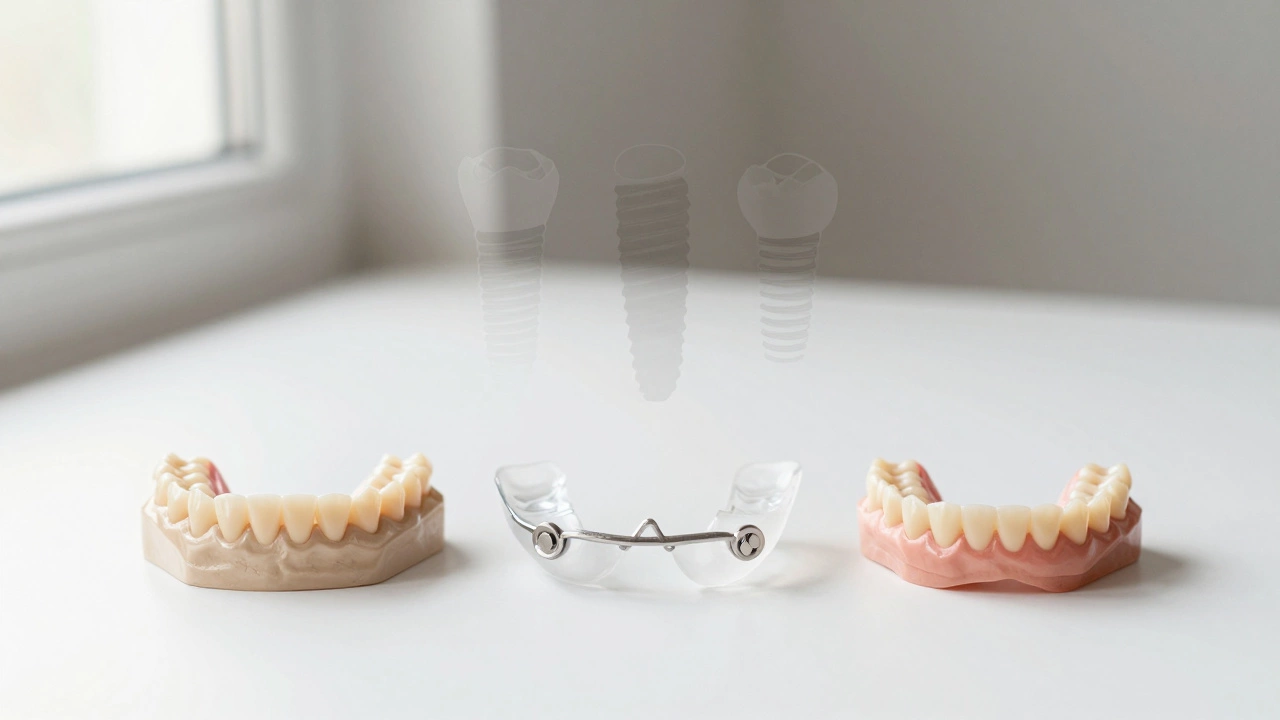
- Fixed bridges: Crowns on adjacent teeth support a false tooth. Less invasive than implants, but requires grinding down healthy teeth.
- Removable partial dentures: Metal or acrylic frames with artificial teeth. Easy to clean and adjust, but can feel bulky.
- Complete dentures: For multiple or full-arch tooth loss. Modern versions use implants for retention, but if you can’t handle even two implants, traditional ones still work.
- Hybrid solutions: Some clinics offer implant-supported overdentures using only 2-4 implants per jaw. Lower cost, lower risk, and still more stable than regular dentures.
Your dentist should show you all options-not just push the most expensive one. Ask about longevity, cost over 10 years, maintenance effort, and how each affects your ability to eat and speak.
What should you do next?
If you’re unsure whether you qualify, start with a consultation. A good dentist will:
- Take a full medical history-including medications, smoking habits, and chronic conditions
- Perform a 3D scan to check your jawbone density
- Assess your gum health with probing and X-rays
- Discuss your daily oral hygiene routine
- Offer alternatives if implants aren’t right for you
Don’t be afraid to ask for a second opinion. Many clinics in the UK offer free initial consultations. Use this time to ask: "What’s the biggest risk for me?" and "What happens if this fails?" The answers will tell you more than any brochure ever could.
Can I get dental implants if I have osteoporosis?
Yes, but it depends. If you’re taking oral bisphosphonates like alendronate for osteoporosis, implants are usually safe if your treatment has been under two years. If you’ve been on them longer or take them intravenously, your risk of bone death (MRONJ) increases. Your dentist will need to coordinate with your doctor and may delay the procedure or suggest alternatives.
Is vaping as bad as smoking for dental implants?
Yes, vaping carries similar risks. While it doesn’t produce tar, the nicotine and chemicals in e-liquids still reduce blood flow to gums and impair healing. Studies show vapers have nearly the same implant failure rates as smokers. Quitting vaping for at least 8 weeks before surgery improves outcomes significantly.
Can I get implants if I’ve had radiation therapy to the head or neck?
It’s possible, but high-risk. Radiation damages blood vessels in the jawbone, making healing difficult and infection more likely. Implants in irradiated areas have failure rates as high as 40%. Many specialists avoid implants here unless absolutely necessary. Hyperbaric oxygen therapy is sometimes used before surgery to improve outcomes, but it’s not widely available in the UK.
Do I need to stop alcohol before getting dental implants?
Heavy alcohol use (more than 3 drinks a day) can interfere with healing and increase bleeding. You don’t need to quit entirely, but most dentists recommend cutting back for at least two weeks before and after surgery. Alcohol also dehydrates you and weakens your immune system, both of which hurt recovery.
What if I’m too afraid of surgery to get implants?
Fear is valid. Many people avoid implants because of anxiety, not medical reasons. Sedation dentistry-like oral sedatives or IV sedation-is widely available in the UK and makes the procedure feel like a short nap. Talk to your dentist about anxiety options. There’s no shame in choosing a non-surgical alternative if implants feel too overwhelming.
Final thoughts
Dental implants aren’t a magic fix. They’re a medical procedure with real risks-and not everyone should get them. The goal isn’t to say "no" to implants. It’s to say "not yet," or "not here," or "try something else." The best outcome isn’t always an implant. Sometimes, it’s a well-fitting denture that lets you eat comfortably, or a bridge that lasts 15 years without surgery.
What matters most is choosing the option that fits your body, your lifestyle, and your long-term health-not the one that looks the most impressive on a website.