
European Plastic Surgery Decision Tool
Your Requirements
Recommendation
You want a facelift that looks natural. You want a nose job that actually fixes your breathing. But you also don’t want to pay New York prices or risk flying halfway across the world to a clinic with no oversight. So, where do you go? The short answer isn't just one country. It depends on whether you value strict regulation, low cost, or specific surgical expertise above all else.
In 2026, the landscape of plastic surgery in Europe is split between three heavyweights: the United Kingdom for safety and legal recourse, Turkey for volume and affordability, and Hungary for specialized aesthetic techniques. Each offers a different trade-off. If you pick the wrong one, you could end up with botched results and zero legal protection. Let’s break down exactly which country wins in which category so you can make a choice that keeps you safe and satisfied.
The Safety First Choice: The United Kingdom
If your top priority is not waking up from anesthesia in a disaster zone, the UK is your safest bet. The British system is built on accountability. In the UK, any surgeon performing cosmetic procedures must be registered with the General Medical Council (GMC). This isn't a suggestion; it's the law. Before you even step into a consultation room, you can check their license online to see if they have any strikes against them.
Why does this matter? Because in many other countries, anyone with a scalpel can call themselves a "cosmetic surgeon." In the UK, the title "Plastic Surgeon" is protected. To use it, you must have completed rigorous specialist training. This means when you book a breast augmentation in London, you are dealing with a doctor who has spent years mastering anatomy, not someone who took a weekend course.
| Feature | United Kingdom | Turkey | Hungary |
|---|---|---|---|
| Surgeon Licensing Body | General Medical Council (GMC) | Turkish Medical Association | National Chamber of Doctors |
| Legal Recourse | Strong NHS/Private Courts | Limited for foreigners | Moderate/EU Laws |
| Avg. Rhinoplasty Cost | £4,500 - £7,000 | $2,500 - $4,000 | €3,000 - €5,000 |
| Hospital Standards | CQC Regulated | JCI Accredited (Varies) | High EU Standards |
The catch? Price. The UK is expensive. You are paying for the insurance, the staff ratios, and the legal framework. But if something goes wrong, you have a clear path to compensation. In 2025, the number of patients seeking redress for poor cosmetic outcomes rose by 12% in the UK, largely because patients knew their rights. That peace of mind has a price tag.
The Volume King: Turkey
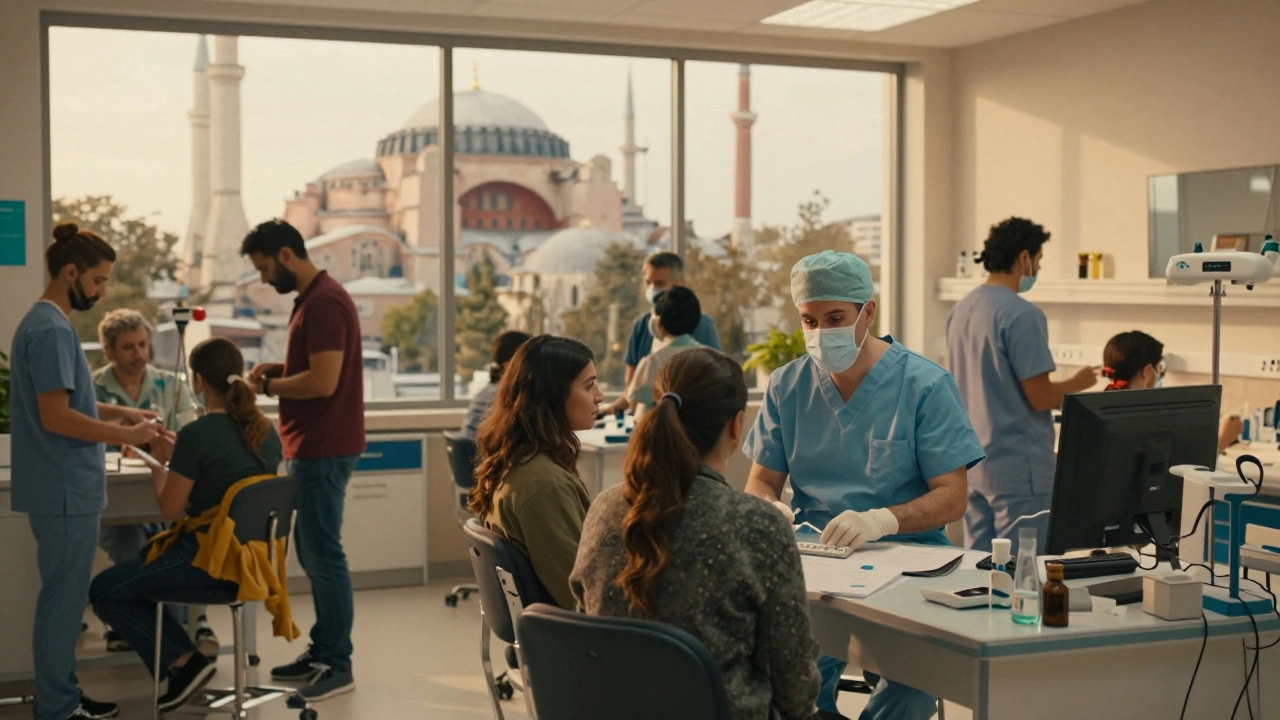
Turkey has become the default destination for budget-conscious travelers. Istanbul alone handles more than half a million medical tourists annually. The city has an entire infrastructure built around you: airport transfers, recovery hotels, and translators who speak "medical English." It is seamless, efficient, and incredibly cheap.
But here is the reality check that most clinics won't tell you: high volume doesn't always mean high quality. Many Turkish clinics operate like assembly lines. You might meet your surgeon for ten minutes before being rushed into prep. The goal is often to fit as many surgeries as possible into a single day. While there are excellent, board-certified surgeons in Turkey, the barrier to entry is lower than in the UK. You can find doctors who perform hundreds of hair transplants but have limited experience with complex facial reconstruction.
If you choose Turkey, you must vet aggressively. Look for surgeons who are members of the International Society of Aesthetic Plastic Surgery (ISAPS), not just local associations. Check if the hospital has Joint Commission International (JCI) accreditation. Without these checks, you are gambling. The savings are real-you can save up to 60% on a tummy tuck-but the margin for error is thinner.
The Hidden Gem: Hungary
While everyone talks about the UK and Turkey, Hungary has quietly established itself as the center for refined aesthetic work, particularly in Budapest. Hungarian surgeons have a reputation for precision and artistic detail. This isn't about mass production; it's about craftsmanship. The country has a long history of medical education, dating back to Semmelweis University, which remains one of Europe's top medical schools.
Hungary sits in the middle ground. Prices are higher than Turkey but significantly lower than the UK or Switzerland. For example, a liposuction procedure might cost €2,500 in Budapest compared to £4,000 in London. More importantly, as an EU member state, Hungary adheres to strict EU medical device regulations and patient data laws. If you live in Europe, traveling to Hungary feels less like "medical tourism" and more like visiting a neighbor. There is no currency exchange shock, and legal protections under EU law are stronger than those available to non-EU citizens in Turkey.
Budapest is also less overwhelming than Istanbul. The clinics are smaller, more boutique, and often offer personalized care plans. If you are looking for subtle refinements-like a non-surgical facelift or a delicate rhinoplasty-Hungarian surgeons are known for avoiding the "overdone" look that plagues some high-volume markets.
How to Vet a Surgeon Anywhere in Europe
No matter which country you pick, the surgeon matters more than the location. A great surgeon in a mediocre clinic will still give you good results. A mediocre surgeon in a five-star hotel will ruin your face. Here is how to cut through the marketing:
- Check the Board Certification: Don't trust the clinic's website. Go directly to the national medical registry. In the UK, search the GMC register. In Germany, check the Bundesärztekammer. In France, verify with the Conseil National de l'Ordre des Médecins.
- Demand Before-and-After Photos of REAL Patients: Social media is full of filtered images and stolen photos. Ask for unedited photos taken in the same lighting. Look for consistency in healing. If every nose looks identical, that’s a red flag. Natural faces have asymmetry.
- Ask About Complication Rates: Every surgeon has complications. If they say they never have issues, they are lying. Ask specifically: "What is your rate of revision surgeries?" A honest surgeon will discuss their protocols for managing bleeding, infection, or poor scarring.
- Verify Hospital Privileges: Does the surgeon operate in a public hospital? Public hospitals only grant privileges to surgeons who meet high standards of competence. If a surgeon only operates in private, standalone clinics, dig deeper.

The Cost of Cutting Corners
Let’s talk about the numbers. Why is a breast augmentation €800 in Bulgaria and £5,000 in the UK? It’s not just rent. It’s the cost of safety. In the UK, you are paying for:
- Anesthetists who are fully qualified specialists, not assistants.
- Nurses with a 1:1 ratio during recovery.
- Implants that are tracked via unique serial numbers to prevent counterfeits.
- Follow-up care that includes monitoring for capsular contracture or implant rupture years later.
In cheaper destinations, these costs are often hidden or eliminated. The anesthetist might be a general practitioner. The follow-up might end after two weeks. When you fly home, who monitors your healing? If you develop an infection three weeks later, you’re stuck paying for emergency care in your home country. Factor in flight costs, accommodation, and potential revision surgery, and the "cheap" option often becomes the most expensive mistake of your life.
Final Verdict: Where Should You Go?
If you have the budget and want zero risk, stay in the United Kingdom is the gold standard for regulatory safety and legal protection in cosmetic surgery.. The GMC registration ensures you are in capable hands, and the CQC-regulated hospitals provide a sterile, monitored environment. It is the right choice for complex procedures like facial reconstruction or large-scale body contouring where complications can be life-threatening.
If you are on a tight budget and undergoing a lower-risk procedure like a hair transplant or minor skin resurfacing, Turkey is a viable option for high-volume, low-cost cosmetic procedures provided rigorous vetting is performed. Just ensure you spend time researching individual surgeons rather than booking through aggregator sites. Avoid packages that rush you into surgery within hours of arrival.
If you want a balance of artistry, EU legal protection, and moderate pricing, look at Hungary is a leading destination for precise, aesthetically focused plastic surgery with strong EU regulatory compliance. Budapest offers sophisticated care without the premium price tag of Western Europe. It is ideal for rhinoplasty, eyelid surgery, and breast enhancements where aesthetic nuance is critical.
Your body is not a project to be outsourced to the lowest bidder. Do the homework. Check the licenses. Talk to the surgeon, not the sales agent. And remember: the best result is the one you can live with safely, not just the one that fits your bank account.
Is plastic surgery in Turkey safe for UK residents?
It can be, but it carries higher risks than staying in the UK. While many Turkish clinics are JCI-accredited and employ skilled surgeons, the regulatory oversight is less stringent than the UK's GMC system. Legal recourse for malpractice is difficult for foreign patients. You must thoroughly vet the surgeon's credentials and ensure the facility meets international safety standards.
Which European country has the cheapest plastic surgery?
Turkey generally offers the lowest prices, followed by Eastern European countries like Poland, Czech Republic, and Hungary. However, "cheapest" should not be the primary deciding factor. Low costs can sometimes reflect lower-quality materials, less experienced staff, or hidden fees for post-operative care.
Do I need to stay in Europe after my surgery?
Yes, absolutely. Most surgeons recommend staying for at least 7-14 days after major procedures. This allows for suture removal, initial wound checks, and management of any immediate complications like bleeding or infection. Flying too soon increases the risk of deep vein thrombosis (DVT) and can disrupt healing.
How do I verify a plastic surgeon's qualifications in Europe?
In the UK, check the General Medical Council (GMC) register. In the EU, look for membership in ISAPS (International Society of Aesthetic Plastic Surgery) or ASPS (American Society of Plastic Surgeons), which have global recognition. Always ask for proof of board certification in plastic surgery, not just general medicine.
What are the risks of medical tourism for cosmetic surgery?
Risks include lack of continuity of care, difficulty obtaining medical records, language barriers leading to misunderstandings, limited legal recourse for malpractice, and complications arising from travel shortly after surgery. Additionally, counterfeit implants or medications are more common in regions with lax regulatory enforcement.