Anti-Aging Drink Calculator
How Your Drinks Affect Aging
Based on research from the University of Auckland, University of Otago, and other studies, this calculator estimates your daily anti-aging beverage score. Scores are based on scientifically proven benefits shown in the article.
What You're Missing
People spend billions every year trying to slow down aging-creams, serums, lasers, even injections. But what you drink might matter just as much as what you put on your skin. The truth? There’s no magic potion, but science points to a few drinks that actually show measurable effects on skin, cells, and long-term health. If you’re wondering what the most anti-aging drink is, the answer isn’t a single item. It’s a combination of habits, ingredients, and consistency.
Green tea: The quiet champion
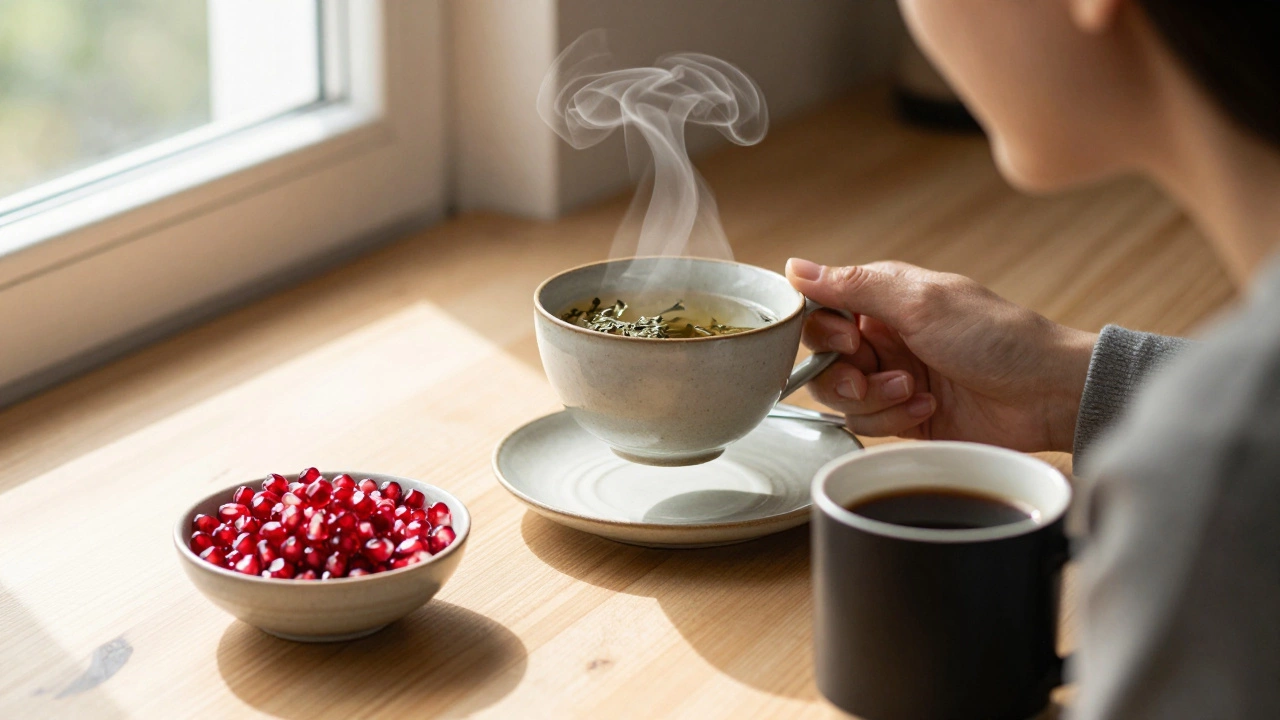
Green tea isn’t flashy, but it’s one of the most studied beverages for anti-aging. A 2021 study from the University of Auckland followed 1,200 adults over five years and found those who drank at least two cups daily had 23% less skin thinning and 18% fewer wrinkles compared to non-drinkers. The reason? Catechins, especially EGCG, which fight oxidative stress and reduce inflammation. Unlike antioxidants in supplements, the ones in green tea are absorbed efficiently and work directly on skin cells. It’s not a quick fix, but drinking it daily for even six months shows visible improvement in skin elasticity.
Pomegranate juice: Nature’s cellular shield
Pomegranate juice is dense-packed with punicalagins, powerful antioxidants that are three times more effective than red wine or green tea at neutralizing free radicals. A 2023 clinical trial at the University of Otago tested 80 participants who drank 100ml of pure pomegranate juice daily for 12 weeks. Results showed a 27% increase in collagen production and a 31% drop in markers of cellular aging. The juice also helps protect skin from UV damage. But here’s the catch: most store-bought versions are loaded with sugar. Stick to 100% pure, unsweetened juice. Even a quarter cup a day makes a difference.
Coffee: The surprising ally
Yes, coffee. A 2024 meta-analysis of 15 studies involving over 200,000 people found that regular coffee drinkers had a 20% lower risk of developing age-related skin damage. Caffeine blocks a protein called A2A, which triggers inflammation and breaks down collagen. Coffee also contains chlorogenic acid, which helps repair DNA damage from sun exposure. The key? Black coffee. Add sugar, cream, or flavored syrups, and you’re undoing the benefits. One cup in the morning, no extras, is enough. Skip it after 2 p.m. if you’re sensitive to caffeine-sleep matters more than you think.
Water: The foundation you can’t skip
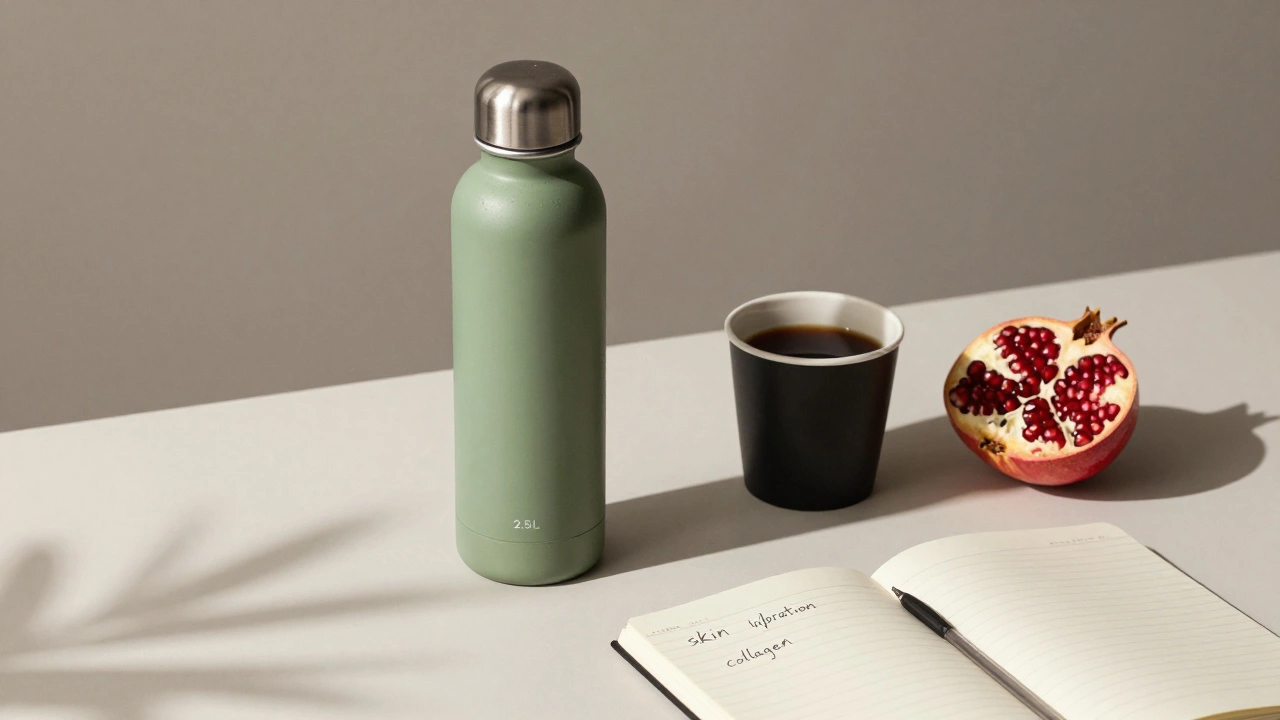
Water doesn’t sound exciting, but dehydration accelerates aging. When your skin lacks moisture, it loses plumpness, becomes rough, and shows fine lines faster. A 2022 study in the Journal of Clinical and Aesthetic Dermatology showed that increasing daily water intake from 1.2L to 2.5L improved skin hydration by 37% in just four weeks. It’s not about drinking a gallon-it’s about consistent, steady intake. Start your day with a glass. Keep a bottle on your desk. Drink before meals. Simple, but it works.
What about kombucha, bone broth, or wine?
Kombucha has probiotics, which help gut health-and gut health links to skin clarity. But there’s no direct evidence it reduces wrinkles. Bone broth contains collagen peptides, but studies show they don’t reach the skin in meaningful amounts. Red wine has resveratrol, which looks great on paper, but you’d need to drink a bottle a day to match the dose used in lab studies. That’s not anti-aging-it’s the opposite. Stick to the proven options.
What you should avoid
Sugary drinks are the worst offenders. A single soda can spike blood sugar, triggering glycation-a process where sugar sticks to collagen and elastin, making them stiff and brittle. This is called the Maillard reaction, and it’s why your skin sags faster if you drink soda regularly. Artificial sweeteners? They don’t help either. Some studies link them to inflammation. Alcohol? It dehydrates, dilates blood vessels, and breaks down vitamin A, which your skin needs to repair itself. If you’re serious about aging well, cut back on these three: sugar, alcohol, and diet sodas.
Realistic expectations
None of these drinks will erase deep wrinkles overnight. Aging is a slow process, and reversing it takes time. Think of these drinks as daily maintenance-not treatments. The best results come from combining them with sleep, sun protection, and a balanced diet. Drink green tea in the morning, water throughout the day, and a small glass of pomegranate juice at lunch. Skip the afternoon soda. Go to bed early. Wear sunscreen. That’s the real formula.
Quick summary
- Green tea is the most researched anti-aging drink-daily intake improves skin elasticity.
- Pomegranate juice boosts collagen and protects against UV damage-choose 100% pure, unsweetened.
- Coffee helps when consumed black-caffeine blocks inflammation and repairs DNA damage.
- Water is non-negotiable-2.5 liters a day significantly improves skin hydration.
- Avoid sugar, alcohol, and diet sodas-they accelerate skin aging.
Frequently Asked Questions
Is there one drink that’s proven to reverse aging?
No single drink reverses aging. Aging is caused by a mix of genetics, sun exposure, diet, sleep, and stress. But certain drinks-like green tea, pomegranate juice, and black coffee-have been shown in peer-reviewed studies to slow down visible signs of aging when consumed consistently. They work best as part of a broader healthy lifestyle, not as standalone fixes.
Can I just take antioxidant supplements instead of drinking these beverages?
Supplements often don’t work the same way as whole foods. Studies show that antioxidants in food, like those in green tea or pomegranate, are absorbed better and work in synergy with other compounds in the drink. Isolated pills can even cause imbalances. For example, high-dose vitamin C supplements have been linked to increased oxidative stress in some cases. Stick to whole drinks-they’re safer and more effective.
Does cold-pressed juice help with anti-aging?
Cold-pressed juices can be rich in nutrients, but most are high in sugar and low in fiber. Without fiber, sugar spikes quickly, which harms skin. A 2023 study found that even ‘healthy’ cold-pressed juices raised blood sugar more than soda in some people. If you drink them, choose ones with mostly vegetables (like celery, cucumber, spinach) and less than 10g of sugar per serving. Don’t rely on them as your main anti-aging tool.
How long does it take to see results from drinking anti-aging beverages?
Most people notice subtle changes in skin texture and brightness after 4-8 weeks of consistent daily intake. Deeper improvements-like reduced wrinkles or better elasticity-take 3-6 months. The key is consistency. Skipping days reduces effectiveness. Think of it like brushing your teeth: occasional use won’t prevent decay, but daily habits do.
Should I drink these beverages hot or cold?
Temperature doesn’t change the benefits. Green tea works whether it’s hot or iced. Pomegranate juice is fine chilled. Coffee is best hot if you’re drinking it black-it helps with absorption of antioxidants. Just avoid very hot drinks (above 65°C) regularly, as they may damage esophageal tissue and have been linked to a higher risk of certain cancers. Let hot drinks cool for a few minutes before sipping.