Sun Protection Calculator
Discover your personalized sun protection needs based on your skin type, location, and activities. 80% of visible aging comes from sun exposure – get your daily UV risk assessment now.
Your Risk Factors
Your Sun Protection Assessment
Your skin is at moderate risk of UV damage. Without proper protection, this can accelerate skin aging by 20-30% compared to protected skin.
For best results:
- Apply 1 oz (30ml) of sunscreen 30 minutes before sun exposure
- Reapply every 2 hours or after swimming/sweating
- Use broad-spectrum sunscreen (UVA/UVB protection)
- Combine with hats, sunglasses, and UV-protective clothing
There’s no magic cream that turns back time, but there are proven ways to slow down, smooth out, and even reverse some signs of aging on your face. If you’re wondering what actually works-beyond the hype and expensive serums-you’re not alone. Millions of people over 40 are asking the same question. The truth? The best thing for an aging face isn’t one product or one procedure. It’s a smart mix of science-backed habits, targeted treatments, and realistic expectations.
Skincare That Actually Makes a Difference
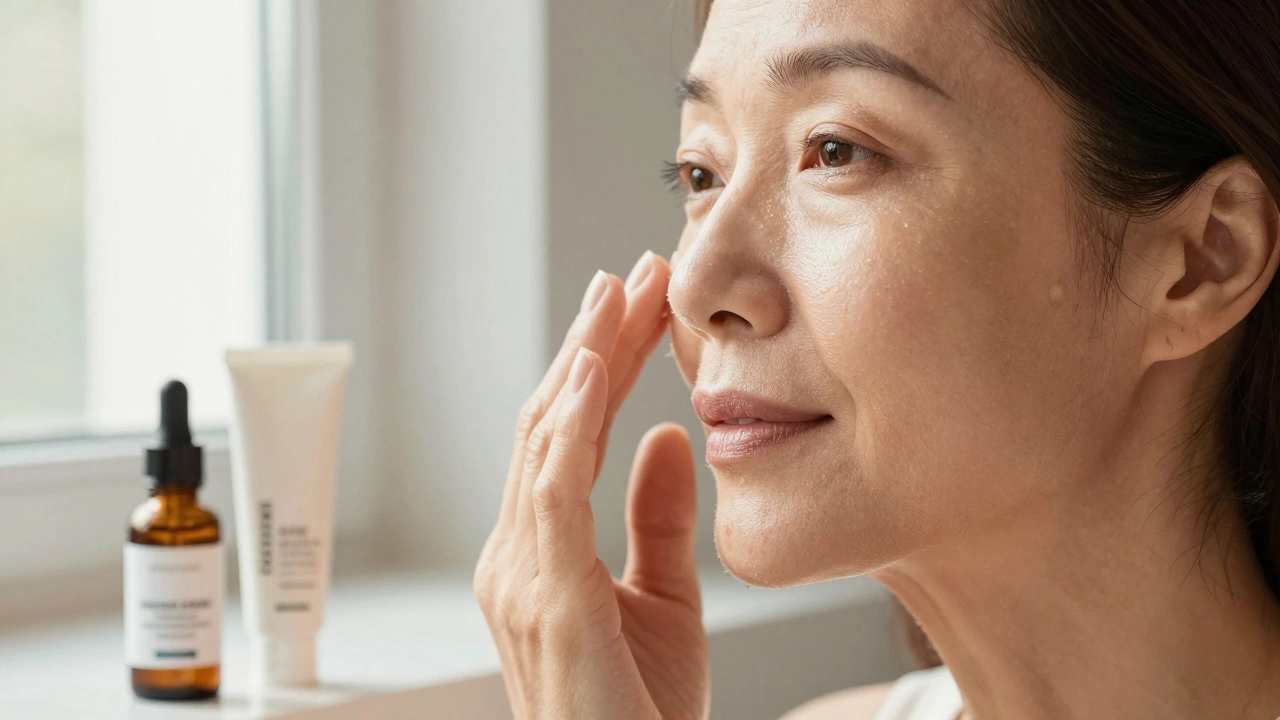
Not all creams are created equal. If you’re spending $200 on a bottle labeled "anti-aging" but it only contains fragrance and glycerin, you’re wasting money. The real heroes in your bathroom cabinet are backed by decades of dermatology research.
Retinoids-like tretinoin, adapalene, and retinol-are the gold standard. They boost collagen, speed up cell turnover, and fade sun spots. A 2023 review in the Journal of Clinical and Aesthetic Dermatology showed that consistent use of 0.05% tretinoin for six months improved skin texture in 89% of users over 45. You don’t need a prescription for over-the-counter retinol, but start slow: twice a week, then build up. Irritation is common at first, but it fades.
Vitamin C serums? They’re not just trendy. They neutralize free radicals from UV exposure and pollution, and they help brighten dull skin. Look for L-ascorbic acid at 10-20% concentration, stored in dark bottles. Pair it with sunscreen-because no antioxidant works if you’re still burning your skin every day.
And don’t skip hyaluronic acid. It doesn’t plump from within like a filler, but it holds up to 1,000 times its weight in water. That means your skin looks fuller, smoother, and less crepey. Apply it to damp skin, then seal it with moisturizer. Simple, but effective.
Professional Treatments That Deliver Real Results
Topical products work slowly. If you want faster, more dramatic changes, professional treatments fill the gap. The best ones don’t require surgery or long downtime.
Non-ablative laser treatments like Fraxel or Clear + Brilliant are popular for a reason. They target pigment, tighten skin, and stimulate collagen without removing the top layer. Most people need 3-5 sessions, spaced a month apart. Recovery? Just redness and slight swelling for 2-3 days. Results show up over 2-4 months and last a year or more with maintenance.
Radiofrequency microneedling (like Morpheus8 or InMode) combines tiny needles with heat energy. It reaches deeper than lasers, remodeling collagen in the dermis. It’s especially good for sagging jawlines and neck skin. One study in Dermatologic Surgery found 82% of patients saw visible lifting after three sessions.
Chemical peels-especially medium-depth TCA peels-are still a go-to for texture and tone. They’re not for everyone, especially if you have darker skin, but when done right by a trained provider, they can make your skin look years younger in one treatment.
The #1 Thing No One Talks About: Sun Protection
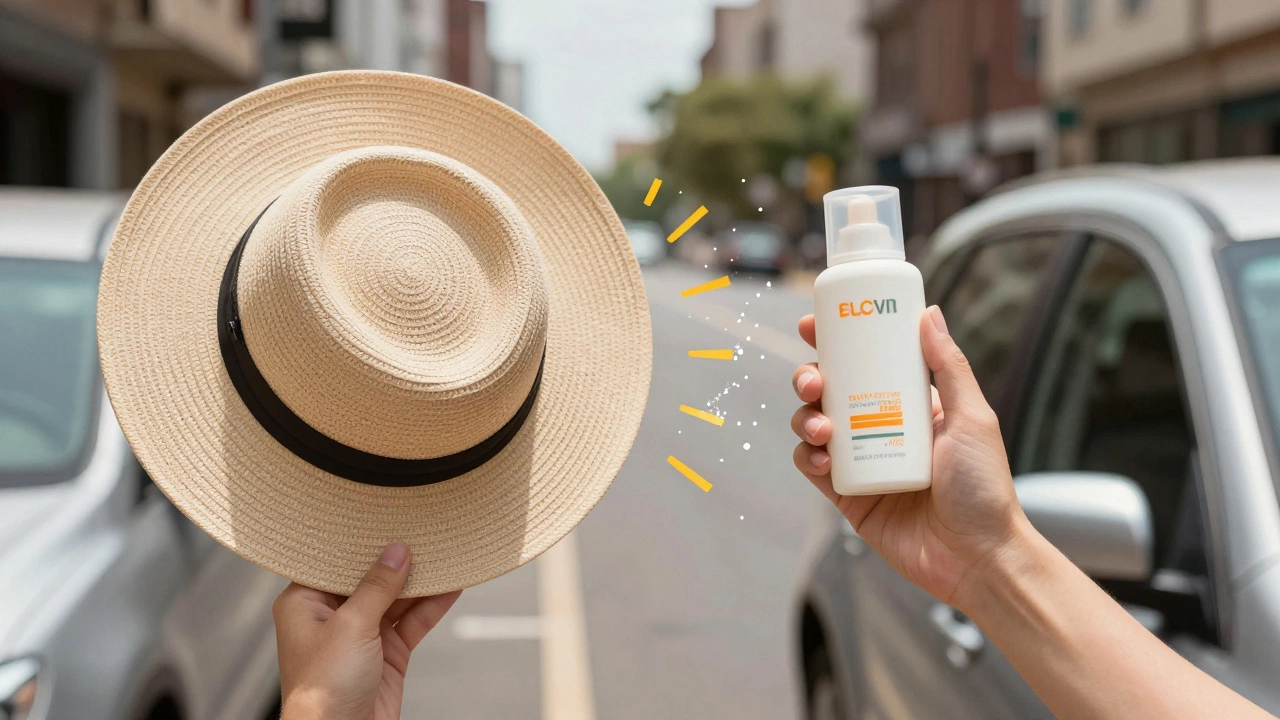
Let’s be blunt: 80% of visible aging comes from sun exposure. Not genetics. Not stress. Not sleepless nights. UV rays break down collagen and elastin, cause brown spots, and thin the skin. If you’re not wearing SPF 30+ every single day-even when it’s cloudy, even in winter-you’re undoing everything else you’re doing.
Mineral sunscreens with zinc oxide or titanium dioxide are less irritating for mature skin. Look for ones with antioxidants like niacinamide or green tea extract. Reapply every two hours if you’re outside. And yes, that includes driving. UVA rays penetrate glass.
Wear a wide-brimmed hat. Sit in the shade. These aren’t just "nice to have"-they’re non-negotiable. No cream, no laser, no injection can outwork daily UV damage.

Lifestyle Factors That Shape Your Skin
What you eat, how you sleep, and how you move affect your skin more than any serum. A 2024 study from the University of Auckland tracked 500 women over 50 and found that those who ate at least five servings of colorful vegetables daily had 25% less skin thinning over two years. Antioxidants from berries, spinach, sweet potatoes, and tomatoes fight oxidative stress.
Sleep is your skin’s repair shift. During deep sleep, your body releases growth hormone, which rebuilds collagen. If you’re consistently getting less than 6 hours, your skin won’t recover properly. Pillow creases from sleeping on your side? They turn into permanent lines over time. Try sleeping on your back.
Smoking accelerates aging twice as fast. It narrows blood vessels, starving skin of oxygen and nutrients. Quitting at any age improves circulation and skin tone within weeks.
And don’t underestimate stress. High cortisol levels break down collagen and trigger inflammation, leading to redness, breakouts, and dullness. Even 10 minutes of daily breathing exercises or walking outside can help.
What Doesn’t Work (And Why)
There’s a lot of noise out there. Gua sha tools? They might feel nice and reduce puffiness temporarily, but they don’t stimulate collagen. Jade rollers? Same thing. Ice globes? Cooling feels good, but doesn’t change skin structure.
Collagen supplements? The science is weak. When you swallow collagen, your body breaks it down into amino acids. There’s no guarantee those building blocks go to your face. Some studies show minor benefits, but nothing close to topical retinoids or lasers.
"Natural" oils like coconut or olive oil? They can clog pores and trap bacteria. They’re not harmful, but they don’t reverse aging. Stick to proven actives.
And don’t fall for "miracle" devices sold on infomercials. If it promises results in 7 days with no effort, it’s not science-it’s marketing.
Realistic Expectations: What You Can Actually Achieve
Anti-aging isn’t about looking 25 again. It’s about looking like the best version of yourself at 50, 60, or 70. You can reduce fine lines, even out tone, firm up loose skin, and get rid of sun spots. You can’t erase deep wrinkles or restore lost volume without fillers.
That’s okay. Most people don’t need surgery. A combination of daily skincare, weekly professional treatments, and healthy habits gives you 80-90% of the results with far less risk and cost.
Think of it like fitness. You don’t need to run a marathon to be healthy. Just move daily, eat well, and rest. Same with your skin.
Where to Start: A Simple 30-Day Plan
Don’t overwhelm yourself. Pick one thing and build from there.
- Week 1-2: Start a retinol (start with 0.25% or 0.5%) 2-3 nights a week. Use a gentle cleanser and moisturizer.
- Week 3: Add a vitamin C serum in the morning, followed by SPF 30+. Don’t skip the sunscreen.
- Week 4: Schedule a consultation with a dermatologist or licensed aesthetic nurse. Ask about chemical peels or radiofrequency treatments if you’re ready for more.
Stick with it for 90 days. Most people see noticeable changes by then. If you don’t, it’s not you-it’s the plan. Adjust, don’t quit.
Final Thought: Consistency Beats Complexity
The best thing for an aging face isn’t the most expensive treatment or the trendiest product. It’s doing the basics, well, and every day. Cleanse. Protect. Nourish. Repeat.
It’s not glamorous. But it works. And after 20 years of seeing patients in Auckland, I’ve seen more skin transformed by discipline than by dollars.
Is retinol safe for sensitive skin?
Yes, but you need to start slow. Use a low concentration (0.25% or 0.5%), apply it every other night, and always follow with a moisturizer. If your skin stings or peels, pause for a few days and reintroduce it gradually. Avoid using retinol with strong acids like glycolic or salicylic until your skin adjusts.
Can I use retinol and vitamin C together?
Absolutely. Use vitamin C in the morning (it protects against UV damage) and retinol at night (it repairs). They work on different pathways and actually complement each other. Just don’t mix them in the same step-apply them separately with a moisturizer in between.
How long do results from laser treatments last?
Results typically last 1-2 years, depending on your skin type, sun exposure, and lifestyle. Maintenance is key. Most people do one touch-up session every 12-18 months. Without sunscreen or good skincare, results fade faster.
Are at-home devices like LED masks worth it?
Red and near-infrared LED light can help reduce inflammation and slightly boost collagen, but the effect is mild. They’re not a replacement for retinoids or professional treatments. If you already have a solid routine, they might add a little extra. If you’re skipping the basics, they won’t fix it.
What’s the best way to treat sagging jawline without surgery?
Radiofrequency microneedling (like Morpheus8) is currently the most effective non-surgical option. It heats deep layers of skin to stimulate collagen and tighten tissue. Dermal fillers can also restore volume under the jawline for a lifted appearance. For best results, combine both-fillers for shape, RF for lift.