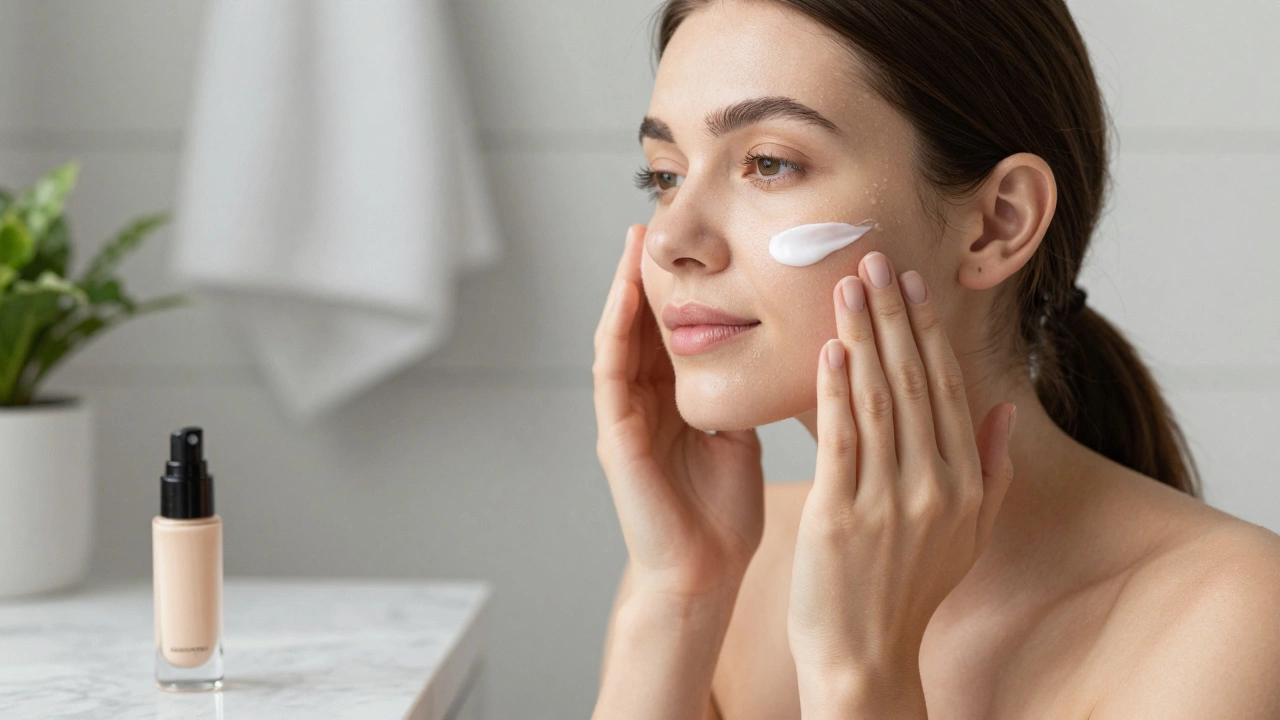
Ever put on your makeup only to have it slide off by noon? Or notice your foundation settling into fine lines right after you walk out the door? More often than not, the problem isn’t the product-it’s the order. And the biggest mistake people make? Skipping the right sequence between moisturizer and primer.
Why the order matters more than you think
Moisturizer and primer do two very different jobs. One hydrates. The other prepares. Mixing them up is like putting socks on before underwear-it doesn’t break anything, but it makes everything worse. Your skin needs water first. That’s where moisturizer comes in. It’s not just about feeling soft-it’s about creating a healthy, balanced base. Without enough hydration, your skin pulls moisture from the surface, which makes makeup cling unevenly, look cakey, or crack around the nose and mouth. A dry patch under your foundation? That’s your skin screaming for water. Primer, on the other hand, isn’t meant to hydrate. It’s a sealant. A smoothing agent. A barrier between your skin and your makeup. It fills in pores, controls oil, and helps your foundation stick better. But if you slap primer on dry, flaky skin, it won’t glide on. It’ll cling to dead skin cells and make everything look worse. The rule is simple: moisturizer always comes before primer. Always. There are no exceptions.What happens if you skip this step?
You might think, “I have oily skin-I don’t need moisturizer.” Or, “My primer has hyaluronic acid, so it’s doing double duty.” That’s a myth. Oily skin still needs hydration. In fact, skipping moisturizer often makes oily skin produce even more oil because it’s trying to compensate for dryness. That’s why you see shiny T-zones by 11 a.m. even when you’ve used a matte primer. And primers with “hydrating” ingredients? They’re not enough. A typical primer has less than 1% hyaluronic acid. A good moisturizer has 1-2%. That’s a huge difference. Primer is a finisher, not a nourisher. Real-world example: A 2024 study from the Journal of Cosmetic Dermatology tracked 120 women using the same foundation over four weeks. Half applied moisturizer first. Half skipped it. The group that moisturized saw 68% less foundation patchiness and 52% longer wear time. The difference wasn’t subtle-it was obvious.How to get the sequence right
Here’s the exact order you should follow, no exceptions:- Wash your face with a gentle cleanser
- Apply toner (optional, but helpful if you use one)
- Apply your moisturizer
- Wait 5-10 minutes
- Apply primer
- Apply foundation and the rest of your makeup
What kind of moisturizer should you use?
Not all moisturizers work the same with primer. You don’t want something too heavy, but you also don’t want something too light. For oily skin: Look for gel or water-based formulas with ingredients like hyaluronic acid, glycerin, or niacinamide. Avoid anything labeled “rich” or “intensive.” For dry skin: Cream-based moisturizers with ceramides or squalane work best. Skip anything with alcohol-it’ll strip your skin and make primer look flaky. For combination skin: Use a lightweight moisturizer on your T-zone and a slightly richer one on your cheeks. Or use one product designed for combination skin, like those labeled “oil-free but hydrating.” A few trusted formulas that work well: CeraVe Daily Moisturizing Lotion, Neutrogena Hydro Boost Water Gel, or La Roche-Posay Toleriane Double Repair Face Moisturizer. These are affordable, widely available, and don’t interfere with primer.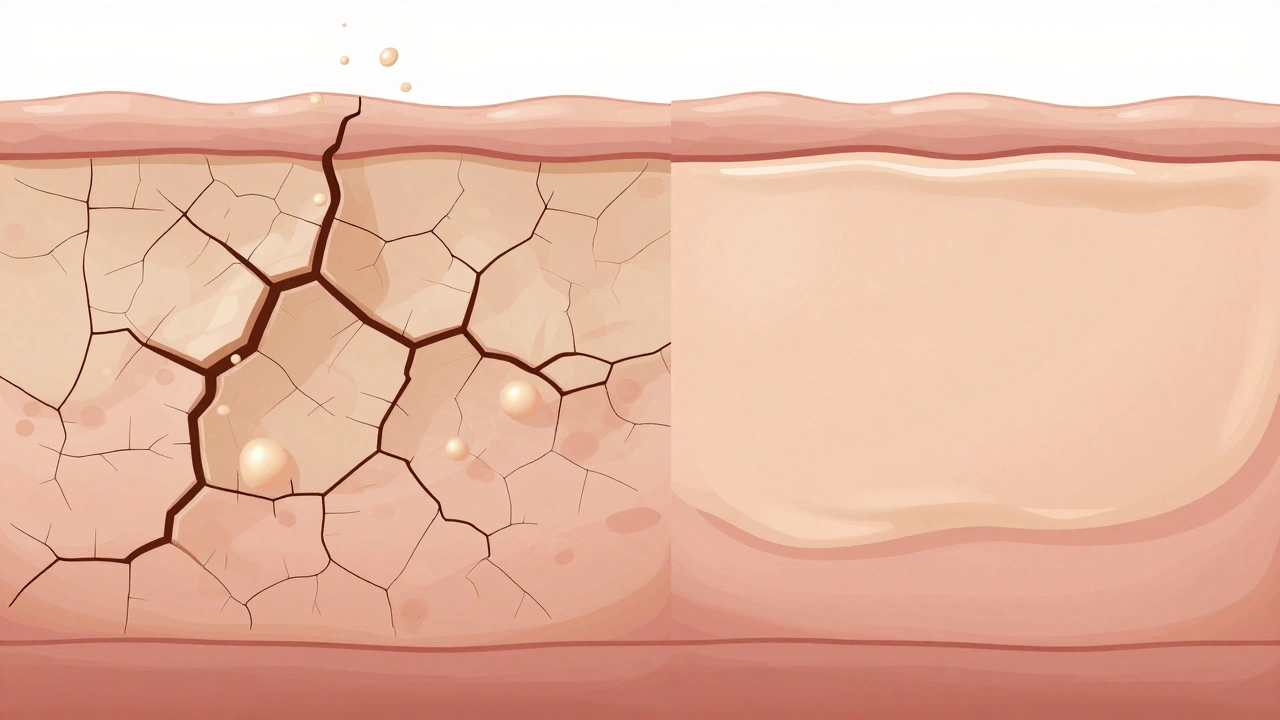
What about primer types?
Primer isn’t one-size-fits-all. Your moisturizer choice should match your primer. - Hydrating primer (like Smashbox Photo Finish Hydrating): Best with lightweight moisturizers. Use if your skin is dry but you want a dewy finish. - Matte primer (like Benefit POREfessional): Works best with oil-control moisturizers. Avoid heavy creams here-they’ll fight the primer. - Pore-filling primer (like Fenty Beauty Pro Filt’r Instant Retouch): Needs a smooth, even base. Skip thick moisturizers-they’ll clog the pores you’re trying to hide. - Color-correcting primer (green for redness, purple for dullness): Make sure your moisturizer doesn’t leave a residue. Otherwise, the color won’t blend properly. The key? Let your skin breathe. If your moisturizer is absorbed, your primer will bond to your skin-not float on top.Common mistakes and how to fix them
- Mistake: Using a facial oil as your moisturizer before primer. Fix: Oils don’t hydrate-they seal. Use them after moisturizer, not instead of it.
- Mistake: Applying primer right after toner. Fix: Toner is prep. Moisturizer is the real hydration step. Don’t skip it.
- Mistake: Using a moisturizer with SPF and thinking that’s enough. Fix: SPF is protection, not hydration. You still need a separate moisturizer unless it’s a 2-in-1 product specifically designed for makeup prep.
- Mistake: Reapplying primer over foundation. Fix: If your makeup fades, blot and reapply foundation-not primer. Primer should only go on bare skin.
What about makeup primers that claim to replace moisturizer?
Some brands market primers as “all-in-one” products. They say things like “no moisturizer needed.” Don’t believe them. Those claims are marketing, not science. Even primers with “hydrating” claims are formulated to sit on top of skin, not penetrate it. They’re designed to smooth, not nourish. Think of them like a paint primer on a wall-you still need to prep the surface properly. If you’re short on time, use a moisturizer that dries fast. Or try a hydrating mist right after your moisturizer to speed up absorption. But never skip the moisturizer.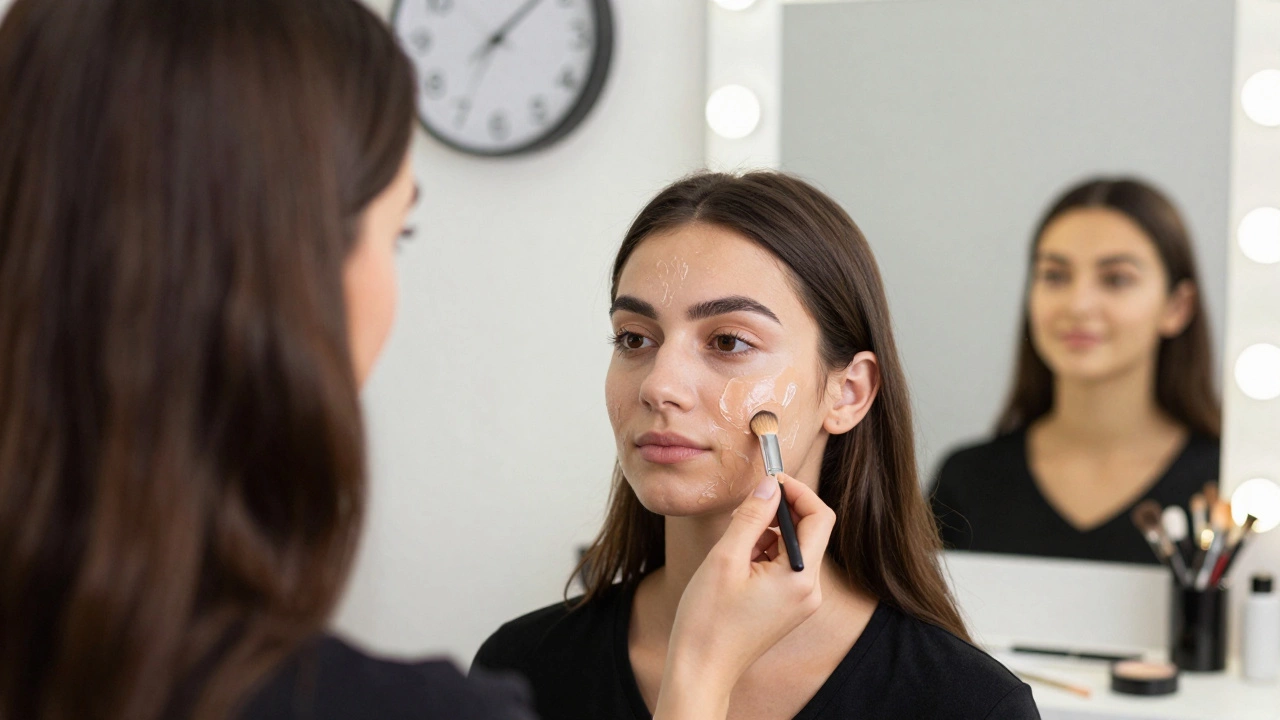
Real-life tip from a makeup artist in Auckland
A local makeup artist who works with bridal clients says: “I’ve seen women spend $200 on foundation and primer, then wonder why it looks terrible. Nine times out of ten, it’s because they didn’t moisturize properly. Your skin is the canvas. You wouldn’t paint on a dusty wall, would you?” She keeps a small bottle of hyaluronic acid serum on her tray for clients with dry skin. She applies it right after moisturizer, waits two minutes, then primes. That extra step adds 30% more wear time.What about at night?
At night, you don’t need primer. Skip it. Your skin repairs itself while you sleep. Use your moisturizer-and maybe a treatment serum or oil-but leave primer in your makeup bag. Primer is for daytime wear only. It’s not skincare. It’s a makeup tool.Final rule: Moisturizer first. Always.
There’s no shortcut. No hack. No “it works for me” exception that lasts beyond a few hours. If you want your makeup to look smooth, last longer, and not settle into lines, moisturizer comes first. Always. It’s not glamorous. It’s not trendy. But it’s the single most effective thing you can do to make your makeup look better. Do it every morning. Even on days you’re just running to the store. Your skin-and your foundation-will thank you.Can I use a moisturizer with SPF instead of a separate moisturizer?
Yes, but only if it’s formulated as a daily moisturizer with SPF, not just a sunscreen. Many SPF products are designed to sit on the skin as protection, not to hydrate. Look for labels that say “hydrating moisturizer with SPF 30” or “daily moisturizer with broad-spectrum protection.” Avoid products that feel thick, greasy, or leave a white cast-they’re meant for sun protection, not makeup prep.
How long should I wait after moisturizer before applying primer?
Wait 5 to 10 minutes. This gives your skin time to fully absorb the product. If you apply primer too soon, it won’t bond properly and can cause pilling or a sticky finish. You’ll know it’s ready when your skin feels smooth and no longer tacky to the touch.
Is primer necessary if I have good skin?
Not always, but it helps. Even if your skin is clear and even, primer smooths texture, controls shine, and extends wear. If you’re going for a natural look, you can skip it-but you’ll still need moisturizer. Primer is optional. Moisturizer is not.
Can I use serum before moisturizer?
Yes. Serums go on after cleansing and before moisturizer. They’re lightweight and penetrate deeper. Think of it as: cleanser → serum → moisturizer → primer → makeup. This layering ensures active ingredients get absorbed before you lock everything in with moisturizer.
Why does my primer pill when I apply foundation?
Pilling usually happens when moisturizer hasn’t absorbed fully, or you’re using incompatible products. Try waiting longer after moisturizer, or switch to a silicone-free primer. Also, avoid layering too many products with silicones-like a silicone-based moisturizer under a silicone primer. They can repel each other.
If you’ve been putting primer on before moisturizer, stop. Right now. Your skin deserves better. And your makeup will thank you.