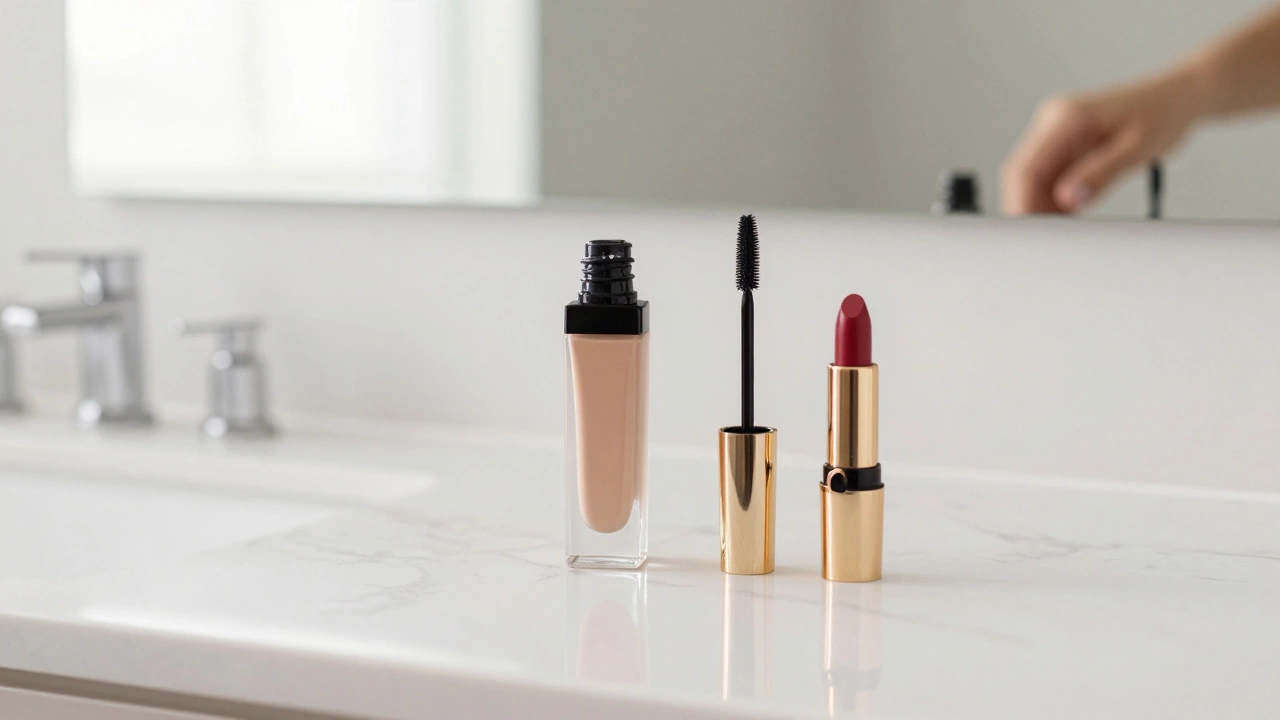
Cosmetics Knowledge Quiz
When people talk about cosmetics, they’re usually thinking of the stuff you put on your face or body to change how you look - not to treat a medical condition, but to enhance, cover, or highlight. It’s everyday stuff: the lipstick you grab before leaving the house, the foundation that evens out your skin tone, the mascara that makes your eyes pop. These aren’t luxury items for special occasions anymore. For most of us, cosmetics are part of the morning routine, just like brushing your teeth.
Foundation: The Base Layer
Foundation is one of the most common cosmetics you’ll find in a makeup bag. It’s designed to create an even skin tone, blur imperfections, and give your skin a smooth, uniform look. Modern foundations come in liquid, cream, powder, and even stick forms. Brands like Fenty Beauty, Estée Lauder, and Maybelline offer dozens of shades to match every skin tone - something that wasn’t always the case. A good foundation doesn’t just cover; it should feel light, last through the day, and not clog pores. If you’ve ever worn foundation that looked cakey or turned orange by noon, you know it’s not all the same. The key is matching it to your neck, not just your face, and choosing one with ingredients that suit your skin type - oily, dry, or sensitive.
Mascara: The Eye Enhancer
Mascara is probably the most universally used cosmetic across cultures and age groups. It’s simple: a wand coated in pigment that coats your lashes to make them look longer, thicker, or darker. Even people who skip eyeliner or blush often reach for mascara. The formula matters more than you think. Some mascaras are water-resistant for workouts or rainy days. Others are designed to volumize without clumping. And then there are the ones that promise to grow lashes - those usually contain peptides or plant extracts, though results vary. Popular options like L’Oréal Voluminous, Benefit They’re Real!, and Too Faced Better Than Sex have built loyal followings because they deliver on their promises. You don’t need to spend a fortune, but you do need to replace it every three months. Old mascara can harbor bacteria and lead to eye infections.
Lipstick: The Statement Piece
Lipstick is more than color - it’s confidence. A red lip can make you feel powerful. A nude shade can look polished without drawing attention. A glossy pink can feel playful. Lipsticks come in matte, satin, cream, liquid, and long-wear formulas. The ingredients have changed a lot too. Older lipsticks used heavy waxes and synthetic dyes. Today, many brands - like Glossier, Ilia, and RMS Beauty - use nourishing oils like jojoba, shea butter, and vitamin E. That means your lips don’t just look good; they feel better, too. And with the rise of clean beauty, more people are checking labels for parabens, phthalates, and synthetic fragrances. It’s not just about looking good anymore - it’s about what’s on your lips, literally.
Why These Three?
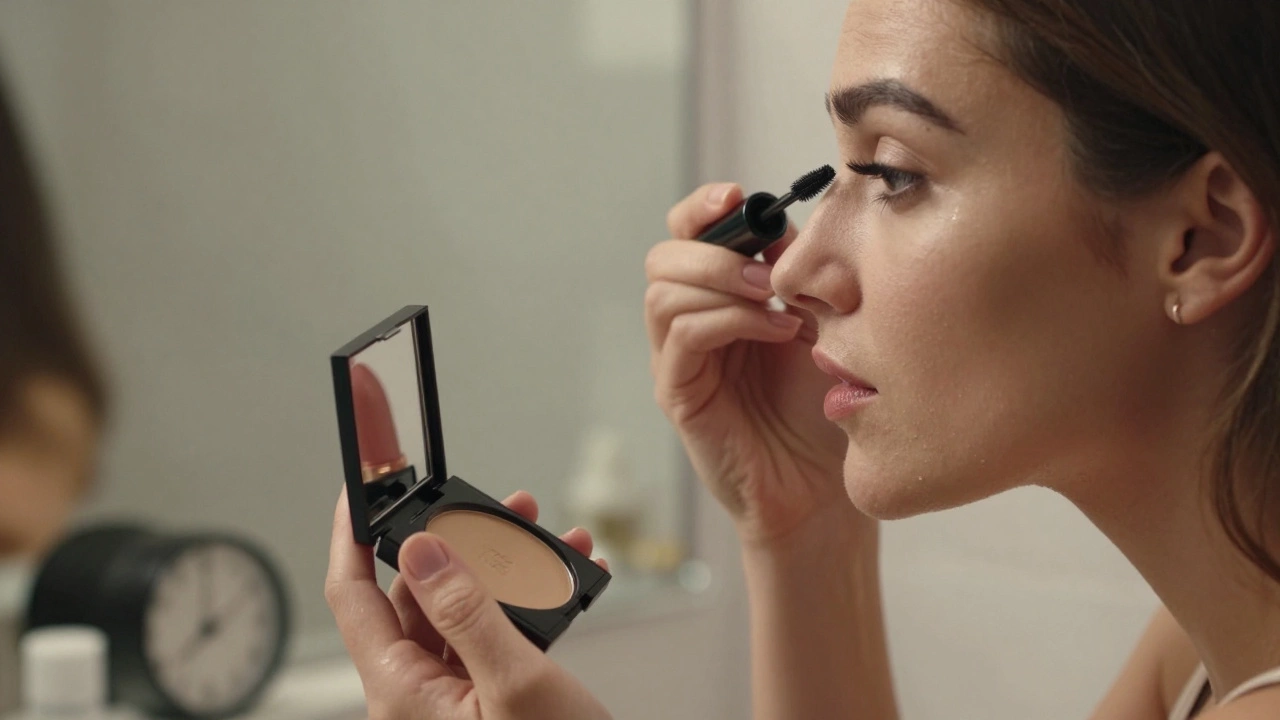
Foundation, mascara, and lipstick are the most basic, most used cosmetics in the world. They’re the trio that transforms a bare face into a finished look. You can wear one, two, or all three - and still be wearing cosmetics. They’re also the most tested, the most researched, and the most regulated. Governments like the FDA in the U.S. and the Therapeutic Goods Administration in Australia require safety testing before these products hit shelves. That doesn’t mean they’re perfect - some still contain trace amounts of heavy metals or allergens - but the standards are higher now than ever.
These three products also show how cosmetics have evolved from being seen as ‘paint’ to being part of self-care. People aren’t just buying color anymore. They’re buying performance, safety, and skin health. That’s why you’ll find moisturizing foundations, lash-conditioning mascaras, and lipsticks with SPF. The line between skincare and cosmetics is blurring - and that’s a good thing.
What’s Not a Cosmetic?
It’s easy to get confused. Sunscreen? It’s a drug if it claims to prevent skin cancer. Acne treatments with benzoyl peroxide? Also drugs. Anti-aging serums with retinol? Those are cosmetics only if they don’t claim to treat wrinkles - just improve appearance. The difference matters because cosmetics are regulated differently than drugs. If a product says it ‘treats’ or ‘cures,’ it’s not a cosmetic anymore. That’s why brands say ‘reduces the look of fine lines’ instead of ‘erases wrinkles.’
Common Myths About Cosmetics
- Myth: Expensive cosmetics work better. Truth: Many drugstore brands use the same labs and ingredients as luxury ones. It’s often packaging and marketing that cost more.
- Myth: Natural means safer. Truth: Poison ivy is natural. Some plant extracts can irritate skin just as much as synthetics. Always patch test.
- Myth: You need to change products every few months. Truth: Unless your skin changes (due to age, hormones, climate), stick with what works.
How to Choose Your Own Cosmetics
- Know your skin type - oily, dry, combination, or sensitive.
- Look for non-comedogenic labels if you’re prone to breakouts.
- Test shades in natural light, not under store bulbs.
- Start with one product at a time. Don’t overhaul your whole routine at once.
- Check expiration dates. Mascara: 3 months. Liquid foundation: 6-12 months. Lipstick: 1-2 years.
Cosmetics aren’t magic. They don’t change who you are. But they can change how you feel - and that’s powerful enough.
What are the three most common types of cosmetics?
The three most common types of cosmetics are foundation, mascara, and lipstick. These are used by millions daily to even skin tone, enhance eyes, and add color to lips. They’re the foundation of most makeup routines and are available in countless formulas to suit different skin types and preferences.
Is lipstick considered a cosmetic?
Yes, lipstick is classified as a cosmetic because it’s used to enhance appearance by adding color or shine to the lips. It doesn’t claim to treat or prevent medical conditions, so it falls under cosmetic regulations, not drug regulations. Many modern lipsticks also include moisturizing ingredients like shea butter or vitamin E, blending skincare benefits with color.
Can cosmetics be harmful?
Most cosmetics are safe when used as directed, but some can cause irritation, allergies, or infections. Old or contaminated products - especially mascara and liquid foundation - can harbor bacteria. Ingredients like parabens, phthalates, or synthetic fragrances may trigger reactions in sensitive skin. Always check expiration dates, avoid sharing products, and patch test new items on your wrist or jawline before full use.
What’s the difference between skincare and cosmetics?
Skincare products are meant to improve skin health - things like cleansers, toners, and serums that hydrate, exfoliate, or treat acne. Cosmetics are meant to alter appearance - foundation, lipstick, blush. Some products blur the line, like moisturizers with SPF or tinted serums. The legal difference? Skincare can make health claims (e.g., ‘reduces wrinkles’), but only if it’s registered as a drug. Cosmetics can only say they ‘improve appearance.’
Do I need to buy expensive brands for good cosmetics?
No. Many affordable brands like Maybelline, L’Oréal, and NYX use the same manufacturers and ingredients as high-end brands. The price difference often comes from packaging, advertising, and brand reputation - not performance. You can find excellent foundation, mascara, and lipstick under $20 that perform just as well as $50 versions. Read reviews, check ingredient lists, and test samples before buying.