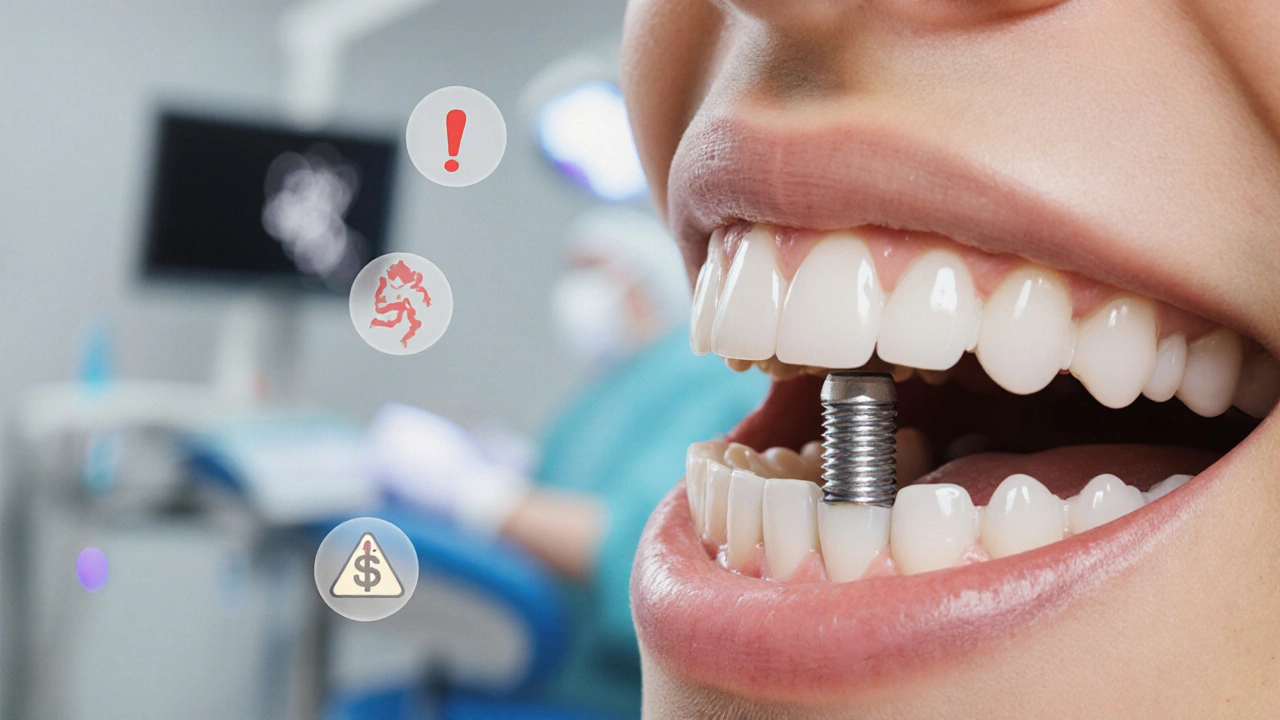
Dental Implant Drawbacks
When evaluating Dental Implant Drawbacks, the potential downsides and risks associated with placing titanium posts into the jawbone to replace missing teeth. Also known as implant complications, this topic matters to anyone weighing permanent tooth replacement against other options.
One of the most talked‑about concerns is Bone Loss, the gradual resorption of jawbone around the implant that can affect stability and aesthetics. If the bone doesn’t integrate properly, the implant may loosen, requiring additional surgery. This risk is higher for smokers or patients with osteoporosis, and it directly influences the long‑term success of the restoration.
Another common issue is Peri‑Implantitis, an inflammatory condition where the gum tissue around the implant becomes infected, leading to bone loss and possible implant failure. Maintaining strict oral hygiene and scheduling regular dental check‑ups are the best ways to keep this problem at bay, but it still adds to the overall maintenance burden.
Cost is a third major factor. Implant Cost, the total expense including surgery, the implant fixture, abutment, crown, and follow‑up care, can run several thousand pounds per tooth. When you add possible retreatments or corrective procedures, the financial commitment can outpace the initial estimate, especially for those without comprehensive insurance coverage.
Beyond these individual drawbacks, the surgical skill required for a successful placement can’t be ignored. A less experienced practitioner may increase the chance of nerve damage, sinus perforation, or improper angulation, all of which translate into pain, additional appointments, and higher costs. Choosing a qualified specialist with a solid track record is essential to mitigate these procedural risks.
Key Concerns to Watch
When you line up the pros and cons, think about the lifespan of the implant versus the need for future adjustments. Implants are marketed as a lifetime solution, but reality shows a 10‑15 year average before complications surface. The need for periodic professional cleaning, potential screw loosening, and occasional crown replacement adds recurring responsibilities that many patients overlook.
Alternative treatments also deserve a look. Options like removable partial dentures, bridgework, or newer ceramic implant materials may offer lower risk profiles or reduced costs. While they might lack the permanence some seek, they can provide satisfactory function and aesthetics without the invasive surgery or long‑term maintenance that traditional titanium implants require.
Patient suitability is another puzzle piece. Age, bone density, medical history, and lifestyle habits all shape the likelihood of success. For example, diabetic patients or those undergoing radiation therapy for head‑and‑neck cancers face higher infection rates and slower healing, making implants a less attractive choice.
All these factors—bone health, infection risk, expense, surgical expertise, and personal circumstances—interact to shape the overall picture. Understanding each element helps you decide whether a dental implant truly fits your needs or if another solution would serve you better.
Below you’ll find a curated collection of articles that dive deeper into each of these areas, offering real‑world examples, expert tips, and practical guidance so you can make an informed decision about your smile.
Dental Implant Downsides: Risks, Costs & Recovery Issues
Explore the real downsides of dental implants, from surgical risks and high costs to recovery time and long‑term maintenance, so you can make an informed decision.
Read More