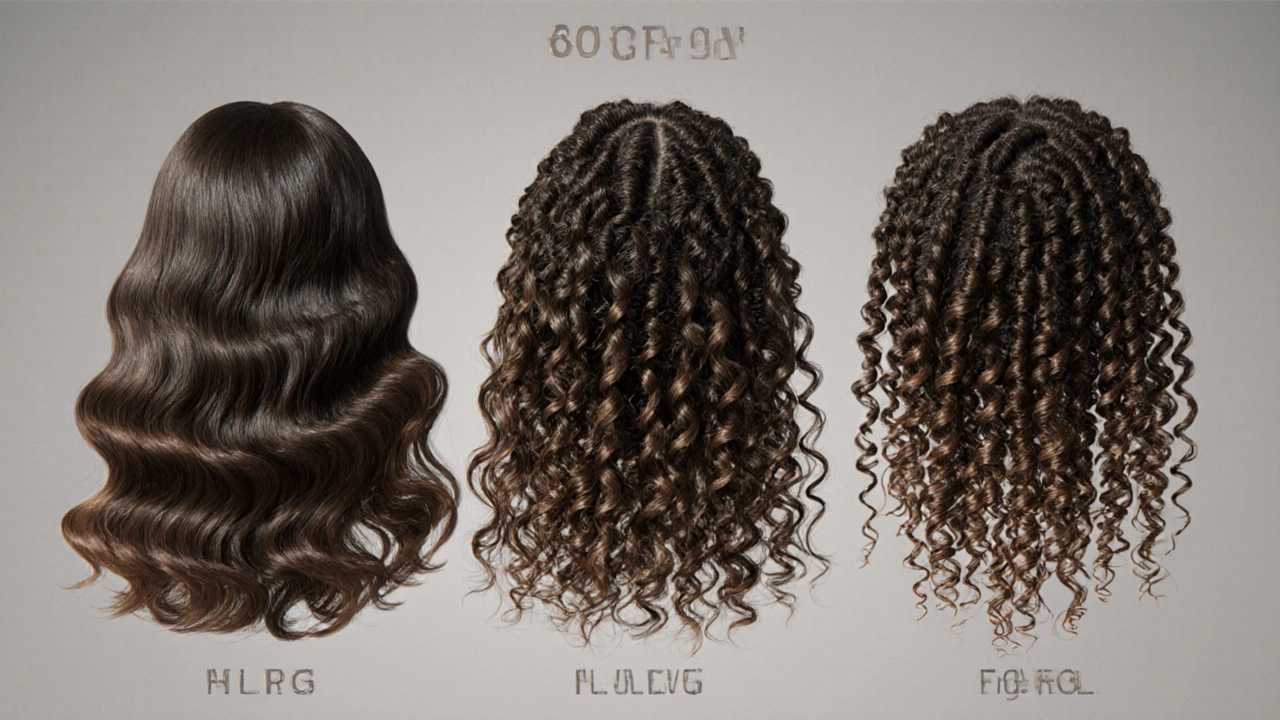
Curly Hair Care: Essential Tips for Healthy, Defined Curls
When it comes to curly hair care, the practice of maintaining and enhancing naturally curly hair through targeted routines and products. Also known as curl maintenance, it’s not just about washing and conditioning—it’s about understanding your hair’s unique structure, porosity, and moisture needs. Unlike straight hair, curls have a twisty path that makes it harder for natural oils to travel from scalp to ends. That’s why dryness, frizz, and lack of definition are so common. You can’t treat curly hair like you would straight hair and expect the same results.
What works for one curl type might fail for another. curly hair types, categories ranging from loose waves to tight coils, often labeled by the Andre Walker system. Also known as curl patterns, they range from 2A to 4C, and each needs a different approach. A person with 2B waves might thrive with a light leave-in, while someone with 4C coils needs heavier butters and co-washing to avoid breakage. Then there’s hair moisture, the key factor that determines whether curls stay bouncy or turn frizzy and brittle. Also known as hydration levels, it’s not just about water—it’s about sealing it in with the right oils and emollients. Too little moisture? Curls snap. Too much? They get limp and weighed down.
And let’s talk about curly hair products, formulations designed specifically to support curl structure without harsh sulfates, silicones, or alcohols that strip or coat. Also known as curl-friendly formulas, they include sulfate-free shampoos, creamy conditioners, and defining gels or creams. Not every product labeled "for curls" actually helps—some contain drying alcohols or build-up-causing silicones that make curls look dull over time. You need to read labels like you’re checking ingredients on food.
There’s no magic routine, but there are proven patterns. People with curly hair who see the best results usually wash less often, condition generously, and avoid brushing dry hair. They air-dry when they can, use microfiber towels instead of regular ones, and sleep on silk pillowcases to reduce friction. Some swear by the "plopping" method—wrapping hair in a towel to boost definition. Others rely on the LOC or LCO method—layering liquid, oil, and cream in the right order to lock in hydration.
What you’ll find in the posts below isn’t guesswork. It’s real advice pulled from people who’ve tried everything and found what sticks. From whether washing at night helps curls hold shape, to which celebrity extension brands mimic natural curl volume, to how salon job titles relate to curl expertise—you’ll see how curly hair care connects to broader beauty trends. No fluff. No hype. Just what actually works.
What Does 3 Mean Hair? Understanding Hair Type 3 and How to Care for It
Type 3 hair refers to naturally curly hair with defined S-shaped curls. Learn what 3A, 3B, and 3C mean, how to care for it, common mistakes to avoid, and product tips that actually work.
Read More