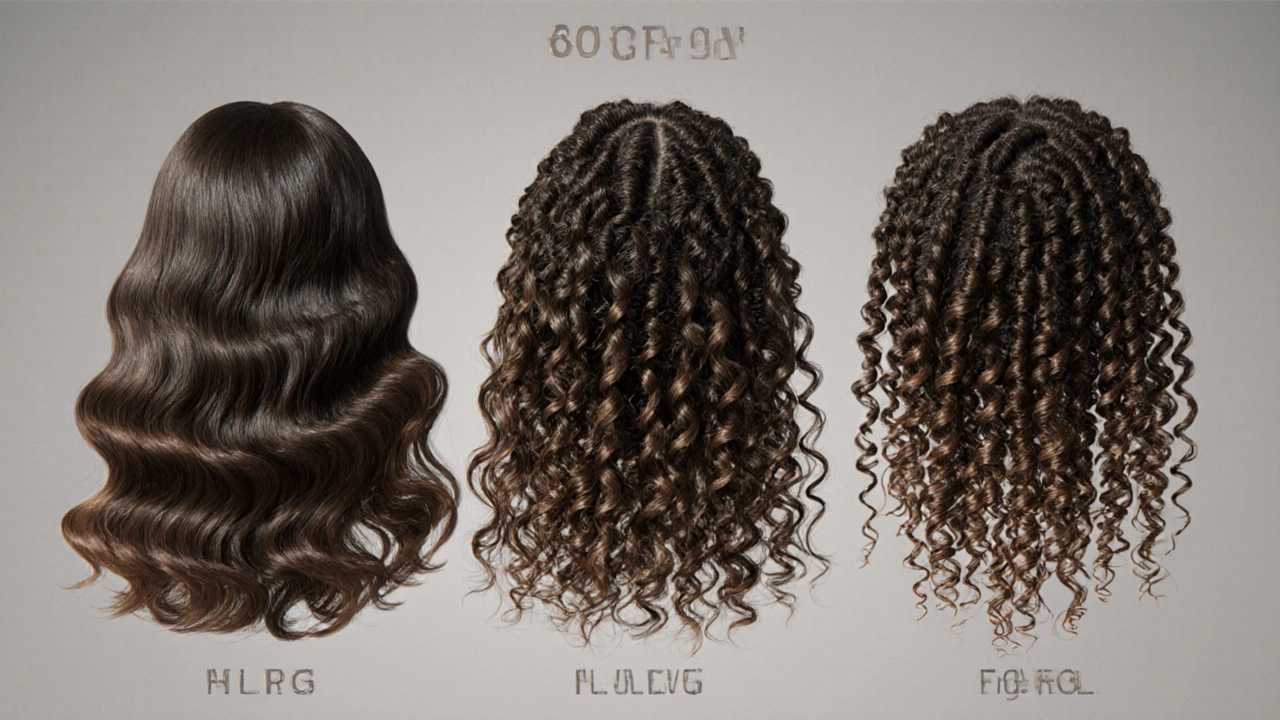
3A 3B 3C Hair: Understanding Hair Types and How to Care for Them
When people talk about 3A 3B 3C hair, a classification system for curly hair based on curl pattern, density, and strand thickness. Also known as curly hair types, it helps you pick the right products and routines instead of guessing what your hair needs. These aren’t just labels—they’re a map to healthier, more manageable curls. If your hair springs into loose spirals, tight coils, or somewhere in between, knowing whether you’re 3A, 3B, or 3C makes a real difference in how it looks and feels.
Each type has its own quirks. 3A hair, features loose, well-defined spirals that look like a corkscrew. Also known as loose curls, it’s often shiny and easy to style but can still get frizzy in humidity. 3B hair, has tighter ringlets that are more springy and voluminous. Also known as medium curls, it’s prone to dryness because natural oils have a harder time traveling down the curl. And 3C hair, is made up of dense, corkscrew-shaped curls that are fine to medium in thickness. Also known as tight curls, it often needs extra moisture to stay soft and defined. You might think all curly hair is the same, but the difference between 3A and 3C is like comparing a beach wave to a rope twist. One might need a light gel, the other a thick cream.
What works for one type often fails for another. A product that gives 3A hair hold might weigh down 3C hair. A shampoo that cleans 3B curls might strip 3A hair of its natural oils. That’s why so many people with curly hair end up frustrated—because they’re treating all curls like they’re the same. The good news? You don’t need expensive salon treatments or complicated routines. Just understand your type, match your products to it, and focus on moisture, not just volume.
You’ll find posts here that dig into real routines people use—like whether washing at night helps curls stay defined longer, or why some shampoos make curls frizzy even if they’re labeled "curly hair friendly." We cover what products actually work, how to avoid common salon mistakes, and why some "professional skincare lines" don’t translate well to curls. There’s also insight into how hair texture affects everything from styling tools to hair extensions—like the ones celebrities wear—and how to choose ones that won’t damage your natural curl pattern.
Whether you’ve just discovered you have 3B hair or you’ve been fighting frizz for years, this collection gives you the facts—not trends. No fluff. No hype. Just what helps real people with real curls get better results without spending hours or money.
What Does 3 Mean Hair? Understanding Hair Type 3 and How to Care for It
Type 3 hair refers to naturally curly hair with defined S-shaped curls. Learn what 3A, 3B, and 3C mean, how to care for it, common mistakes to avoid, and product tips that actually work.
Read More