Beauty Essentials Routine Builder
Select your skin goals to discover the essential products you need
What is your primary goal?
Your Essential Kit:
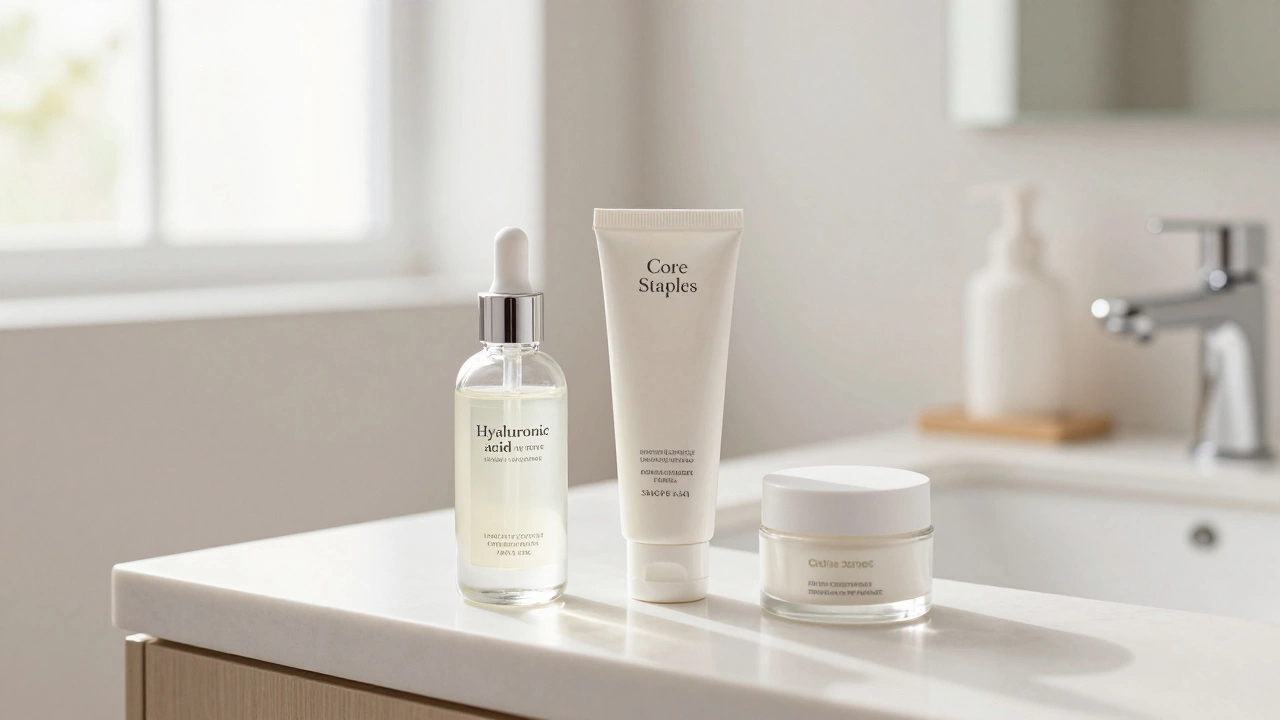
The Core Staples of Modern Skincare
Before we even touch makeup, the foundation of every routine is skincare. You can't build a house on sand, and you can't put a flawless finish on dehydrated skin.The absolute king of the bathroom cabinet is the Moisturizer. It's a basic necessity because it locks in hydration and protects the skin barrier. From lightweight gels for oily skin to thick creams for dry winter days, almost everyone uses one. Then there is the Sunscreen. A few years ago, people only wore this at the beach. Now, with the rise of daily SPF usage, it's a non-negotiable. Modern formulas are no longer greasy white pastes; they are sheer, breathable liquids that prevent premature aging and skin cancer.
We also can't ignore the Cleanser. Whether it's a foaming wash or a gentle milk, removing dirt and pollution is the first step for millions. If you've looked at a beauty trend lately, you've probably seen Hyaluronic Acid. This isn't just a buzzword; it's a powerhouse ingredient found in serums that can hold up to 1,000 times its weight in water, making it a top choice for that "plump" look.
The Heavy Hitters of Daily Makeup
When it comes to color cosmetics, some items are just more practical than others. If you look at the average makeup bag, you'll find a few constants.The Mascara is likely the most used decorative product globally. Why? Because it's the fastest way to look awake. A quick swipe of carbon black or deep brown changes the entire vibe of the face. Next is the Concealer. While full-coverage foundations are becoming less common in favor of a more "natural" look, concealers remain essential for hiding a late night or a sudden breakout.
Then we have the Lip Balm and Lipstick. Lip care has evolved. We've moved away from heavy, drying mattes to tinted oils and hydrating balms that provide a hint of color while treating the lips. It's the ultimate "low effort, high reward" product.
| Product Type | Primary Goal | Typical Frequency | Key Ingredient Trend |
|---|---|---|---|
| Sunscreen | Protection | Daily (AM) | Mineral Zinc/Chemical Hybrids |
| Moisturizer | Hydration | Daily (AM/PM) | Ceramides & Squalane |
| Mascara | Definition | Daily | Tubing Formulas |
| Concealer | Correction | Daily/Occasional | Vitamin C / Caffeine |
| Cleanser | Purification | Daily (PM) | Salicylic Acid (for acne) |
Why Certain Products Win Over Others
Why do some products stay popular for decades while others vanish? It usually comes down to the "utility-to-effort" ratio. A Face Primer, for example, is used by many, but not everyone. It requires an extra step and specific knowledge to apply. On the other hand, a Tinted Moisturizer is booming because it combines two jobs into one: hydrating the skin and evening out the skin tone.The shift toward "Skinimalism" has changed what we use. Instead of a ten-step routine, people are opting for multi-tasking products. This is why you see the rise of the most used cosmetic products being those that offer a skincare benefit. For example, a foundation that contains Niacinamide (to control oil) is far more likely to be a daily staple than a heavy stage-makeup foundation.
The Role of Tools and Accessories
It's not just about the liquids and creams. The tools we use to apply them have become products in their own right.The Beauty Blender or makeup sponge has almost entirely replaced the traditional brush for foundation application. Why? Because it allows for a more seamless, airbrushed finish that doesn't look like a mask. Similarly, Eyelash Curlers are a staple in millions of kits because they provide a structural lift that mascara alone can't achieve.
We're also seeing a massive surge in the use of Micellar Water. This isn't a traditional makeup remover that you scrub into your skin; it uses tiny oil molecules (micelles) to pull dirt and makeup away without irritating the skin. It's the go-to for anyone who wants a fast, gentle cleanup.
Common Mistakes and Pro Tips
Just because a product is widely used doesn't mean everyone uses it correctly. A common pitfall is using a Chemical Exfoliant (like an AHA or BHA) too often. While these are highly used for clearing pores and smoothing texture, using them every single day can strip the skin barrier, leading to redness and sensitivity.A better rule of thumb? Treat your exfoliants like a specialized tool-use them 2-3 times a week, not every time you wash your face. Also, always remember that sunscreen is the most important step. Using an expensive Anti-Aging Serum with Retinol at night is pointless if you skip the SPF the next morning, as Retinol makes your skin more sensitive to the sun.
The Future of Daily Beauty
As we move further into 2026, the most used products will likely be those that adapt to our environment. We're seeing "smart" cosmetics that change tint based on skin temperature or formulas that react to pollution levels in the city.Sustainable beauty is also no longer a niche. The most popular brands are shifting toward refillable packaging. Instead of buying a new plastic bottle of moisturizer every month, users are buying a permanent glass jar and slipping in a compostable refill pod. This doesn't change the product's function, but it changes the consumer's relationship with the brand.
What is the difference between a moisturizer and a serum?
A serum is a concentrated treatment designed to deliver a high dose of specific active ingredients (like Vitamin C or Hyaluronic Acid) deep into the skin. A moisturizer, on the other hand, is designed to seal that moisture in and protect the skin's surface. You generally apply the serum first and then "lock it in" with the moisturizer.
Can I use the same concealer for spots and under-eyes?
You can, but it's not always ideal. Under-eye skin is thinner and more prone to creasing, so a hydrating, lightweight concealer works best there. For spots or acne, a matte, high-pigment concealer is better because it stays in place and covers the redness more effectively without sliding off.
Why is sunscreen considered a cosmetic product?
While sunscreen has medical benefits (preventing cancer), it falls under cosmetics because it is applied topically to the skin to enhance its appearance (by preventing wrinkles and sunspots) and is sold through beauty channels. In many regions, it is classified as a "cosmeceutical"-a blend of cosmetic and pharmaceutical properties.
How often should I replace my mascara?
You should replace your mascara every three months. Because the tube is a dark, moist environment and the wand is dipped back in after touching your eye, it can easily harbor bacteria. Using old mascara can lead to eye infections or irritation.
Is a primer really necessary for makeup?
It depends on your goal. If you have very oily skin or need your makeup to last for 12+ hours (like at a wedding), a primer is a lifesaver. If you're just going to the office and prefer a natural look, a good moisturizer often acts as a sufficient base for your foundation.
Getting Your Routine Right
If you're feeling overwhelmed by the options, start with a "Core Four" approach: a gentle cleanser, a hydrating moisturizer, a daily SPF, and one targeted treatment (like a serum). Once you have those basics mastered, you can add the decorative elements like mascara or a tinted lip oil.Remember that the "most used" product isn't necessarily the most expensive one; it's the one that actually works for your specific skin type. A budget-friendly drugstore moisturizer that you actually use every day is infinitely better than a luxury cream that sits on your shelf because it's too greasy for your skin.