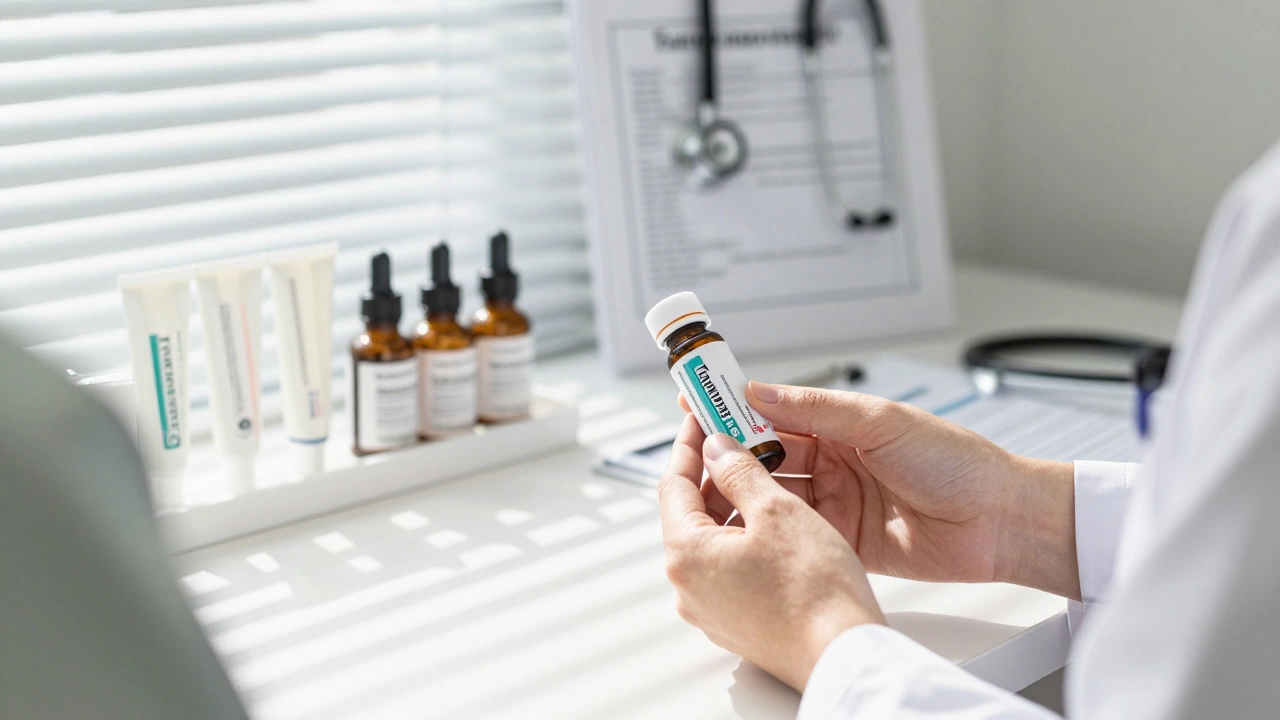
Medical Grade Skincare Coverage Checker
This tool helps you determine if your medical grade skincare product might be covered by insurance based on the criteria outlined in the article. Note that coverage depends on your specific insurer, diagnosis, and product formulary.
Coverage Result
Medical grade skincare isn’t just another buzzword-it’s a real category of products prescribed or recommended by dermatologists and licensed skincare professionals. But if you’re paying out of pocket for retinoids, high-strength vitamin C serums, or prescription-strength hydroquinone, you might be wondering: is medical grade skincare covered by insurance? The short answer? Almost never. But there are exceptions, and knowing them could save you hundreds-or even thousands-of dollars a year.
What Exactly Is Medical Grade Skincare?
Medical grade skincare refers to topical products formulated with higher concentrations of active ingredients than what you find in drugstore or even luxury beauty brands. These products are typically available only through dermatologists, plastic surgeons, or licensed medical spas. They’re not over-the-counter. They’re not sold on Amazon or Sephora without a prescription or professional consultation.
Common ingredients include:
- Prescription-strength tretinoin (Retin-A)
- Hydroquinone (2-4%) for hyperpigmentation
- High-dose azelaic acid (15-20%)
- Medical-grade glycolic and salicylic acid peels
- Prescription-grade antioxidants like stabilized vitamin C (15-20%)
These aren’t moisturizers with a fancy label. They’re clinically tested, regulated like pharmaceuticals, and designed to treat skin conditions-not just improve appearance. For example, tretinoin isn’t just for anti-aging; it’s FDA-approved for acne and photoaging. Hydroquinone is used to treat melasma, a chronic skin condition often triggered by hormones or sun exposure.
Why Insurance Usually Doesn’t Cover It
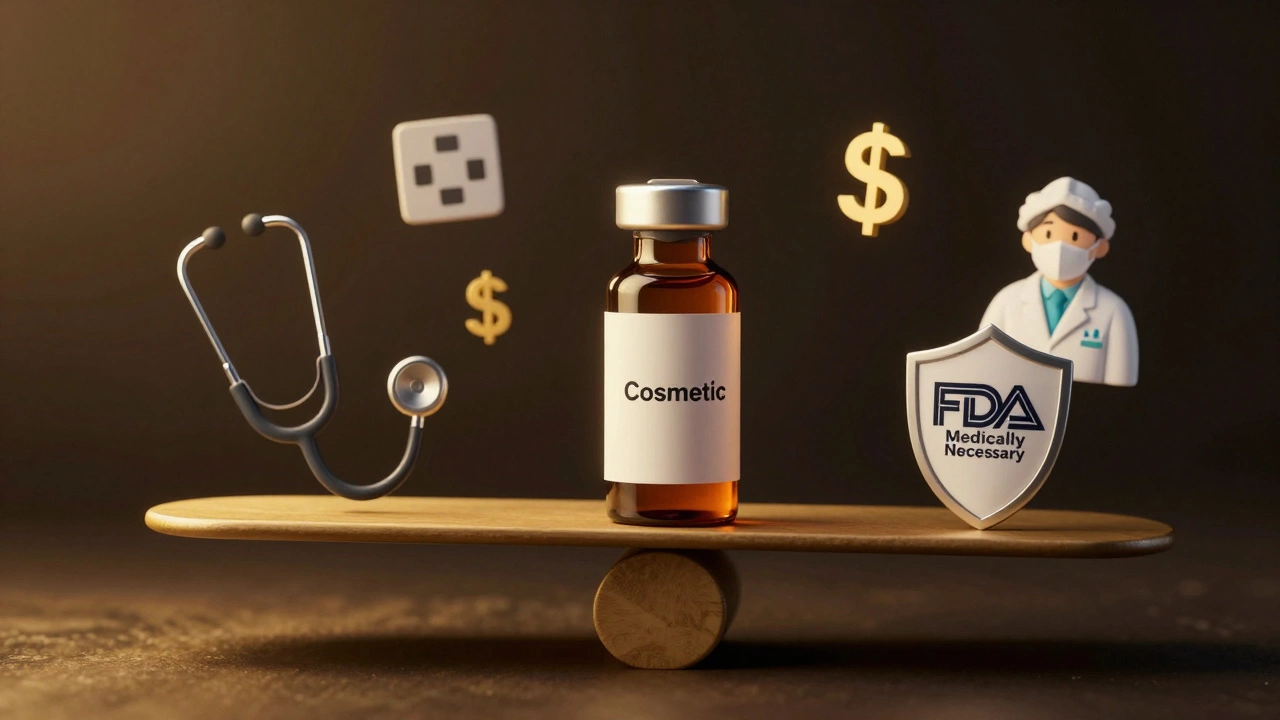
Insurance companies classify most skincare products as cosmetic, even when they treat medical conditions. That’s the key distinction: cosmetic vs. medically necessary.
Let’s say you have severe acne. Your dermatologist prescribes tretinoin cream. Insurance might cover the prescription because it’s treating a diagnosed condition-acne is a medical diagnosis. But if you buy the same tretinoin from a medical spa without a prescription, or if you’re using it for fine lines instead of active breakouts, it’s no longer covered.
Same goes for hydroquinone. If you have post-inflammatory hyperpigmentation from eczema or acne, and your doctor documents it as a medical issue, some insurers might cover it. But if you’re using it to lighten sun spots for aesthetic reasons? No coverage.
Insurance doesn’t pay for beauty. It pays for treatment. And unless your skincare product is classified as a drug by the FDA and prescribed for a diagnosed condition, it’s seen as elective.
When Medical Grade Skincare Is Covered
There are real cases where insurance pays. Here’s how it works:
- Prescription required: The product must be dispensed with a valid prescription from a licensed provider.
- Diagnosed medical condition: You need a documented diagnosis-like acne, rosacea, actinic keratosis, melasma (in some cases), or seborrheic keratosis.
- Insurance-approved formulary: The product must be on your insurer’s approved list. Not all medical-grade brands are covered, even if they’re prescription.
- No alternative available: If a cheaper generic version exists (like generic tretinoin), insurers will push you toward that first.
For example, in New Zealand, public health funding may cover tretinoin or hydroquinone for patients with severe acne or melasma under certain eligibility criteria. In the U.S., Medicare Part D or private plans like Blue Cross may cover tretinoin cream if prescribed for acne, but rarely for anti-aging. In Australia, the Pharmaceutical Benefits Scheme (PBS) subsidizes some prescription skincare for specific conditions.
One real case: A patient in Auckland with persistent melasma after pregnancy was prescribed 4% hydroquinone. Her private insurer covered it because her dermatologist submitted a claim with diagnostic code L81.1 (melasma) and documented that it was affecting her quality of life. She paid a $10 co-pay. Without that diagnosis, it would’ve cost her $120 a month.

What to Do If It’s Not Covered
Most people pay out of pocket. But that doesn’t mean you’re stuck paying full price.
- Ask for samples: Many dermatologists give out free samples of medical-grade products so you can test them before committing.
- Use manufacturer coupons: Brands like SkinCeuticals, Obagi, and ZO Skin Health offer rebates and discount programs through their websites.
- Bundle treatments: Some clinics offer package deals-buy three months of retinol, get the fourth free.
- Check your HSA or FSA: If you have a Health Savings Account or Flexible Spending Account, you can often use pre-tax dollars to pay for prescription skincare. Keep your receipt and prescription as proof.
- Compare prices: Medical-grade products vary wildly in price. A 30ml tube of tretinoin from a dermatologist might cost $80, but the same generic version from a pharmacy might be $35 with insurance. Always ask for the generic.
Common Myths About Insurance and Skincare
There’s a lot of misinformation out there. Here’s what’s not true:
- Myth: “All prescription skincare is covered.”
Truth: Only if it’s on the formulary and tied to a covered diagnosis. - Myth: “Medical grade means insurance will pay.”
Truth: “Medical grade” is a marketing term. Insurance doesn’t care about the label-they care about the code. - Myth: “If my doctor says it’s necessary, insurance will pay.”
Truth: Doctors can recommend anything. Insurance has its own rules. - Myth: “I can use my FSA for any skincare product.”
Truth: Only if it’s a prescription medication. Serums without a prescription? Not eligible.
How to Get Insurance to Cover Your Skincare
If you believe your condition qualifies, here’s how to fight for coverage:
- Get a clear diagnosis from your dermatologist. Ask them to document the medical necessity in your chart.
- Ask your doctor to write a letter of medical necessity. This should explain why the product is needed, how it improves your health, and why alternatives won’t work.
- Submit a prior authorization request through your insurer. This is often required for expensive or non-generic drugs.
- If denied, appeal. Many insurers approve on the second try if you provide clinical evidence.
One patient in Wellington spent six months appealing a denial for hydroquinone. She submitted peer-reviewed studies showing its effectiveness for melasma, a photo of her skin before treatment, and a letter from her dermatologist. Her insurer approved it on the third try.
Alternatives If Insurance Won’t Cover It
Not everyone can afford medical-grade products. But you don’t have to settle for cheap, ineffective formulas.
- OTC alternatives: Some over-the-counter products now contain stabilized niacinamide, bakuchiol, or low-dose retinol that mimic medical-grade effects with fewer side effects.
- Compounding pharmacies: In New Zealand and Australia, compounding pharmacies can create custom formulations at lower prices than branded medical skincare lines.
- Generic prescriptions: Always ask for the generic version of tretinoin, adapalene, or hydroquinone. It’s often 70% cheaper.
- Skincare programs through clinics: Some dermatology clinics offer sliding scale fees or payment plans for patients without insurance coverage.
For example, adapalene gel (Differin) is now available over the counter in many countries. It’s a weaker retinoid than tretinoin, but studies show it’s effective for mild-to-moderate acne at a fraction of the cost.
Bottom Line: It’s Rare, But Not Impossible
Medical grade skincare is rarely covered by insurance-but it’s not impossible. Coverage depends on your diagnosis, your country’s healthcare system, your insurer’s rules, and whether you have a prescription tied to a documented medical need. Most people pay out of pocket, but smart strategies-like using FSAs, asking for generics, and negotiating with clinics-can make it affordable.
If you’re spending more than $100 a month on skincare and you have a diagnosed skin condition, it’s worth asking your dermatologist: “Can this be prescribed? Can you help me get it covered?” That one question could change your out-of-pocket costs forever.
Is medical grade skincare the same as prescription skincare?
Not always. Prescription skincare is always medical grade, but not all medical-grade products require a prescription. Some are sold through dermatologists without a formal prescription, especially in places like New Zealand and Australia. The key difference is whether it’s regulated as a drug (prescription) or as a medical device or cosmetic (non-prescription medical grade).
Can I use my HSA or FSA for medical grade skincare?
Yes-if it’s prescribed. You can use pre-tax dollars from an HSA or FSA to pay for FDA-approved prescription skincare products like tretinoin, hydroquinone, or adapalene. Keep your prescription and receipt. Non-prescription serums, even if labeled "medical grade," usually don’t qualify.
Why won’t my insurance cover my acne treatment even though it’s a medical condition?
Insurance might cover oral antibiotics or isotretinoin for acne, but topical treatments like tretinoin are often excluded unless they’re the only option. Some insurers require you to try cheaper OTC products first. Always ask your dermatologist to submit a letter of medical necessity and request prior authorization.
Are there cheaper alternatives to medical grade skincare?
Yes. Over-the-counter options like adapalene gel (Differin), niacinamide serums, and bakuchiol are clinically proven to deliver similar results with fewer side effects. Compounding pharmacies can also make custom formulations at lower prices than branded lines like Obagi or SkinCeuticals.
Does Medicare cover medical grade skincare in the U.S.?
Medicare Part D may cover prescription skincare like tretinoin or hydroquinone if it’s listed on your plan’s formulary and prescribed for a covered condition like acne or actinic keratosis. It won’t cover products used for cosmetic purposes, even if they’re medical grade. Always check your plan’s drug list and ask your dermatologist to code the diagnosis correctly.