
When you ask, "How much is a facial treatment?" you’re not just looking for a number-you want to know if it’s worth it. Is a $150 facial going to make your skin look noticeably better? Or are you just paying for a relaxing massage and some fancy lotions? The truth is, facial treatment prices in New Zealand vary wildly, and not all of them deliver real results. Let’s cut through the noise and show you exactly what you’ll pay, what you actually get, and which treatments are worth your time and money.
What You Pay for a Basic Facial
A standard facial in Auckland, Wellington, or Christchurch usually runs between $80 and $120. This is the entry-level service most beauty salons offer. It includes cleansing, steaming, exfoliation, a gentle extraction (if needed), a mask, and a moisturizing massage. It’s relaxing, leaves your skin glowing, and is great if you’re just starting out with professional skincare. But don’t expect dramatic changes. If your skin is congested, acne-prone, or showing signs of aging, a basic facial won’t fix it.
Many places offer a first-time discount. You might see deals like "First Facial Free" or "50% Off Your First Visit." These are real, and they’re worth taking. But read the fine print. Some deals only apply to the cheapest package, or require you to buy a product afterward. Always ask: "Is there a sales pitch after the treatment?" If the answer is yes, you’re not just paying for skincare-you’re paying for a sales experience.
Medical-Grade Facials: The Real Game-Changer
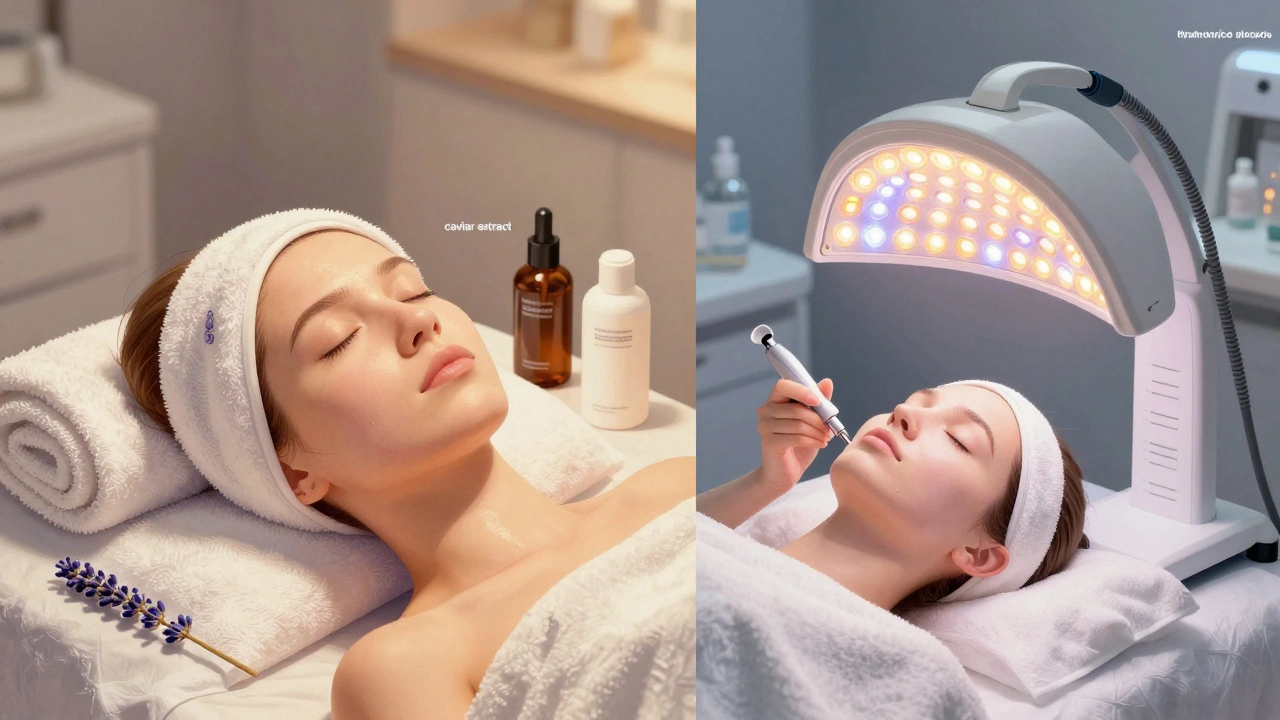
If you’re serious about your skin, skip the spa and look for a clinic that offers medical-grade facials. These aren’t just fancy versions of salon facials-they’re backed by science. A chemical peel facial with medical-grade glycolic or salicylic acid costs between $180 and $300. A microneedling facial with growth factor serums runs $220-$350. And a LED light therapy facial with red or blue light for acne or anti-aging? That’s $150-$250 per session.
Why the big jump in price? Because these treatments use ingredients that actually penetrate deeper than the surface. A chemical peel doesn’t just exfoliate-it triggers your skin to regenerate. Microneedling creates tiny channels that let serums absorb 80% better. LED light kills acne bacteria and boosts collagen. These aren’t gimmicks. Dermatologists and licensed aesthetic nurses perform them. You’ll see real results: fewer breakouts, smoother texture, brighter tone.
What You’re Really Paying For
Not every $300 facial is better than a $100 one. The difference isn’t always in the product-it’s in the expertise. A good provider will:
- Assess your skin type before starting
- Adjust the treatment based on your concerns (not push a one-size-fits-all package)
- Use sterile tools and clean, clinical-grade products
- Give you a clear aftercare plan
On the flip side, a flashy spa might use expensive-sounding ingredients like "caviar extract" or "diamond dust," but those are marketing tricks. They don’t change your skin. You’re paying for ambiance, not results.
Ask: "What active ingredients will be used?" If they can’t name them, walk away. Look for ingredients like:
- Retinol (for wrinkles and texture)
- Hyaluronic acid (for deep hydration)
- Niacinamide (for redness and pores)
- Peptides (for firming)
These are proven. You can buy them online. If a clinic charges $250 to apply them to your face, that’s a fair price. If they charge $250 to put on "luxury botanicals" with no science behind them? You’re being overcharged.
How Often Should You Get One?
For maintenance? Once a month. That’s when your skin naturally renews itself. A monthly facial helps keep pores clear and glow steady.
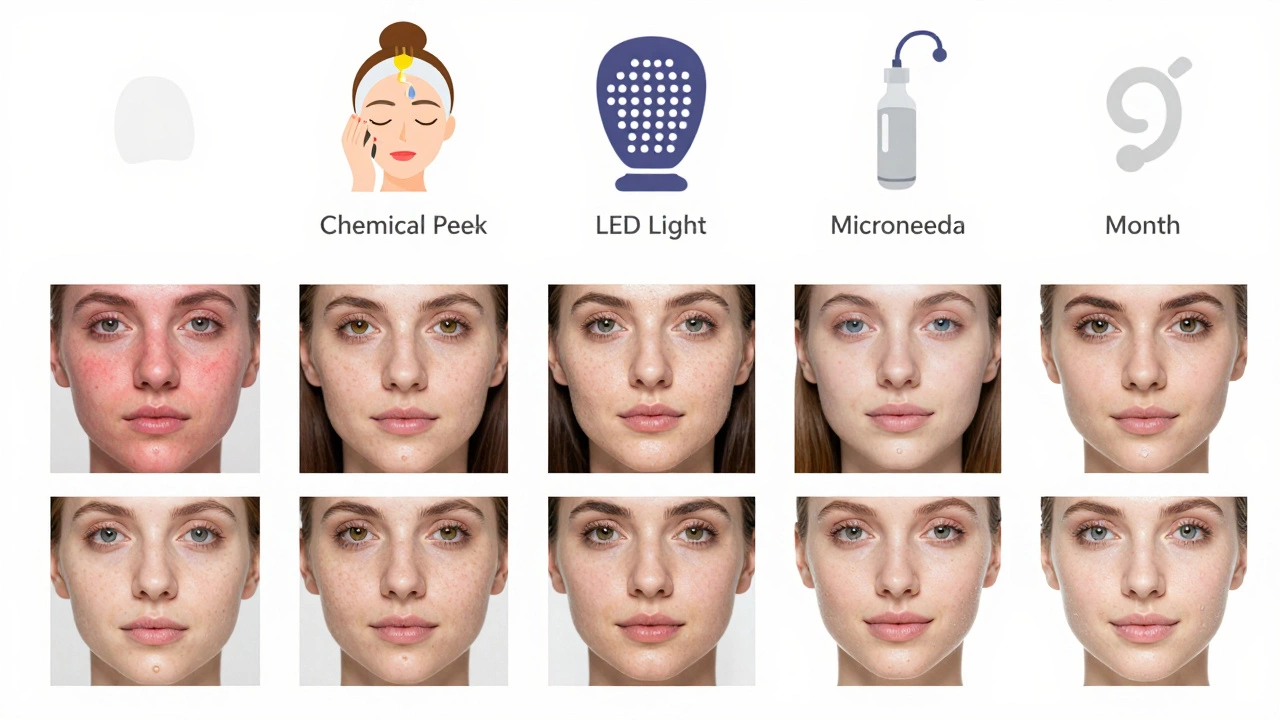
For problem skin? More often. If you have acne, rosacea, or sun damage, you might need a treatment every 2-3 weeks for 2-3 months, then drop back to monthly. A dermatologist might recommend a series of 4-6 peels spaced two weeks apart to reset your skin. That’s not optional-it’s a course of treatment.
Don’t fall for the "buy 5, get 1 free" packages unless you know what you’re getting. If you don’t need weekly facials, you’re just wasting money. And if you’re getting a facial every week? You’re probably irritating your skin. Over-treatment leads to redness, sensitivity, and breakouts.
What’s Not Worth the Money
Here are three common facial add-ons that rarely deliver:
- Gold leaf or caviar masks - These are luxury gimmicks. Gold doesn’t penetrate skin. Caviar extract is just fat. You’re paying for the story, not the science.
- Ultrasonic scrubbing - Sounds high-tech, but it’s just a vibrating tool. It doesn’t remove deep debris better than manual exfoliation.
- Hot stone massage - Feels nice, but it has zero effect on skin health. Save this for a spa day, not a skincare fix.
Also avoid facials that include hair removal (waxing, threading) unless you specifically need it. That’s a separate service. Bundling it inflates the price.
Where to Go in New Zealand
In Auckland, clinics like DermaSkin Clinic and MediBeauty NZ offer medical facials with licensed practitioners. Wellington has SkinLab, and Christchurch is home to The Skin Room. These places don’t just sell facials-they offer skin assessments, follow-up plans, and sometimes even patch tests for allergies.
Don’t go to a mall kiosk or a salon with no medical training. If the person doing your facial can’t explain how a chemical peel works or what concentration they’re using, they’re not qualified to do it.
DIY vs Professional: When to Skip the Spa
You can do a decent facial at home for under $20. Use a gentle cleanser, a chemical exfoliant (like a low-strength AHA toner), a hydrating mask, and a good moisturizer. Do it once a week. You’ll see improvement over time.
But if you’re struggling with persistent acne, dark spots, or fine lines, you need more than a DIY routine. Professional treatments work faster and deeper. A single session with a dermatologist can do more than six months of home care.
Think of it like dental cleaning. You brush your teeth daily, but you still go to the dentist. Same with skin. Home care maintains. Professional care transforms.
Insurance and Costs
Most health insurance in New Zealand doesn’t cover facials. But if your facial is prescribed by a dermatologist for medical reasons-like severe acne or rosacea-some private insurers might cover part of it. Always ask your provider if the treatment is considered "therapeutic" rather than "cosmetic."
Some clinics offer payment plans. If you’re doing a course of 6 microneedling sessions at $280 each, that’s $1,680 total. Many clinics let you pay $280 per month instead. Always ask.
Final Price Breakdown
Here’s what you can realistically expect to pay in 2026:
| Type of Facial | Price Range | Best For |
|---|---|---|
| Basic Spa Facial | $80-$120 | Relaxation, maintenance |
| Chemical Peel (Medical) | $180-$300 | Dull skin, acne, fine lines |
| Microneedling + Serum | $220-$350 | Scarring, wrinkles, texture |
| LED Light Therapy | $150-$250 | Acne, inflammation, anti-aging |
| Hydrafacial | $200-$300 | Immediate glow, deep cleansing |
| Custom Medical Facial | $250-$400 | Complex skin concerns |
Remember: the most expensive option isn’t always the best. The right one is the one that matches your skin’s needs-not your Instagram feed.
Is a facial worth it if I have acne?
Yes-but only if it’s done right. A basic spa facial can make acne worse by clogging pores with heavy oils or using harsh extractions. A medical-grade facial with salicylic acid peels, blue LED light, and non-comedogenic products can clear breakouts faster than over-the-counter creams. Always ask if the provider treats acne medically, not just cosmetically.
How long does a facial last?
The glow from a basic facial fades in 3-5 days. A chemical peel or microneedling treatment takes 7-14 days to show full results, and the effects can last 4-8 weeks. For lasting change, you need a series of treatments-not just one.
Can I get a facial if I have sensitive skin?
Absolutely, but you need to choose carefully. Avoid scrubs, steam, and strong acids. Look for facials that use calming ingredients like centella asiatica, niacinamide, or colloidal oatmeal. Tell the provider your skin reacts easily. A good aesthetician will adjust the treatment on the spot.
Do I need to buy products after a facial?
No, you don’t. Some clinics push products to make extra profit. If you’re pressured to buy, walk away. A professional should give you a simple aftercare routine using products you can find anywhere. If they say you need their $100 serum to maintain results, they’re lying. Most results come from the treatment, not the product.
Are there hidden costs?
Yes. Watch out for: consultation fees (should be free), product sales pressure, add-ons like "dermaplaning" or "oxygen infusion" that aren’t necessary, and booking fees. Always ask: "What’s the total cost before I lie down?" If they hesitate, they’re hiding something.
If you’re ready to improve your skin, start with a consultation-not a package. Find a clinic that offers a free skin assessment. Talk to the provider. Ask questions. If they listen, you’ve found a good one. If they push you into a $500 bundle, walk out. Your skin deserves better than a sales pitch.