
Mature Skin Foundation Finder
What is your primary skin concern?
How much coverage do you prefer?
Sheer
Natural skin show-through
Light
Evens tone but not opaque
Medium
Covers most imperfections
How do you typically apply makeup?
Fingertips
Warm product into skin
Damp Sponge
Press and dab motion
Brush
Swiping or buffing
How do you like to set your makeup?
Nothing
Let it sit naturally
Powder
Traditional setting powder
Setting Spray
Hydrating mist finish
Your Personalized Recommendation
There is a persistent myth in the beauty world that as we age, we should stop wearing makeup. You’ve likely heard it whispered in salon chairs or read it in glossy magazines: "Less is more," or worse, "Why bother covering up?" But here is the reality check you didn’t ask for but definitely need: mature skin does not automatically look better without foundation. In fact, going completely bare-faced can sometimes highlight texture, uneven tone, and fatigue more than a well-chosen product ever could.
The question isn't whether you *should* wear foundation; it's whether you are wearing the *right* kind of coverage. For many women over 40, 50, and beyond, skipping foundation entirely leaves them looking tired rather than fresh. However, using the wrong type-a heavy, matte, full-coverage liquid-can make fine lines and wrinkles appear deeper and more pronounced. The goal is balance. We want to even out skin tone without adding weight or cakey texture.
The Science of Aging Skin and Coverage
To understand why some foundations fail on mature skin, we have to look at what changes happen under the surface. As collagen production decreases by about 1% per year after age 20, skin loses its plumpness and elasticity. This loss of structural support leads to the formation of static lines (wrinkles visible when your face is resting) and dynamic lines (formed by movement).
Simultaneously, sebum production natural oil output from sebaceous glands often drops, leading to dryness. Dry skin reflects light differently than oily skin. It tends to scatter light, which can create a dull, grayish cast if not properly hydrated. When you apply a traditional matte foundation to dry, thinning skin, the powder particles settle into those fine lines, essentially highlighting every crease. It’s like pouring concrete into a crack-it hardens and draws attention to the flaw rather than smoothing it over.
Furthermore, hyperpigmentation becomes more common. Sun damage accumulated over decades manifests as age spots, melasma, or general redness. A complete lack of coverage means these discolorations stand out starkly against lighter surrounding skin. This creates a patchy appearance that many perceive as "looking older." Strategic, light coverage can unify this tone, creating a smoother canvas that looks healthier and more rested.
When Going Bare-Faced Actually Works
That said, there are scenarios where skipping foundation is the superior choice. If your primary concern is deep nasolabial folds or crow’s feet, any layer of product carries a risk of settling. In these cases, the "no-makeup" look relies entirely on the health of the skin itself.
If you choose to go foundation-free, your skincare routine must be impeccable. You cannot rely on makeup to hide neglect. Here is what a successful bare-faced approach requires:
- Intense Hydration: Your skin needs to be plump. Dehydrated skin emphasizes texture. Use hyaluronic acid serums followed by rich creams.
- Brightening Agents: To combat dullness, incorporate Vitamin C or niacinamide into your morning routine. These ingredients help even out skin tone naturally.
- Sun Protection: Non-negotiable. UV rays break down collagen further. A high-quality SPF 30+ prevents future dark spots and maintains current clarity.
- Healthy Glow: Without foundation to provide a uniform base, your natural radiance must shine. Facial oils or illuminating primers can mimic the finish of a dewy foundation without the weight.
If your skin barrier is compromised, sensitive, or breaking out, skipping foundation allows the skin to breathe and heal. In this context, "less is more" is medically accurate. But for stable, healthy mature skin, a total absence of color correction often results in a washed-out complexion.
The Middle Ground: Tinted Moisturizers and Skin Tints
For most people with mature skin, the answer lies in the middle ground. You don't need full-coverage foundation, but you might benefit from a tinted moisturizer a hybrid product combining hydration with light pigment. These products offer sheer coverage that evens out minor redness and sallowness without masking the skin's natural texture. They typically contain fewer drying alcohols and more emollients than traditional foundations.
Look for formulas labeled "sheer," "natural," or "dewy." Avoid anything claiming "matte" or "full coverage." The key is translucency. You want the product to blend seamlessly so that friends notice you look great, not that you are wearing makeup. Brands like NARS Sheer Glow, IT Cosmetics CC+ Cream, and Estée Lauder Futurist Aqua Brilliance are popular choices because they prioritize skincare benefits alongside color correction.
| Product Type | Coverage Level | Best For | Risk Factors |
|---|---|---|---|
| No Makeup | None | Very textured skin, acne, extreme sensitivity | Highlights discoloration, redness, and fatigue |
| Tinted Moisturizer | Sheer to Light | Dry skin, mild uneven tone, daily wear | May not cover significant hyperpigmentation |
| BB/CC Cream | Light to Medium | Redness, sun spots, need for SPF | Can feel heavy if formula is thick |
| Liquid Foundation (Dewy) | Medium to Full | Special occasions, significant discoloration | High risk of settling into lines if over-applied |
| Powder Foundation | Variable | Oily mature skin (rare) | Emphasizes dry patches and wrinkles significantly |
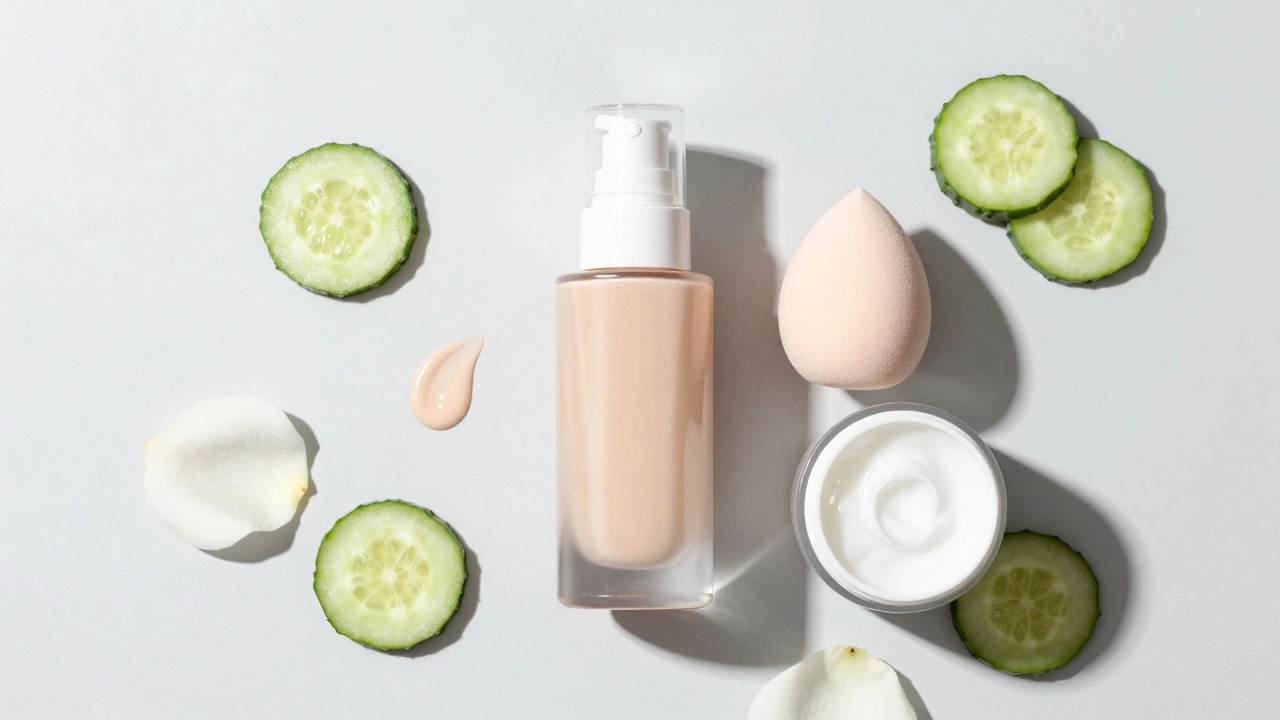
Application Techniques That Change Everything
Even the best product will fail if applied incorrectly. On mature skin, technique matters more than the brand name. The golden rule is: less product, more blending.
First, prep is everything. Apply your foundation only after your moisturizer has fully absorbed. Wait at least five minutes. If your skin is still tacky, the foundation will slide around and pill. Use a hydrating primer if you have very dry areas, focusing on cheeks and forehead. Avoid silicone-heavy primers if you are prone to milia (small white bumps), as they can trap debris.
Second, ditch the dense kabuki brush. Dense brushes push too much product into the skin. Instead, use a damp beauty sponge (like a Beautyblender) or your fingertips. Fingertips warm the product, helping it melt into the skin for a more natural finish. Dab and press-do not drag or wipe. Dragging stretches the skin and can emphasize creases. Pressing ensures the product sits on top of the skin rather than sinking into pores.
Third, concentrate coverage where it’s needed. Don't slap foundation all over your face evenly. Apply more product to areas of redness (nose, chin) or hyperpigmentation (cheeks, upper lip). Leave the center of your forehead and the bridge of your nose with little to no product. This strategic placement mimics natural variation in skin tone and keeps the look fresh.
Color Correction: The Secret Weapon
If you find that you need more coverage than a tinted moisturizer provides, do not reach for a heavier foundation. Instead, use color correctors. This is a game-changer for mature skin. Correctors neutralize specific discolorations before you apply your base, allowing you to use less overall product.
- Peach or Orange Corrector: Neutralizes blue-purple tones under eyes and dark circles. Apply sparingly only to the darkest part of the under-eye triangle.
- Green Corrector: Cancels out redness from rosacea or broken capillaries. Blend well, as green can show through if too thick.
- Lavender Corrector: Brightens sallow or yellow-toned skin, giving a fresher, awake appearance.
By correcting first, you reduce the need for opaque foundation. You can then follow with a lightweight tinted serum or BB cream. This layered approach provides the evenness of full coverage with the comfort of a skincare product.
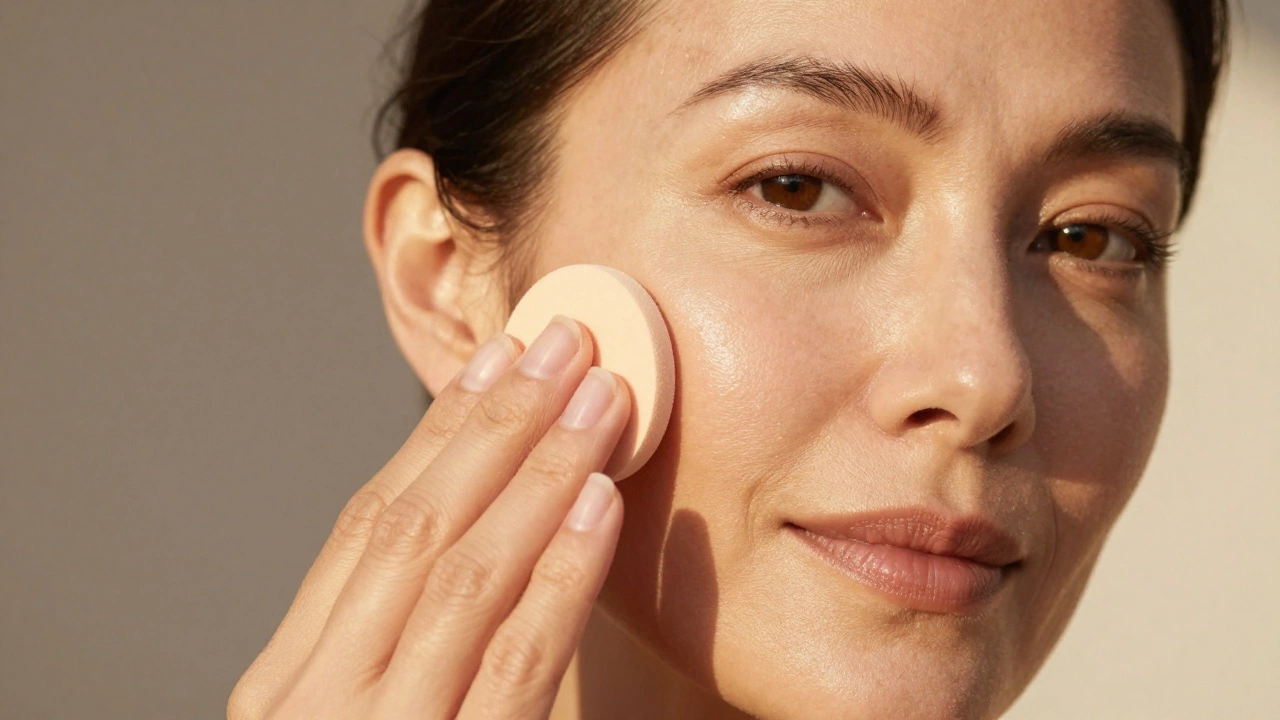
Setting Without Drying
Many women with mature skin fear setting powder because it can look chalky and accentuate dryness. However, skipping setting entirely can lead to sliding makeup and a greasy appearance by midday. The solution? Set strategically.
Avoid dusting powder all over your face. Instead, use a tiny amount of translucent, finely-milled powder only in areas where you tend to get shiny or where makeup creases. Typically, this is the under-eye area (to prevent creasing) and the T-zone (forehead and nose). Use a fluffy brush and tap off excess powder before applying. Alternatively, consider a setting spray. A hydrating setting spray locks in moisture and melds layers together without adding texture. Look for sprays containing glycerin or rose water for an extra boost of hydration.
Frequently Asked Questions
Does wearing foundation cause wrinkles?
Foundation itself does not cause wrinkles. Wrinkles are caused by sun exposure, genetics, smoking, and repetitive facial expressions. However, certain foundations can exacerbate their appearance. Matte, powder-based, or heavy formulas can settle into existing lines, making them look deeper. Additionally, failing to remove makeup thoroughly can clog pores and irritate the skin barrier, potentially accelerating aging signs indirectly. Always choose non-comedogenic, hydrating formulas and cleanse gently at night.
What is the best type of foundation for 60-year-old skin?
For skin over 60, the best options are usually liquid foundations with a dewy or satin finish, or high-quality tinted moisturizers. These formulations contain more emollients and light-reflecting particles that blur imperfections without emphasizing texture. Look for keywords like "hydrating," "anti-aging," or "luminous." Avoid matte finishes, which can look flat and dry on thinner skin. Brands often formulate specific lines for mature skin, such as L'Oréal Age Perfect or Clinique Even Better Makeup, which are designed to address common concerns like dryness and loss of radiance.
Can I wear concealer if I don't wear foundation?
Yes, absolutely. Many women prefer to skip foundation but use concealer strategically. This approach offers targeted coverage where it’s needed most-typically under the eyes, around the nose, and on blemishes. To make this work, ensure your skin is well-hydrated. Apply concealer after moisturizer and let it set for a minute before blending. Choose a creamy, hydrating concealer rather than a matte one to avoid creasing. This method gives you a fresh, polished look while maintaining the natural texture of your skin elsewhere.
How do I prevent foundation from looking cakey on mature skin?
Cakeiness occurs when too much product accumulates on the skin or when dry patches repel the formula. To prevent this, start with exfoliation (1-2 times a week) to remove dead skin cells. Use a hydrating primer to create a smooth base. Apply foundation in thin layers, building up only where necessary. Use a damp sponge to press the product in rather than dragging it. Finally, avoid baking with heavy powders. If you need to set your makeup, use a minimal amount of translucent powder only in problem areas, or opt for a hydrating setting spray.
Is skincare more important than makeup for mature skin?
Skincare is the foundation of how your makeup looks. No amount of foundation can perfectly mask dehydrated, uneven, or irritated skin. Investing in a consistent skincare routine-including cleansing, moisturizing, sun protection, and active ingredients like retinoids or vitamin C-will improve your skin's texture and tone over time. This means you'll need less makeup to achieve a polished look. Think of skincare as long-term investment and makeup as immediate enhancement. Both play crucial roles, but skincare provides the canvas upon which makeup sits.