
Antibiotic Need Checker
How This Tool Works
Based on CDC guidelines and virtual doctor protocols, this tool helps you understand if your symptoms might require antibiotics. Remember:
- Antibiotics only treat bacterial infections, not viruses
- Virtual doctors follow the same clinical guidelines as in-person care
- This is not medical advice - always consult a licensed provider
More people are turning to virtual doctors for quick care-especially when they’re sick, busy, or can’t get into a clinic. But one question keeps coming up: Can a virtual doctor prescribe antibiotics? The short answer is yes-but only if it’s the right call. Not every cough, sore throat, or fever needs antibiotics. And not every online visit will get you a prescription.
How Virtual Doctor Visits Work
Online doctor consultations let you talk to a licensed physician through video, phone, or secure messaging. You describe your symptoms, answer a few questions, and sometimes upload photos or recent test results. The doctor reviews everything and decides whether you need treatment, further testing, or just rest and fluids.
These visits are fast. Most take under 15 minutes. You don’t need to wait in a waiting room. You don’t need to take time off work. But speed doesn’t mean care is shallow. Doctors follow the same clinical guidelines online as they do in person.
When Antibiotics Are Actually Needed
Antibiotics fight bacterial infections-not viruses. That’s the key. Most colds, flu, bronchitis, and sinus infections are caused by viruses. Antibiotics won’t help those. In fact, taking them when they’re not needed can make future infections harder to treat.
Doctors prescribe antibiotics only for confirmed or strongly suspected bacterial infections, like:
- Strep throat (confirmed by rapid test or culture)
- Urinary tract infections (UTIs)
- Some ear infections in children
- Pneumonia
- Skin infections like cellulitis
- Sinus infections that last more than 10 days or get worse after improving
If your symptoms suggest one of these, a virtual doctor can ask follow-up questions to rule out other causes. They might ask about fever duration, pain location, mucus color, or whether you’ve had this before.
What Virtual Doctors Won’t Do
Online doctors can’t prescribe antibiotics blindly. They won’t give you amoxicillin just because you’ve had it before. They won’t write a script for a sore throat without checking for strep. And they definitely won’t prescribe antibiotics for a runny nose or a viral cough.
Some patients expect a prescription because they’ve gotten one before. But doctors are trained to avoid overprescribing. The CDC estimates that 30% of outpatient antibiotic prescriptions in the U.S. are unnecessary. That’s why virtual platforms have strict protocols.
Also, virtual doctors won’t prescribe controlled substances like opioids or certain anxiety meds. Antibiotics are different-they’re not addictive, but they’re still tightly regulated because of antibiotic resistance.
How a Virtual Doctor Decides to Prescribe
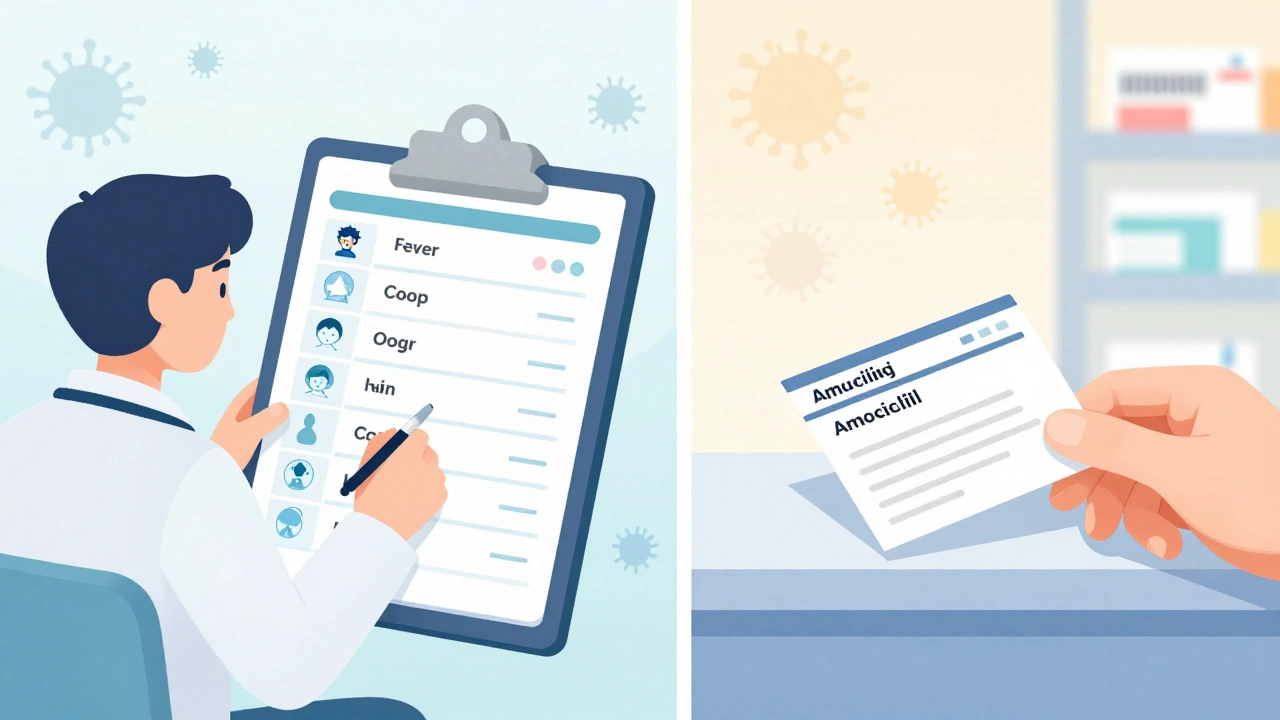
Here’s how it usually goes:
- You report symptoms like fever, sore throat, and swollen tonsils.
- The doctor asks if you’ve had a rapid strep test before or if you’ve been exposed to someone with strep.
- They check for other signs: white patches on tonsils, no cough, tender neck glands.
- If it looks like strep, they might recommend a lab test (some services let you get one done at a nearby pharmacy or lab).
- If test results confirm strep, they send the antibiotic prescription to your pharmacy.
- If it’s likely viral, they suggest rest, hydration, and OTC pain relievers.
Some platforms use AI-assisted symptom checkers to help guide the doctor-but the final decision is always made by a licensed physician.
What Happens If You Need an In-Person Exam?
Not every condition can be diagnosed remotely. If your symptoms are unclear, severe, or could be something serious, the virtual doctor will tell you to go to urgent care or the ER.
Examples:
- Difficulty breathing or chest pain
- High fever with rash
- Severe pain or swelling
- Symptoms that don’t match common patterns
In these cases, the doctor won’t risk prescribing antibiotics without a full exam. They’ll refer you to someone who can check your lungs, throat, or blood pressure in person.
Prescription Delivery and Costs
If you get a prescription, it’s sent electronically to your preferred pharmacy. Most major chains-CVS, Walgreens, Rite Aid-accept digital prescriptions. You’ll get a text or email when it’s ready.
Costs vary. Some virtual care services charge $30-$50 per visit. Others are covered by insurance. If you have Medicare or private insurance, check if telehealth visits are included. Many plans cover antibiotic prescriptions with a low copay.
Without insurance, you might pay $10-$25 for a generic antibiotic like amoxicillin or azithromycin. That’s often cheaper than an ER visit or even a clinic co-pay.
Why You Shouldn’t Self-Diagnose or Ask for Antibiotics
Some people go online and ask for antibiotics by name: “Can you give me amoxicillin for my sore throat?” That’s a red flag for doctors.
Why? Because:
- You might be wrong about the cause of your symptoms.
- Antibiotics have side effects-diarrhea, rashes, yeast infections.
- Using them incorrectly helps create superbugs.
Doctors don’t want to be your pharmacy. They want to be your health partner. That means making smart choices, even if it’s not what you expected.
What to Do If You’re Denied Antibiotics
It’s frustrating when you feel sick and the doctor says, “No antibiotics.” But here’s what you can do:
- Ask for a symptom management plan: What OTC meds help? How long should you wait?
- Request a follow-up if symptoms worsen.
- Ask if you need a test-like a rapid strep or urine dipstick.
- Get a second opinion from another virtual doctor if you’re unsure.
Most platforms allow you to book another visit within 7 days at no extra cost if your condition changes.

Are Virtual Antibiotic Prescriptions Legal?
Yes. All licensed physicians in the U.S. and Canada can prescribe antibiotics online, as long as they establish a valid patient-doctor relationship. That means they’ve reviewed your medical history, asked relevant questions, and made a clinical judgment.
Regulations vary by state, but the DEA and CDC support telehealth prescribing for antibiotics when appropriate. The key is that the doctor must be able to evaluate you properly-not just hand out scripts like candy.
Real Example: A Patient’s Story
Last fall, Sarah, 32, had a sore throat, fever, and swollen glands. She’d had strep before and knew the signs. She used her insurance’s telehealth app, talked to a doctor on video, and described her symptoms in detail.
The doctor asked if she’d had a test before. She hadn’t. So the doctor recommended a rapid strep test at a nearby CVS. Sarah got tested the same day. Results came back positive. Within an hour, her prescription for penicillin was ready at the pharmacy.
She didn’t go to the clinic. Didn’t miss work. Got treated in under 24 hours. And she didn’t take antibiotics when she didn’t need them-because the doctor didn’t guess. They tested first.
Bottom Line
Virtual doctors can prescribe antibiotics-but only when they’re medically necessary. They won’t give them on request. They won’t skip the diagnosis. And they won’t risk your health-or public health-by overprescribing.
If you’re sick and think you might need antibiotics, try a virtual visit. It’s faster, cheaper, and often just as accurate as an in-person trip. Just be ready to answer questions honestly, accept test recommendations, and understand that sometimes, the best treatment is no pill at all.
Can a virtual doctor prescribe antibiotics for a sinus infection?
Yes-if the infection is bacterial and meets clinical guidelines. Most sinus infections are viral and clear up on their own. But if symptoms last more than 10 days, worsen after improving, or include high fever and thick nasal discharge, a virtual doctor may prescribe antibiotics like amoxicillin after evaluating your history and symptoms.
Do I need a prior diagnosis to get antibiotics from a virtual doctor?
You don’t need a prior diagnosis, but you do need a current evaluation. The doctor must assess your symptoms in real time, ask follow-up questions, and rule out viral causes. If you’ve had the same issue before, that helps-but it doesn’t guarantee a prescription.
Can I get antibiotics for my child through telehealth?
Yes, for children over 2 years old. Virtual doctors can prescribe antibiotics for ear infections, strep throat, or UTIs if symptoms match clinical guidelines. For infants under 2, most providers prefer an in-person exam due to higher risks and difficulty assessing symptoms remotely.
What if the virtual doctor says no to antibiotics-should I go to the ER?
Not necessarily. If the doctor says no and you’re not having trouble breathing, high fever, or severe pain, it’s likely safe to wait. Ask for a follow-up plan: when to call back, what symptoms to watch for, and how long to wait before seeking in-person care. ER visits are for emergencies, not routine infections.
Are online antibiotic prescriptions as safe as in-person ones?
Yes-if the provider follows proper protocols. Studies show that telehealth antibiotic prescribing is just as accurate as in-person visits for common conditions like strep throat and UTIs. The key is thorough evaluation, not location. Always choose a licensed, reputable telehealth service with board-certified doctors.
Next Steps
If you’re considering a virtual visit for a possible infection:
- Check if your insurance covers telehealth.
- Choose a platform with board-certified physicians (look for names like Amwell, Teladoc, or your insurer’s network).
- Have your symptoms ready: when they started, what’s worse, what helps, any recent exposures.
- Be honest-even if you think you “know” what you need.
- Follow up if you don’t improve in 2-3 days.
Virtual care isn’t magic. But when used right, it’s one of the most efficient ways to get treatment-without unnecessary pills or trips to the clinic.