
Botox & Filler Estimator
Treatment Details
Your Estimated Plan
Select your options and click calculate to see estimated units/volume and costs.
Note: This is an estimate only. Actual results depend on individual anatomy and practitioner assessment.
Always consult a qualified medical professional.
You might assume that the country with the most plastic surgeons or the highest GDP automatically tops the charts for Botox usage. You would be wrong. While the United States often dominates headlines regarding cosmetic procedures, a closer look at per-capita data reveals a different story. South Korea consistently ranks as the world leader in injectable treatments per person. This isn't just about vanity; it is a cultural phenomenon where looking well-rested is considered a professional necessity.
But what does this mean for you, especially if you are based in the UK? The landscape of aesthetic medicine is shifting. It is no longer just about erasing lines; it is about preventative care and subtle enhancement. Understanding which countries lead the way helps us understand where the technology is heading and how safe practices are evolving globally.
The Global Leader: Why South Korea Tops the List
South Korea holds the title for the highest number of Botox and filler procedures per capita. According to the International Society of Aesthetic Plastic Surgery (ISAPS), South Korea has maintained this position for years. In some years, over 13% of women aged 19-64 in South Korea have undergone an aesthetic procedure. That is a staggering figure compared to other developed nations.
South Korea is a nation recognized globally for its advanced medical tourism industry and high adoption rates of non-surgical aesthetic treatments. The country's healthcare system integrates dermatology and aesthetics seamlessly, making these treatments accessible to a broader demographic than in many Western countries.
Why so high? Several factors drive this trend. First, the cost is significantly lower than in Europe or North America. Second, there is less social stigma attached to cosmetic enhancements. In Seoul, it is common for graduates to receive Botox or fillers as a gift before entering the workforce. Third, the competition among clinics drives innovation and quality. If you walk down Gangnam Avenue, you will see more aesthetic clinics than coffee shops.
The United States: Volume vs. Per Capita
If we look at raw numbers rather than per-person statistics, the United States takes the crown. The American Society of Plastic Surgeons reports millions of botulinum toxin type A procedures annually. The sheer size of the population skews the total volume. However, when adjusted for population size, the US falls behind South Korea and several European nations.
Americans tend to favor larger doses and more frequent treatments. There is also a strong cultural emphasis on maintaining a youthful appearance, particularly in industries like entertainment and finance. But here is the catch: the US market is fragmented. Regulations vary by state, and practitioner qualifications can differ wildly. This contrasts sharply with the standardized training seen in top-performing Asian markets.
Europe’s Quiet Contenders: UK, France, and Germany
Europe presents a mixed picture. The United Kingdom has seen a surge in demand for anti-wrinkle injections, driven largely by social media influence and the rise of "tweakments." Unlike surgical rhinoplasties, Botox is quick, requires no downtime, and offers immediate results. This fits perfectly into the busy schedules of modern professionals.
| Region | Primary Driver | Cost Factor | Regulatory Environment |
|---|---|---|---|
| South Korea | Cultural norm & career advantage | Low (Highly competitive) | Strict licensing, high standardization |
| United States | Youth preservation & media influence | High (Variable pricing) | State-by-state regulations |
| United Kingdom | Preventative aging & convenience | Moderate to High | Self-regulated (moving towards statutory regulation) |
| France | Natural beauty ideals | High | Strict medical oversight |
In the UK, the approach is often more conservative. British patients typically seek to soften expressions rather than freeze them completely. This aligns with the French philosophy of "je ne sais quoi," where the goal is to look refreshed, not altered. France remains a key player in the European market, though its per-capita rates are lower than South Korea’s.
Germany also boasts a robust market, driven by a strong economy and high disposable income. Germans value precision and science-backed results. Clinics in Berlin and Munich often focus on long-term skin health alongside wrinkle reduction.
Understanding the Product: What Exactly Is Botox?
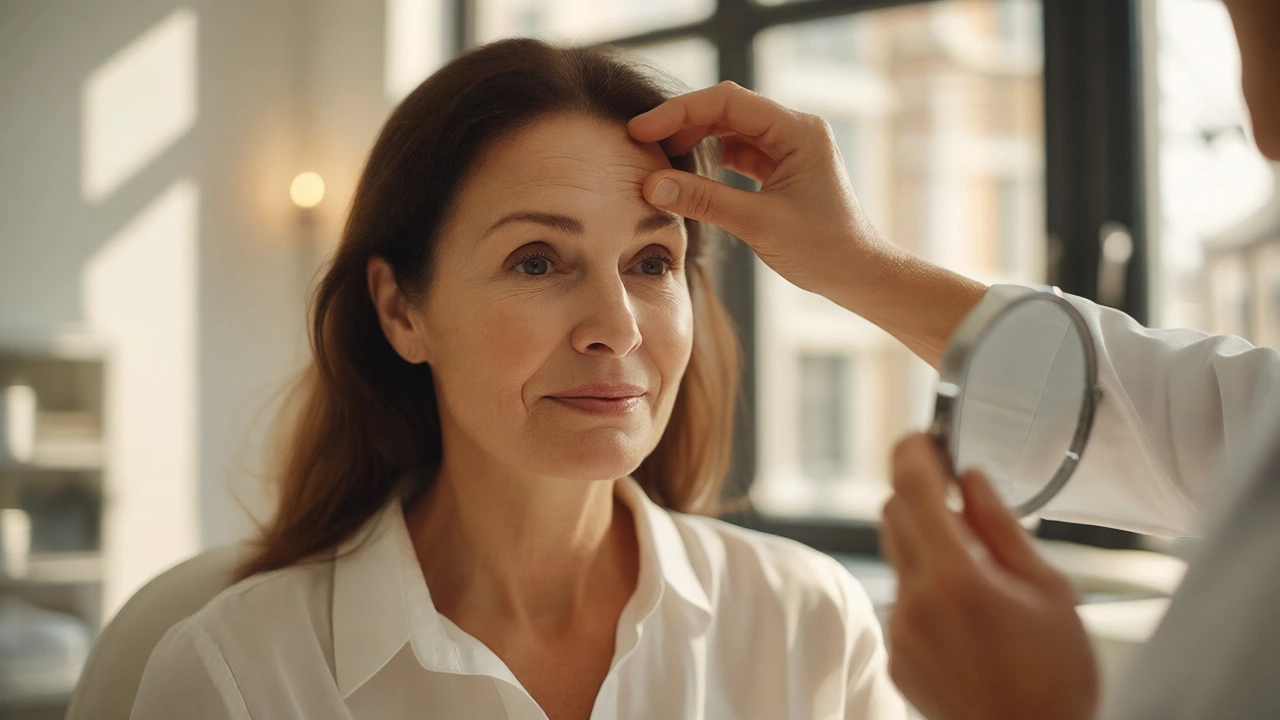
Before diving deeper into regional differences, let’s clarify what we are injecting. Botox is a brand name for onabotulinumtoxinA, which is a neurotoxic protein produced by the bacterium Clostridium botulinum. It works by blocking nerve signals in the muscles where it is injected. When those nerve signals are interrupted, the affected muscle is temporarily paralyzed.
This paralysis prevents the muscle from contracting, which smooths out the dynamic wrinkles formed by repeated facial movements. Common treatment areas include:
- Frown lines between the eyebrows (glabellar lines)
- Forehead horizontal lines
- Crow’s feet around the eyes
- Smile lines around the mouth
It is crucial to distinguish Botox from dermal fillers. Fillers add volume using substances like hyaluronic acid. Botox relaxes muscles. Mixing up these two leads to unrealistic expectations. Many people think Botox fills deep static folds, but it primarily targets active expression lines.
Why the Demand Is Rising Globally
The global aesthetic market is growing at a compound annual growth rate (CAGR) of approximately 10-15%. Several universal factors fuel this expansion:
- Social Media Pressure: Platforms like Instagram and TikTok have normalized cosmetic enhancements. Filters create unrealistic standards, pushing users to replicate digital perfection in real life.
- Accessibility: Treatments are faster and cheaper than they were ten years ago. Lunchtime appointments make maintenance easy.
- Demographic Shifts: People are living longer and want to look younger for longer. Preventative Botox is increasingly popular among millennials and Gen Z.
- Medical Applications: Beyond cosmetics, Botox treats migraines, excessive sweating (hyperhidrosis), and jaw clenching (bruxism). These medical uses increase overall production and visibility.
In the UK specifically, the National Health Service (NHS) rarely covers cosmetic Botox. Patients pay privately, which creates a direct consumer-provider relationship. This transparency drives competition and keeps practitioners accountable for results.
Risks and Safety Standards Across Borders
Just because a country uses more Botox doesn’t mean it is safer. In fact, high-volume markets sometimes struggle with quality control. In South Korea, while top-tier clinics are excellent, budget options may use diluted products or unqualified injectors. Always verify credentials.
In the UK, the regulatory landscape is changing. Currently, anyone can administer injectables unless they are performing surgery. However, new legislation aims to introduce statutory regulation for aesthetic practitioners. This means stricter checks on training and hygiene. Until then, choose your provider carefully. Look for registration with bodies like the General Medical Council (GMC) or the Nursing and Midwifery Council (NMC).
Common side effects include bruising, temporary drooping of the eyelid (ptosis), and asymmetry. These are usually minor and resolve within weeks. Serious complications are rare but require immediate attention.
How to Choose Your Provider
Whether you are in London, Seoul, or New York, the principles for choosing a injector remain the same. Don’t just chase the lowest price. Cheap Botox often means under-dosing or poor technique.
- Check Qualifications: Ensure they are a licensed medical professional (doctor, dentist, or nurse prescriber).
- Review Before-and-Afters: Look for natural results, not frozen faces.
- Consultation Quality: A good provider will assess your facial anatomy and discuss goals, not just sell units.
- Product Authenticity: Ask to see the box. Reputable clinics open fresh vials in front of you.
Remember, Botox is temporary. Effects last three to four months. This allows you to adjust your routine over time. Start conservatively. You can always add more later, but reversing too much Botox takes patience.
Which country has the highest Botox usage per capita?
South Korea consistently ranks highest for Botox and filler usage per capita. Cultural acceptance, lower costs, and advanced medical infrastructure contribute to this high adoption rate.
Is Botox only used for cosmetic purposes?
No. While widely known for reducing wrinkles, Botox is also prescribed medically to treat chronic migraines, excessive sweating (hyperhidrosis), overactive bladder, and muscle spasms.
How long do Botox results last?
Typically, results last between three to four months. As the body metabolizes the toxin, muscle activity gradually returns. Regular treatments may eventually require fewer units as muscles weaken over time.
Is Botox safe in the UK?
Yes, when administered by qualified professionals. The UK is moving toward stricter statutory regulation for aesthetic practitioners to ensure safety and consistency in care.
Can men get Botox?
Absolutely. Men often have stronger facial muscles and may require higher doses. Treatment focuses on softening frown lines and forehead creases while maintaining masculine features.