Dermatologist vs. Esthetician Decision Tool
Not sure who to call? Answer these three questions based on the article's self-assessment guide to get a personalized recommendation.
Is it hurting me?
Pain, itching, or burning suggests a medical issue.
Is it changing fast?
Rapid growth or spreading suggests something active.
Do I just want it to look better?
If the goal is glow, smoothness, or confidence.
Your Recommendation
Please answer all questions above.
You’re staring at a red patch on your cheek that won’t go away. Is it just dryness from the winter air, or is it early-stage eczema? Do you need a prescription cream, or would a deep-cleaning facial fix it? This is where most people get stuck. The line between a dermatologist and an esthetician can feel blurry, but the difference in their training, scope of practice, and cost is significant. Choosing the wrong one doesn’t just waste money; it can delay treatment for conditions that require medical intervention or leave you with unnecessary prescriptions for issues that are purely cosmetic.
This guide cuts through the confusion. We’ll break down exactly what each professional does, when to book which appointment, and how to decide based on your specific skin concerns. Whether you’re dealing with painful acne, stubborn wrinkles, or just want better texture, you’ll know exactly who to call first.
The Core Difference: Medical Doctor vs. Skincare Specialist
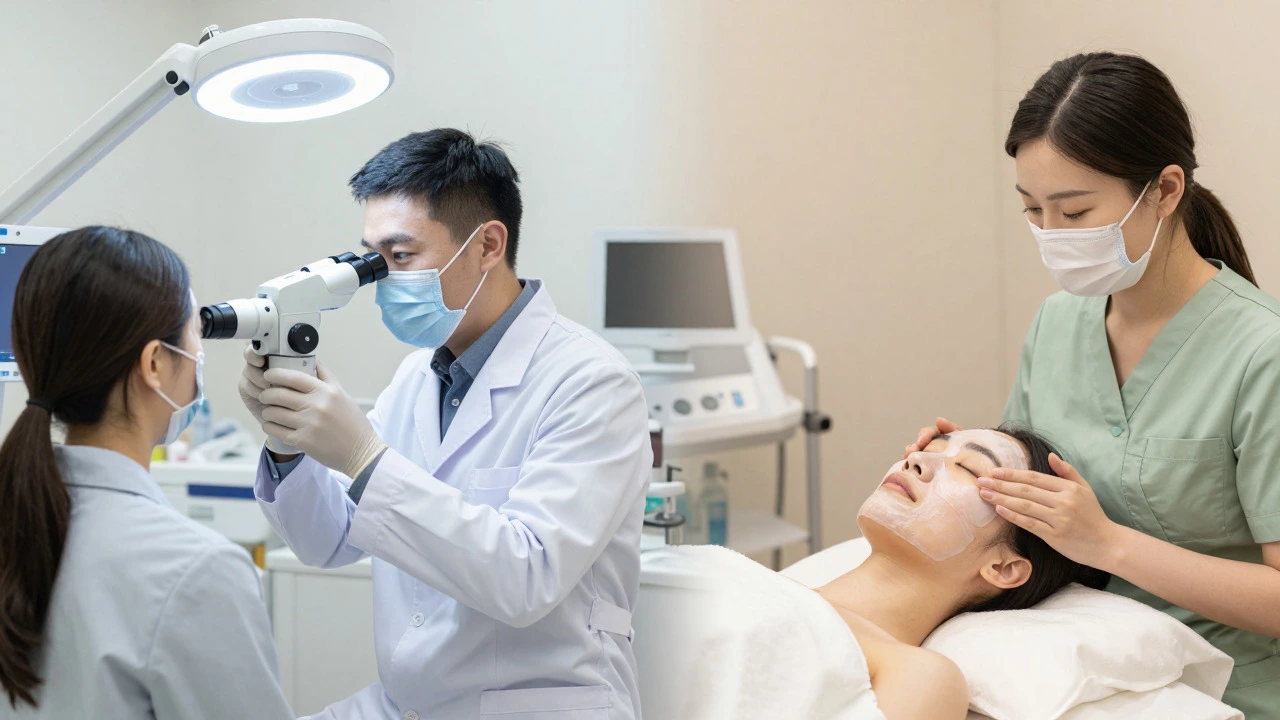
At its core, a dermatologist is a physician. They hold an MD (Doctor of Medicine) degree and have completed years of residency specifically focused on skin, hair, and nails. Their primary job is diagnosis and treatment of disease. An esthetician, often called a skin therapist or licensed aesthetician, is a non-medical specialist. They focus on surface-level skin health, aesthetics, and maintenance through treatments like facials, peels, and waxing.
Dermatology is a branch of medicine that deals with cutaneous diseases and their relationship to systemic diseases. A dermatologist can prescribe medication, perform biopsies, conduct laser surgery, and manage chronic conditions like psoriasis or rosacea. They look at your skin as part of your overall health system.
In contrast, an esthetician works within a defined scope of practice set by state or local licensing boards. They cannot diagnose medical conditions or prescribe drugs. Instead, they use topical products, manual techniques, and light-based therapies to improve skin appearance and hydration. Think of them as the fitness trainer for your face, while the dermatologist is the sports doctor.
When to See a Dermatologist First
There are clear red flags that mean you should skip the spa and head straight to the clinic. If your skin issue involves pain, bleeding, rapid changes, or systemic symptoms, it’s a medical matter. Here are the specific scenarios where a dermatologist is the only correct choice:
- Persistent Acne: If over-the-counter cleansers and benzoyl peroxide haven’t worked after eight weeks, or if you have cystic nodules that leave scars, you need prescription-strength retinoids or oral antibiotics.
- Suspected Skin Cancer: Any mole that changes size, shape, or color, or any new spot that bleeds easily, requires a biopsy. Only a doctor can perform this.
- Autoimmune Conditions: Psoriasis, lupus rashes, and severe eczema are immune system responses. They often require systemic medications that affect your whole body, not just the skin.
- Hair Loss: Sudden thinning or bald patches can indicate thyroid issues, nutritional deficiencies, or alopecia areata. A derm can run blood tests to find the root cause.
- Allergic Reactions: Hives, contact dermatitis, or severe itching that disrupts sleep usually needs antihistamines or corticosteroids prescribed by a physician.
Going to an esthetician for these issues is risky. They might try to treat a fungal infection with a hydrating mask, or attempt to peel away a pre-cancerous lesion without realizing it. While rare, misdiagnosis by non-medical staff can lead to prolonged discomfort and delayed proper care.
When an Esthetician Is the Right Choice
If your skin is generally healthy but you want to enhance its appearance, an esthetician is often more effective and affordable than a doctor. They specialize in the "art" of skincare, focusing on immediate results, relaxation, and long-term maintenance routines. Consider booking an appointment with an esthetician if:
- You Want Cosmetic Improvements: Fine lines, dullness, clogged pores, or uneven tone are perfect for chemical peels, microdermabrasion, or LED light therapy.
- You Need Professional Cleansing: Blackheads and whiteheads that resist home exfoliation can be extracted safely by a trained pro using sterile tools and proper technique.
- You’re Preparing for an Event: A high-quality facial boosts circulation and hydration, giving you that "lit-from-within" glow days before a wedding or photoshoot.
- You Want Customized Product Advice: Estheticians spend time analyzing your skin type (oily, dry, combination) and recommend specific serums, moisturizers, and sunscreens tailored to your daily routine.
- You Enjoy the Experience: For many, the ritual of a facial is stress-relieving. The massage, steam, and calm environment contribute to overall well-being, which indirectly benefits skin health.
Estheticians stay up-to-date on the latest trends in skincare technology and ingredients. They can introduce you to new active ingredients like niacinamide or bakuchiol that fit into your regimen without the need for a prescription.
Cost Comparison and Insurance Coverage
Money is a major factor in deciding who to see. In most regions, including New Zealand and the US, dermatology visits are considered medical expenses, while esthetician services are considered luxury or wellness expenses.
While a dermatologist visit might seem expensive upfront, insurance may cover 80% of the cost if you have a valid medical reason. However, if you just want a check-up for minor blemishes, it will likely be a private expense. Esthetician prices vary widely based on location and the complexity of the treatment. A basic European facial costs less than a medical consult, but advanced treatments like HydraFacials or laser resurfacing done by an esthetician can approach medical pricing.
Can They Work Together?
The best approach for serious skin goals is often a hybrid model. Many successful skincare routines involve both professionals playing distinct roles. The dermatologist handles the "foundation"-treating underlying conditions, prescribing strong actives, and monitoring health. The esthetician handles the "finishing touches"-regular maintenance, product application, and temporary enhancements.
For example, someone with moderate acne might see a dermatologist monthly to adjust their prescription retinoid strength. Between those visits, they might see an esthetician every six weeks for a gentle extraction and hydration mask. The esthetician ensures the skin barrier stays healthy under the harsh effects of the prescription, while the dermatologist keeps the inflammation in check. This collaboration prevents the common pitfall of using too many strong products at once, which can damage the skin barrier.
Communication is key here. Always tell your esthetician if you are currently using prescription tretinoin or isotretinoin. These medications make skin more sensitive, so the esthetician will adjust their tools and products accordingly to avoid irritation. Conversely, tell your dermatologist about any strong peels or lasers you’ve had recently, as this can affect how your skin reacts to new prescriptions.

How to Choose Your First Appointment
If you’re still unsure, start with a simple self-assessment. Ask yourself three questions:
- Is it hurting me? Pain, itching, or burning suggests a medical issue. Go to the dermatologist.
- Is it changing fast? Rapid growth or spreading suggests something active. Go to the dermatologist.
- Do I just want it to look better? If the goal is glow, smoothness, or confidence, start with the esthetician.
If the answer to all three is "no," you have flexibility. You can start with an esthetician for a general assessment. If they identify something that looks unusual or persistent, they will refer you to a doctor. This is a standard and helpful part of their job. They don’t compete with doctors; they complement them. By starting with the lower-cost, non-invasive option, you save money if the issue is minor. If the issue turns out to be complex, you’ve already gotten a baseline assessment that helps the dermatologist understand your history.
Remember, there is no single "better" professional. There is only the right professional for your current skin situation. Your skin is dynamic; what works today might change next year. Stay flexible, listen to your body, and don’t hesitate to switch providers if you aren’t seeing results.
Frequently Asked Questions
Can an esthetician prescribe medication?
No. Estheticians are licensed to provide superficial treatments and recommend over-the-counter products. Only a licensed physician, such as a dermatologist or general practitioner, can write prescriptions for topical creams, oral antibiotics, or isotretinoin.
Which is cheaper: a dermatologist or an esthetician?
Generally, an esthetician is cheaper for initial consultations and basic facials. However, if your condition requires medical treatment, a dermatologist visit may be partially covered by insurance, making it more cost-effective in the long run compared to repeated esthetician visits that don't solve the root problem.
Should I see a dermatologist for anti-aging treatments?
It depends on the severity. For Botox, fillers, and intense pulsed light (IPL), both can perform these procedures, though qualifications vary by region. For prescription retinoids to slow aging, you need a dermatologist. For regular maintenance facials to support anti-aging products, an esthetician is ideal.
What if my esthetician tells me I have a skin disease?
They shouldn't diagnose it officially, but they can observe signs and recommend a referral. If they mention terms like "psoriasis," "rosacea," or "melasma," take it seriously and book a dermatologist appointment to confirm the diagnosis and get appropriate treatment.
How often should I see each professional?
Dermatologists are typically seen quarterly or semi-annually for check-ups, or more frequently during active flare-ups of a condition. Estheticians are usually seen every 4 to 6 weeks for maintenance facials and ongoing skincare management.