
Back Pain Relief Finder
What does your pain feel like?
Select the option that best describes your primary symptom.
Potential Relief Options
Waking up with a sharp, stabbing sensation in your lower back that makes getting out of bed feel like climbing a mountain is not just uncomfortable-it’s exhausting. If you are dealing with severe back pain, over-the-counter ibuprofen might feel like trying to put out a forest fire with a water pistol. You need something stronger, but the pharmacy aisle is confusing, and the internet is full of conflicting advice. So, what is actually the best painkiller for this kind of agony?
The short answer? There isn’t one single "best" pill for everyone. The right choice depends entirely on why your back hurts. Is it inflammation from a herniated disc? Is it muscle spasms from poor posture? Or is it nerve damage causing shooting pain down your leg? Treating severe back pain requires matching the medication to the source of the problem. Let’s break down the options, how they work, and when to use them.
Understanding the Source of Your Pain
Before you pop any pills, you have to understand what you are fighting against. Back pain is not a single condition; it is a symptom. In medical terms, we often categorize it into three types: nociceptive (tissue damage), neuropathic (nerve damage), and musculoskeletal (muscle/joint issues).
If your pain feels like a deep ache or throbbing, it’s likely inflammatory or muscular. This responds well to anti-inflammatories. If the pain feels like burning, tingling, or electric shocks, that is neuropathic pain. Standard painkillers rarely touch this type of pain. You need medications that calm down the nervous system itself. Misidentifying the pain type leads to taking the wrong medication, which means more side effects and zero relief.
Non-Steroidal Anti-Inflammatory Drugs (NSAIDs)
For most people with acute severe back pain caused by injury or inflammation, Non-Steroidal Anti-Inflammatory Drugs are the first line of defense. Unlike acetaminophen (paracetamol), which only blocks pain signals, NSAIDs reduce the swelling and irritation at the site of the injury.
Ibuprofen is the most common option, but for severe pain, doctors often prescribe higher doses or stronger variants like Naproxen or Diclofenac. Naproxen lasts longer in the body, meaning you take it less frequently, which can be easier on your stomach if taken with food. Diclofenac is particularly potent for joint and spinal inflammation.
However, there is a catch. Long-term use of high-dose NSAIDs can irritate the stomach lining, leading to ulcers or bleeding. They can also raise blood pressure and affect kidney function. If you have a history of gastric issues or heart conditions, these drugs require careful monitoring. They are excellent for short-term bursts of severe pain but are rarely safe as a permanent daily solution without medical supervision.
Opioids: The Double-Edged Sword
When NSAIDs fail, many patients turn to opioids. Drugs like Codeine, Tramadol, or even Morphine and Oxycodone are powerful. They bind to opioid receptors in the brain, effectively turning down the volume on pain signals.
But here is the hard truth: opioids are generally discouraged for long-term back pain management. Why? Because of tolerance and dependence. Your body gets used to the drug, requiring higher doses for the same effect. More importantly, studies show that opioids do not significantly improve function or quality of life for chronic back pain compared to non-opioid treatments. They mask the pain, which can lead to further injury because you don’t feel your body’s warning signs.
If a doctor prescribes an opioid for severe back pain, it should be for a very short period-usually no more than a few days to a week-to help you get through the worst of an acute flare-up so you can start physical therapy. It is a bridge, not a destination.
Muscle Relaxants for Spasms
Sometimes, the pain isn’t coming from the spine itself, but from the muscles guarding it. When your back is injured, the surrounding muscles tighten up to protect the area. This results in painful spasms that can lock you in place. In these cases, cyclobenzaprine or methocarbamol might be the best option.
Muscle relaxants work by depressing the central nervous system, reducing muscle tone. They are highly effective for acute mechanical back pain with spasms. However, they come with a heavy price tag in terms of side effects: drowsiness, dizziness, and brain fog. You cannot drive or operate machinery while taking them. Like opioids, they are intended for short-term use, typically two to three weeks, to break the cycle of pain and spasm.
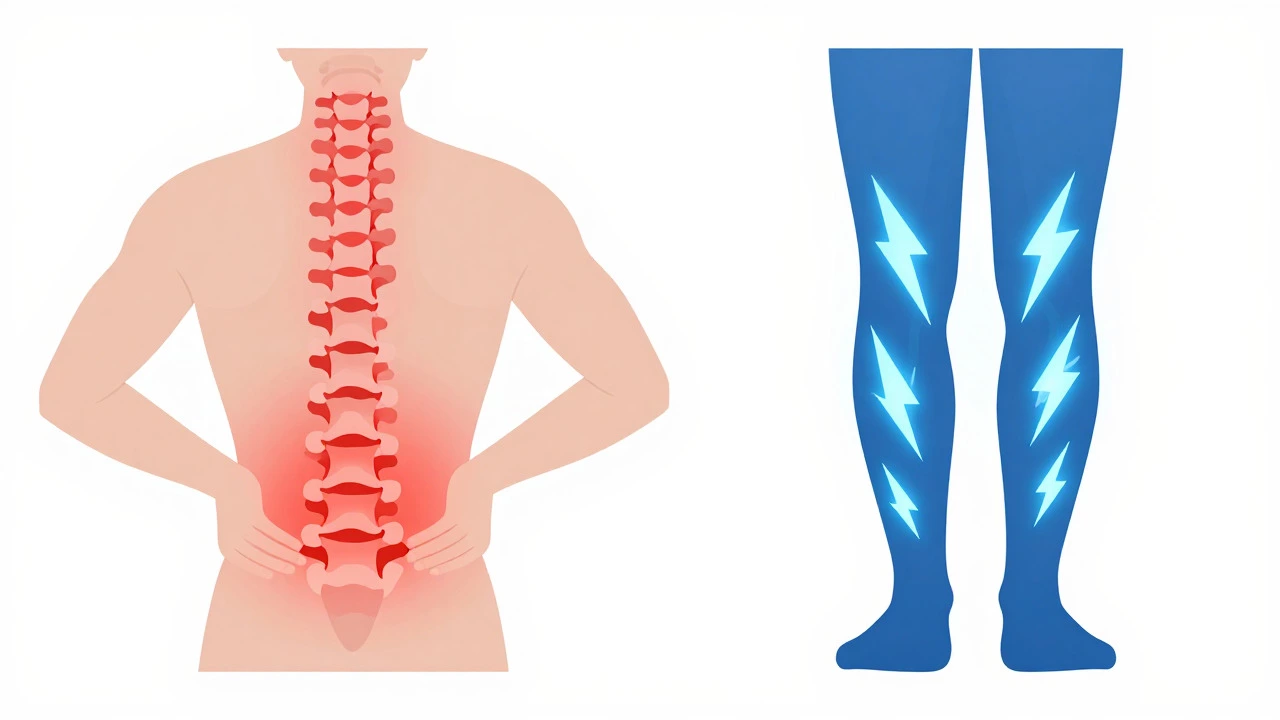
Treating Nerve Pain: Anticonvulsants and Antidepressants
If your back pain shoots down your leg (sciatica) or feels like burning, you are likely dealing with nerve compression. Traditional painkillers often fail here. Instead, doctors look to repurposed medications originally designed for seizures or depression.
Pregabalin and Gabapentin are anticonvulsants that stabilize electrical activity in the brain and nerves. They are FDA-approved for neuropathic pain and can significantly reduce the intensity of shooting back and leg pain. Similarly, certain antidepressants like Duloxetine (an SNRI) increase serotonin and norepinephrine levels, which helps inhibit pain signals in the spinal cord. Duloxetine is specifically approved for chronic musculoskeletal pain, including chronic low back pain.
These medications take time to work. You won’t feel relief immediately. It can take two to four weeks to reach full effectiveness. But for nerve-related severe back pain, they are often the most sustainable long-term solution.
Topical Treatments and Localized Relief
Don’t underestimate the power of topical agents. For localized severe pain, applying Lidocaine patches or Diclofenac gel directly to the affected area can provide relief without systemic side effects. Lidocaine numbs the surface nerves, providing a buffer against deeper pain. Capsaicin creams, derived from chili peppers, deplete substance P (a neurotransmitter involved in pain perception) over time, offering longer-term relief for some patients.
While these may not stop severe pain on their own, they are excellent adjuncts to oral medications, allowing you to lower the dose of stronger pills.
Comparison of Pain Management Options
| Medication Type | Best For | Key Risks/Side Effects | Duration of Use |
|---|---|---|---|
| NSAIDs (Ibuprofen, Naproxen) | Inflammation, acute injury | Stomach ulcers, kidney stress, BP rise | Short to medium term |
| Opioids (Codeine, Tramadol) | Severe acute pain breakthrough | Addiction, tolerance, constipation, sedation | Very short term (days) |
| Muscle Relaxants | Muscle spasms, stiffness | Drowsiness, dizziness, impaired coordination | Short term (weeks) |
| Anticonvulsants (Pregabalin) | Nerve pain, sciatica, burning sensations | Weight gain, brain fog, edema | Long term |
| SNRIs (Duloxetine) | Chronic musculoskeletal pain | Nausea, dry mouth, insomnia | Long term |

The Role of Physical Therapy and Lifestyle
No pill will fix a weak core or poor posture forever. Medication buys you the window of opportunity to move. Physical therapy is the gold standard for treating the root cause of back pain. Exercises that strengthen the core and improve flexibility reduce the load on your spine, preventing future flare-ups.
Heat and ice therapy also play a crucial role. Ice reduces inflammation in the first 48 hours of an acute injury. Heat increases blood flow and relaxes tight muscles during chronic phases. Combining medication with these physical modalities creates a synergistic effect, often reducing the amount of drug needed.
When to See a Doctor Immediately
Not all back pain is benign. Seek immediate medical attention if your back pain is accompanied by:
- Loss of bladder or bowel control (Cauda Equina Syndrome).
- Severe weakness or numbness in both legs.
- Fever along with back pain (could indicate infection).
- Pain following significant trauma, like a fall or car accident.
These are red flags that suggest structural damage or serious underlying conditions that pills alone cannot fix.
Conclusion: Finding Your Balance
There is no magic bullet for severe back pain. The "best" painkiller is the one that targets your specific type of pain with the lowest risk profile. For inflammatory pain, NSAIDs are strong contenders. For nerve pain, Pregabalin or Duloxetine offer better long-term outcomes. For spasms, muscle relaxants provide temporary relief. Opioids should be used sparingly and cautiously.
Work closely with your healthcare provider. Be honest about your symptoms and side effects. The goal is not just to silence the pain, but to restore your ability to live your life. Medication is a tool, not the entire toolbox. Combine it with movement, heat/cold therapy, and patience. Your back can heal, but it needs the right support to do so.
What is the strongest over-the-counter painkiller for back pain?
The strongest OTC option is usually a combination of Ibuprofen and Acetaminophen. Ibuprofen tackles inflammation, while Acetaminophen blocks pain signals. Taking them together (staggered or simultaneous, depending on dosage) often provides better relief than either alone. However, always check with a pharmacist to ensure you stay within safe daily limits for both drugs.
How long does it take for Gabapentin to work for back pain?
Gabapentin is not an instant painkiller. It typically takes 1 to 2 weeks to start noticing a reduction in nerve pain, and up to 4 to 6 weeks to achieve maximum benefit. Doctors usually start with a low dose and gradually increase it to minimize side effects like dizziness and drowsiness.
Can opioids cure severe back pain?
No, opioids do not cure back pain; they only mask it temporarily. While they can be effective for short-term acute pain, long-term use often leads to tolerance, dependence, and increased sensitivity to pain (opioid-induced hyperalgesia). They are generally reserved for severe, short-term situations or when other treatments have failed.
Is Diclofenac better than Ibuprofen for back pain?
Diclofenac is often considered more potent than Ibuprofen for joint and spinal inflammation. It has a stronger anti-inflammatory effect. However, it also carries a slightly higher risk of cardiovascular and gastrointestinal side effects. The "better" choice depends on your individual health history and how your body responds to each medication.
What should I do if painkillers aren't working?
If standard painkillers aren't helping, you may be dealing with a different type of pain, such as nerve pain, which requires different medications like Pregabalin or Duloxetine. Alternatively, the issue might be mechanical, requiring physical therapy, epidural steroid injections, or other interventional procedures. Consult a pain specialist or physiatrist for a comprehensive evaluation.